top of page

By:

Quaid Najmi

4 January 2025 at 3:26:24 pm

CJP attracts 1.5 cr; new politics shaping up

Mumbai: Not from kitchen sinks, toilets or gutters — these two-legged ‘roaches’ have swarmed Social Media in millions through memes, live-streams, rap anthems and viral posts… and the country has begun taking note. On May 16, an unemployed youth, Abhijeet Dipke from Chhatrapati Sambhajinagar - currently job-hunting in Boston, USA, grabbed national attention after launching a digital platform called the “Cockroach Janta Party” (CJP), pitched as a democratic movement “of the youth, for the...

CJP attracts 1.5 cr; new politics shaping up

Mumbai: Not from kitchen sinks, toilets or gutters — these two-legged ‘roaches’ have swarmed Social Media in millions through memes, live-streams, rap anthems and viral posts… and the country has begun taking note. On May 16, an unemployed youth, Abhijeet Dipke from Chhatrapati Sambhajinagar - currently job-hunting in Boston, USA, grabbed national attention after launching a digital platform called the “Cockroach Janta Party” (CJP), pitched as a democratic movement “of the youth, for the youth, by the youth” targeting disillusioned Gen-Z Indians. To Dipke’s own surprise, the announcement exploded online. Within days, CJP has amassed nearly 1.5-crore followers on Instagram, over 40-lakh across other platforms, more than three-lakh registered members, and counting - despite allegations of account suspensions and restrictions. Ironically, CJP’s online numbers are being compared with the social media reach of the ruling Bharatiya Janata Party and the Opposition Indian National Congress - overtaking both, leaving political circles both amused and unsettled. On Thursday, at least one major social media platform briefly suspended the party’s accounts, while CJP supporters alleged hacking attempts on others. Yet, within hours, the page resurfaced with a sarcastic: “You thought you could get rid of us? LOL! Cockroach is back!” After flexing its digital muscle, the fledgling week-old outfit unveiled a basic charter of demands-cum-mini manifesto, along with a tickly political slogan: “Abki Baar, Cockroach Sarkar,” and aimed to capture “400-plus seats” in the next Lok Sabha elections. The CJP’s first political salvo was directed at Union Education Minister Dharmendra Pradhan over the alleged NEET examination paper leak controversy. “Governments make mistakes, but students pay the price. What kind of system is this? Why has the Education Minister not been sacked? Where is the accountability?” Dipke thundered from Boston during an online media interaction. The CJP’s memes have become a star attraction. One depicts a swaggering political cockroach dressed in Gandhi topi, kurta, angavastram and chappals before Parliament House; another shows a suited-booted cockroach delivering a corporate speech; yet another portrays giant roaches marching amid restless crowds. In one provocative graphic, a cocky cockroach is seen gleefully chewing up a giant lotus and relishing it - a not-so-subtle political jab. Dipke has proclaimed himself as the “Cockroach” and ditto with his followers, transforming the usually reviled six-legged arthropod into an unlikely mascot of survival and resistance. His legion of fans gleefully remind how cockroaches, believed to have existed for over 300 million years, can survive pesticides, extreme conditions and even nuclear disasters, besides online attacks! “The biggest complaint among young people is that nobody listens to them, nobody talks to them, and nobody even acknowledges their existence. And now they are being compared to cockroaches and parasites. Naturally, the youth are angry with the system,” Dipke said. A media strategist who reportedly worked for a couple of years with the Aam Aadmi Party, Dipke says the CJP plans to crowdsource its political agenda by asking supporters what issues the movement should prioritise and how citizens can collectively push for systemic change. ‘Cockroaches’ want to swarm Parliament The Cockroach Janta Party (CJP)’s anti-establishment rap anthem, pointed memes and online campaigns revolve around corruption, pollution, propaganda, unemployment and collapsing public systems that have left large sections of India’s youth disillusioned, angry and politically alienated. Its wishlist includes free world-class education, universal healthcare, clean rivers, safe drinking water, breathable air, and greater media accountability - promises that traditional political parties have made for decades, but which suddenly sound radical when articulated by self-styled “cockroaches” claiming to survive every form of rot and decay. Though many dismiss the CJP as a digital gimmick, some political observers believe this sudden rise of ‘cockroaches’ reflects growing public frustration not just with the ruling establishment, but also with the Opposition.

India emerges as APAC’s highest-yield market: CBRE

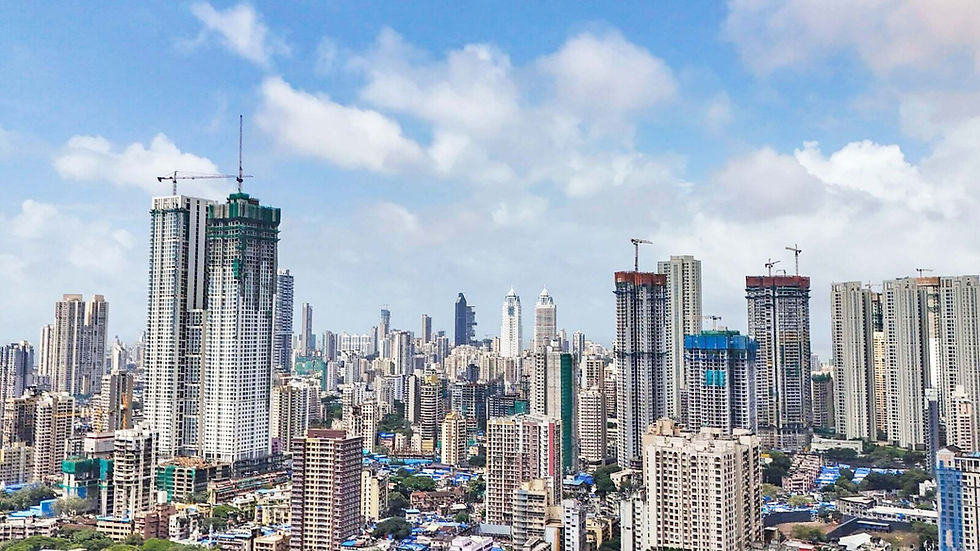
Mumbai: India has emerged as the most attractive real estate yield market across the Asia Pacific region, driven by strong economic fundamentals, rising institutional participation and sustained occupier demand, according to a latest survey by CBRE. The consultancy’s Q1 2026 Asia Pacific Cap Rate Survey shows that India offers the highest yields across every major asset class, including office, retail, logistics, hotels and student housing, significantly outperforming mature markets such as Singapore, Japan and South Korea.


The findings come at a time when global investors are increasingly recalibrating their Asia Pacific strategies amid geopolitical uncertainty and slowing growth in several developed economies. India’s real estate market, backed by strong domestic consumption, infrastructure expansion and a growing corporate ecosystem, is increasingly being viewed as a high-growth alternative capable of delivering superior returns.


Investment volumes in Indian real estate surged 189 per cent year-on-year during the January-March quarter of 2026 to USD 2.29 billion, up from USD 839.85 million in the corresponding period last year. This marks the second-highest growth rate in Asia Pacific after Singapore, where investment volumes rose 364per cent.


“We are seeing genuine, broad-based demand across sectors driven by India’s economic fundamentals, its growing corporate base and a young, consumption-led population,” said Anshuman Magazine, Chairman & CEO, India, South-East Asia, Middle East & Africa, CBRE. “Global investors who have been cautious till now are actively looking to deploy capital here, and we expect this momentum to strengthen further as more institutional-grade product comes to market,” he added.


Office Sector

India’s attractiveness is particularly visible in the office sector, where Grade A office cap rates in core central business districts range between 7.50 per cent and 8.40 per cent. In comparison, yields in Singapore stand at 3.25 per cent to 3.80 per cent, Tokyo at 2 per cent to 3 per cent, and Seoul at 3.75 per cent to 4.65 per cent. This substantial yield spread is drawing increasing attention from institutional investors seeking better risk-adjusted returns.


The student housing segment has emerged as another standout performer, delivering yields of 8.50 per cent to 9 per cent, nearly 320 basis points higher than Australia, the next-best market in the region. Similarly, India’s institutional-grade logistics assets offer cap rates of 7.15per cent to 7.75per cent, comfortably ahead of Vietnam’s 6per cent to 7per cent.


Industry experts believe these elevated yields reflect India’s position as a rapidly expanding emerging economy where institutional participation and price discovery mechanisms are still evolving. While mature markets offer stability, India provides the potential for stronger capital appreciation and income generation.


The report also underlined the growing maturity of India’s real estate capital markets. Apart from equity investments, global and domestic investors are increasingly participating through REITs, alternative investment funds (AIFs), structured debt, and private credit vehicles. India is now regarded as one of the leading markets in Asia Pacific for real estate debt interest, signalling a broader evolution of the sector beyond traditional equity-led investments.


“What makes India’s yield story particularly compelling right now is that it does not stand alone, but is supported by strong occupier fundamentals,” said Ada Choi, Head of Asia Pacific Research, CBRE. 


The rapid expansion of Global Capability Centres (GCCs), government-led infrastructure spending, and rising domestic consumption are further strengthening demand across office, retail, logistics and hospitality assets.


However, challenges remain. Investors surveyed by CBRE identified slower-than-expected economic growth as a key risk. While lending conditions remain accommodative, any tightening in monetary policy or rise in credit costs could impact capital flows into the sector.


Despite these concerns, India’s real estate sector appears firmly positioned as the region’s most compelling high-yield investment destination, combining strong returns with long-term structural growth drivers.
Comments


bottom of page