top of page

By:

Bhalchandra Chorghade

11 August 2025 at 1:54:18 pm

Micro-Zoning, RR proposal: A reform opportunity

Mumbai: The government’s proposed introduction of micro-zoning and differentiated Ready Reckoner (RR) rates marks a significant shift in the way property valuations are determined across the state. The initiative, which seeks to assign distinct RR rates to high-rise buildings, slums, chawls and redeveloped properties within the same locality, has largely been welcomed by the real estate sector. Industry stakeholders, however, caution that the reform’s effectiveness will depend less on its...

Micro-Zoning, RR proposal: A reform opportunity

Mumbai: The government’s proposed introduction of micro-zoning and differentiated Ready Reckoner (RR) rates marks a significant shift in the way property valuations are determined across the state. The initiative, which seeks to assign distinct RR rates to high-rise buildings, slums, chawls and redeveloped properties within the same locality, has largely been welcomed by the real estate sector. Industry stakeholders, however, caution that the reform’s effectiveness will depend less on its intent and more on the framework governing its implementation. The proposal comes at a time when property markets in major urban centres, particularly Mumbai Metropolitan Region (MMR), are witnessing increasingly diverse development patterns within the same neighbourhoods. Experts argue that uniform RR rates often fail to capture the substantial variations in infrastructure quality, redevelopment status, accessibility and market demand that exist even within small geographical pockets. Real estate professionals believe that a micro-zoning approach could help bridge the gap between official property valuations and actual market realities. More accurate valuation mechanisms can improve transparency in transactions, provide a fairer basis for stamp duty calculations and create a more nuanced framework for urban planning. Experts’ Comments Kamlesh Thakur, President, NAREDCO Maharashtra and Co-Founder & Managing Director, Srishti Group, believes the concept has merit but warns that the execution framework will determine whether the reform succeeds or creates fresh challenges. “The concept of micro-zoning and differentiated Ready Reckoner rates has the potential to make property valuation more reflective of local market realities and development potential. However, its success will depend entirely on the framework adopted for implementation. Unless there is a clear, transparent and objective policy with well-defined parameters, the introduction of micro-zoning could lead to increased discretion at the administrative level, resulting in uncertainty and inconsistent outcomes,” he said. According to Thakur, valuation systems that allow excessive room for subjective interpretation can generate disputes, create inconsistencies in assessments and undermine business confidence. His concerns reflect a broader industry apprehension that redevelopment projects—already burdened by lengthy approval processes and rising costs—could face additional uncertainty if valuation criteria vary across administrative jurisdictions. Kaushal Agarwal, Chairman, The Guardians Real Estate Advisory, views the proposal as a logical evolution of property valuation practices, particularly in rapidly transforming urban markets. “The move towards differentiated Ready Reckoner rates through micro-zoning is a progressive step, as property values can vary significantly within the same locality depending on factors such as infrastructure, accessibility, building quality and surrounding development. If implemented effectively, it has the potential to make property valuations more realistic and aligned with actual market dynamics,” he said. Transparency, Methodology At the same time, Agarwal emphasized that transparency and data quality will be critical to ensuring credibility. “However, the success of this initiative will depend on the transparency of the methodology, the quality of data used, and the consistency of its application across micro-markets. Buyers, investors, and developers value clarity and predictability in valuation mechanisms. A well-defined and publicly accessible framework will be essential to avoid ambiguity, strengthen market confidence, and ensure that the new system delivers greater accuracy without creating uncertainty in transaction pricing or investment decisions,” he noted. Uniformly Implemented Echoing similar concerns, Dhruman Shah, Promoter, Ariha Group, said the government must ensure that the system remains easy to understand and uniformly implemented. “The move towards micro-zoning reflects an effort to modernize property valuation and make it more representative of actual market conditions. However, it is important that the system remains simple, transparent and uniformly enforced across regions. If multiple layers of interpretation emerge during implementation, it could lead to disputes and delays, particularly for redevelopment projects that already involve complex approval processes. Industry consultation at every stage will help create a practical and effective framework,” Shah said. As the state explores one of the most significant changes to its property valuation mechanism in recent years, the industry appears broadly supportive of the objective. Yet the consensus remains clear: the success of micro-zoning will depend on transparency, consistency and stakeholder consultation. Without these safeguards, a reform intended to improve valuation accuracy could inadvertently introduce new layers of uncertainty into an already complex real estate ecosystem.

International flights from July 1

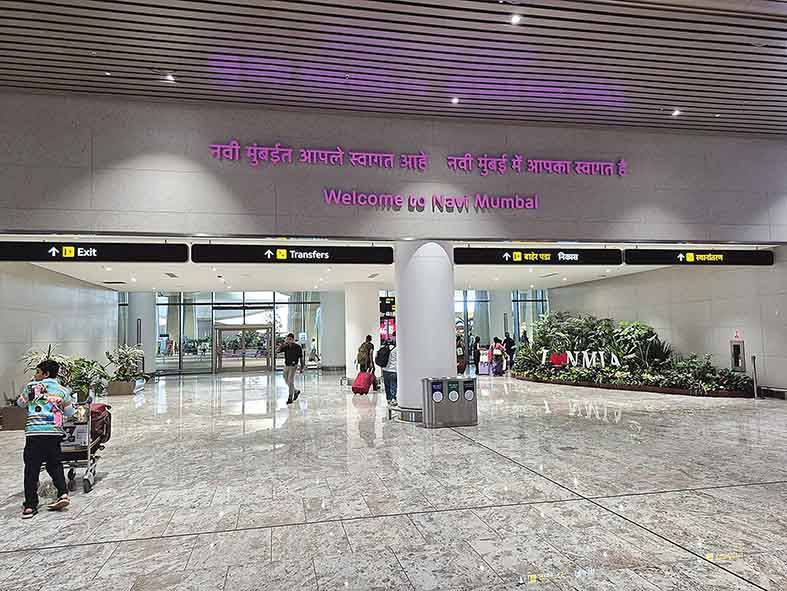
Mumbai: Mumbai’s rapidly expanding second aviation hub may be preparing for its biggest operational leap yet. International flight operations from Navi Mumbai International Airport (NMIA) are tentatively expected to commence from July 1, according to sources familiar with the development, although details regarding participating airlines, destinations, and flight frequencies are still being finalized.


If the timeline materializes, the move would mark a significant milestone for the greenfield airport, which has already witnessed sharp growth in domestic passenger traffic within months of beginning operations on December 25, 2025. Aviation industry observers believe the introduction of international services could substantially accelerate traffic redistribution across the Mumbai Metropolitan Region while easing pressure on the heavily congested Chhatrapati Shivaji Maharaj International Airport (CSMIA).


Sources indicated that discussions are underway with multiple carriers regarding slot allocation and operational readiness. However, officials maintained that the July 1 date remains tentative and subject to regulatory clearances, airline preparedness, and completion of final operational protocols linked to immigration, customs, and international passenger handling systems.


The expected rollout comes at a time when NMIA is already demonstrating strong operational momentum. Airport officials said the facility is currently handling more than 148 air traffic movements (ATMs) daily, translating into approximately 20,500 passengers every day. Around 10,500 of these passengers are outbound travelers, reflecting growing demand from flyers increasingly shifting to the new airport.


Officials noted that the airport’s traffic growth has been accompanied by relatively stable operational performance. According to airport authorities, on-time arrivals currently stand at 96.4%, while on-time departures are recorded at 86.7%. Industry experts say such figures are considered robust for an airport still in its initial expansion phase.


The proposed international launch is also expected to strengthen NMIA’s role in Mumbai’s broader aviation ecosystem. Industry stakeholders believe airlines may initially deploy short-haul Gulf and Southeast Asian routes from the airport before gradually expanding to longer international sectors depending on passenger response and bilateral slot availability.


Officials have previously projected that NMIA could eventually handle nearly 50,000 passengers daily, more than double its current throughput. Analysts say the commencement of international operations could significantly accelerate that target.


Experts believe international connectivity could now become the airport’s defining next phase. “Domestic operations established the airport operationally, but international flights will determine how quickly NMIA evolves into a true global gateway,” an aviation consultant said.


Passengers, meanwhile, are expected to benefit from reduced congestion, shorter turnaround times, and modern terminal infrastructure. With CSMIA operating under significant slot constraints, NMIA’s emergence is increasingly being viewed as essential to sustaining Mumbai’s long-term aviation growth.
Comments


bottom of page