

IOD may cushion El Nino’s mega-threat
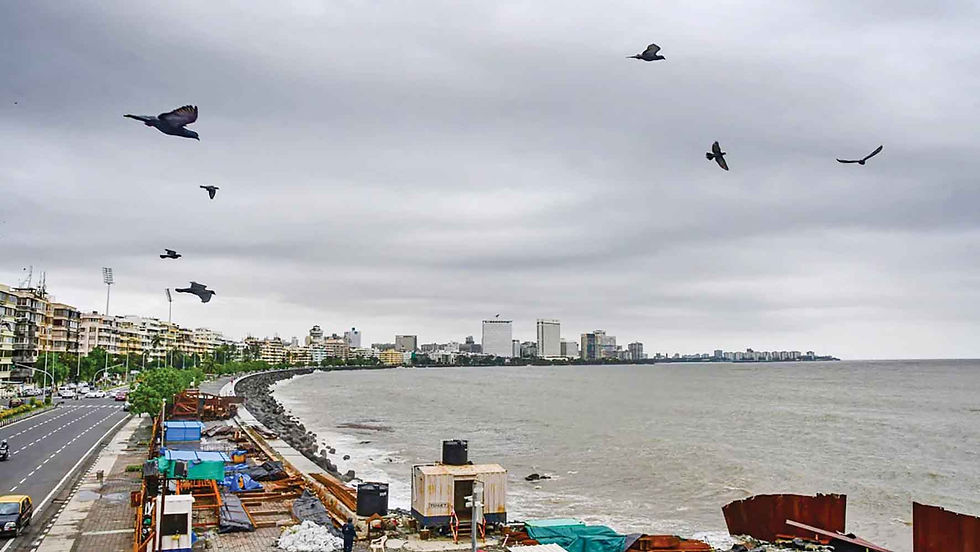
Mumbai: Amid gloomy forecasts of a below-normal monsoon 2026 in India due to a potentially devastating El Nino, scientists are monitoring the Indian Ocean Dipole (IOD), an ocean-atmosphere phenomena that could possibly soften the impact over the sub-continent.
As a ‘very strong’ El Nino threatens to overshadow the rainy season with erratic rains, uneven spread, heat waves, farm distress and fresh inflationary pressures on the economy, meteorologists keep their fingers crossed – as Positive IOD conditions that warm the western Indian Ocean have helped salvage the Indian monsoons in the past.
Though current forecasts point to neutral IOD conditions in May-June, with the possibility of turning positive later in the season, experts caution it may not be powerful enough to roll-back the effects of a very strong El Nino this year.
The Indian Meteorological Department (IMD) has forecast monsoon rainfall at 90 pc of the Long Period Average of 870 mm, with an error margin of 4 pc, placing India dangerously close to ‘deficient rainfall’ category in 2026. The chances of deficient rains could be 60pc and probability of below-normal rains is at 24pc – an alarming picture.
Present forecast models point to a ‘strong to very strong’ El Nino by the year-end. In the past 75 years, the world has seen only four ‘Super El Ninos’, in 1982, 1991, 1997 and 2015 seasons.
Top scientists and meteorologists like Skymet Weather President (Meteorology and Climate Change) retired Air Vice-Marshal G. P. Sharma, University of Maryland Emeritus Professor Raghu Murtugudde, Food policy analyst Devinder Sharma, Centre for Sustainable Agriculture Executive Director Dr G. V. Ramanjaneyulu, FLAME University Public Policy Professor Dr. Anjal Prakash, Climate Trends Founder Aarti Khosla and Associate Director Archana Chaudhary, are a worried lot as the current ocean warming trends are similar to previous ‘Super El Nino’ events.
“The numerical models suggest the evolving El Nino (2026) could match the ‘Super El Nino’ seen four decades ago. Ocean temperatures are nearing record highs, and 2027 may surpass 2024 as the warmest year on record as El Nino’s warming impact is usually felt strongly the following year,” Sharma said.
Global Warming
Sharma added that the phenomenon is unfolding alongside long-term global warming, with oceans already absorbing nearly 90pc of excess heat generated by human activity.
The Pacific Ocean rapidly warms toward El Niño conditions after a rare year of climatic transition, while India began the year under weak La Nina conditions, shifted into ENSO-neutral conditions, and is now slated to move into El Nino territory in the second half of 2026 - itself a rare sequence in a single calendar year.
Meteorologists aver that even an ‘evolving El Nino’ can disrupt the Indian monsoon – weakening the ‘Walker Circulation’ which is a massive air circulation system across the Pacific – leading to high-pressure conditions over the Indian subcontinent and suppressing rain-bearing clouds. The concern spans not just lower rainfall totals, but also erratic weather patterns and prolonged dry spells during the core monsoon months.
The US National Oceanic and Atmospheric Administration (NOAA) latest advisory says that there is an 82pc chance of El Nino emerging in May-July 2026, with a 96pc probability of it continuing through the northern hemisphere winter of 2026-27.
Murtugudde said rainfall distribution would matter more than seasonal averages, the monsoon may be patchy, with longer break-monsoon conditions. “Delayed monsoon advance could trigger humid heat-waves across north-west India as hot winds from Pakistan combine with Arabian Sea moisture,” he explained.
He cautioned that agriculture planning would have to rely increasingly on short-term forecasts amid climate volatility and geopolitical uncertainty.



Comments