top of page

By:

Quaid Najmi

4 January 2025 at 3:26:24 pm

Strange bedfellows

BJP hugs Congress, AIMIM; panics after uproar Thane : Eyebrows were singed and blood pressures spiked when the Bharatiya Janata Party suddenly decided to hug its “sworn enemies” in Ambernath (Thane), and in Akot (Akola) – after the December 20 municipal council polls there.   The BJP became snug under its saffron blanket with the Congress and Ajit Pawar’s Nationalist Congress Party – all to politically leave the Mahayuti ally, Shiv Sena led by Deputy Chief Minister Eknath Shinde, out in the...

Strange bedfellows

BJP hugs Congress, AIMIM; panics after uproar Thane : Eyebrows were singed and blood pressures spiked when the Bharatiya Janata Party suddenly decided to hug its “sworn enemies” in Ambernath (Thane), and in Akot (Akola) – after the December 20 municipal council polls there.   The BJP became snug under its saffron blanket with the Congress and Ajit Pawar’s Nationalist Congress Party – all to politically leave the Mahayuti ally, Shiv Sena led by Deputy Chief Minister Eknath Shinde, out in the cold.   Similarly in Akot, the BJP cozied up under the All India Majlis-E-Ittehadul Muslimeen (AIMIM)'s green quilt, without a shred of guilt, to shoo off the Congress-Vanchit Bahujan Aghadi and others from bagging the civic body.   In Ambernath, the Shiv Sena had emerged as the single-largest party with 27 seats in the 60-Ward house, and in Akot, the BJP achieved the same feat with 11 seats in the 35-Ward house.   Predictably, leaders across these parties rushed to douze the hayfires. A shaken Congress state chief Harshwardhan Sapkal suspended local leaders in Ambernath, including the local party chief Pradeep Patil, the executive committee and around a dozen elected municipal councillors.   A dazed AIMIM state chief Imtiaz Jaleel, declared there was “no question of joining hands with the BJP”, and added grimly: “We have sought a report from the local party leaders, and after getting all details, we shall initiate appropriate disciplinary action,” a grim Jaleel said.   Smarting under red-hot chilli criticism flung by Shiv Sena (UBT)’s Sanjay Raut and Aam Aadmi Party’s Preeti Sharma-Menon, Chief Minister Devendra Fadnavis shot out an earful to the local party leaders in Ambernath and Akot.   “We shall not tolerate the alliances with Congress and AIMIM. These partnerships must be broken. If the local (BJP) units have worked out such deals, they are wrong and violate norms. We shall take stringent action against them,” warned Fadnavis. Later, BJP State President Ravindra Chavan slapped a notice on the Akot party units seeking an explanation.   Ideological Somersaults Since 2019, the state has witnessed many such brazen ideological somersaults that have left political parties and voters shocked and awed.   It started when the (undivided) Shiv Sena joined the Congress and (united) NCP to form the Maharashtra Vikas Aghadi (MVA) which ruled the state for two-and-half years.   In the current civic elections season, even the MVA has fractured with Congress going solo or with local allies like Prakash Ambedkar’s Vanchit Bahujan Aghadi, while the Shiv Sena (UBT) and NCP (SP) have embraced the once-untouchable MNS.   Adding to this is the flurry of local leaders-activists hopping parties, leaving voters bemused and bewildered, even as the parties fumbled to save their ideological credibility.   Ambernath: Shoving out the winner Indulging in political creativity, the BJP, Congress and NCP floated the Ambernath City Development Front, uniting the BJP, Congress and NCP, intended to keep the Shiv Sena out of power at all costs.   Ambernath falls in the Kalyan Lok Sabha seat of Dr Shrikant Shinde, son of Deputy CM Eknath Shinde, who is already at loggerheads with BJP state chief Ravindra Chavan, hailing from Dombivali town, also in Thane district. BJP-Shiv Sena fought against each other in the civic polls last month.   In the 59-member Ambernath Municipal Council, the Shiv Sena won 23 seats, BJP 16, Congress 12 and NCP four. BJP’s Tejashree Karanjule was elected president through direct polls. Post-alliance, the BJP-Congress-NCP touched 32 seats, edging out the Shiv Sena which in its undivided form had ruled here for almost 35 years.     Akot: Bulldozing to grab power The BJP, AIMIM formed the Akot Vikas Manch, which included Shiv Sena, Shiv Sena (UBT), NCP and NCP (SP) and Prahar Janshakti Party to wrest the 35-member house from potential claimants.   The BJP won 11 and AIMIM five, and along with others, the AVM claimed a majority with 25 municipal councillors, and the Congress, VBA floundered with just 8 seats.   The AVM was formally registered with the SEC. In the polls, BJP’s Maya Dhule was elected mayor defeating AIMIM’s Firozabi S. Rana.

Office market posts record leasing

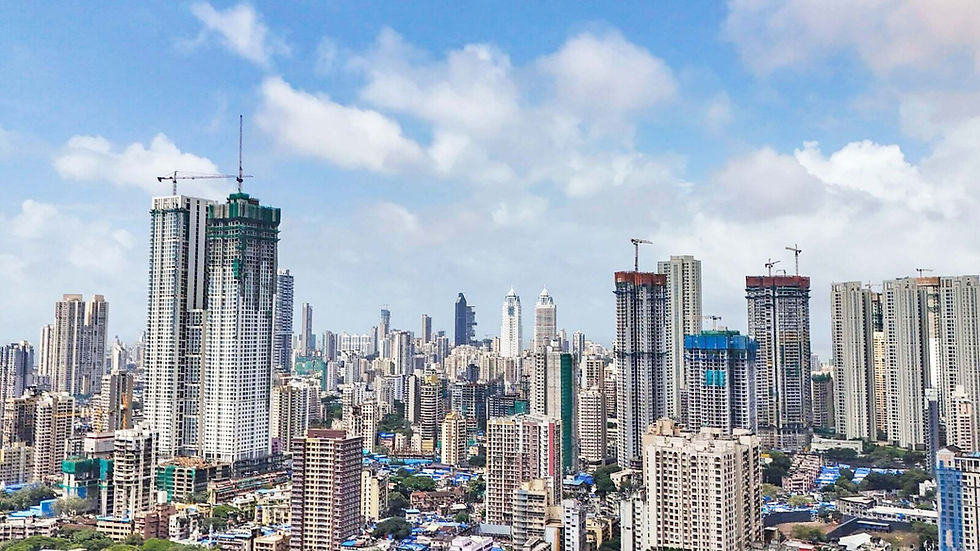
Mumbai: India’s office real estate market delivered its strongest-ever performance in 2025, with gross leasing touching an all-time high of 86.4 million sq ft, marking a 20 per cent year-on-year growth, according to Knight Frank India’s India Real Estate – Office and Residential Market (H2 2025) report. The year not only surpassed the previous peak recorded in 2024 but also stood 43 per cent higher than pre-pandemic levels of 2019, underscoring the structural strengthening of occupier demand across major cities.


The surge was broad-based, with five of the eight tracked markets crossing the 10 million sq ft annual leasing threshold, reflecting the growing depth and geographic diversification of India’s office ecosystem. Bengaluru retained its leadership position, registering a historic 28.7 million sq ft of leasing—its highest ever—driven largely by global technology firms and Global Capability Centres (GCCs). Hyderabad, NCR, Pune and Chennai also recorded their best or near-best annual performances, while Mumbai narrowly missed the 10 million sq ft mark.


Leasing momentum remained robust throughout the year. H2 2025 accounted for 37.5 million sq ft, second only to the exceptionally strong first half, indicating sustained occupier confidence and long-term commitment to Indian office assets. This resilience came despite global economic uncertainty, reinforcing India’s standing as a preferred destination for corporate expansion.


Global Capability Centres

A defining feature of 2025 was the dominance of Global Capability Centres, which emerged as the largest occupier segment. GCCs accounted for 38 per cent of total leasing, or nearly 32 million sq ft, consolidating India’s position as a global hub for research, development and high-value services. Bengaluru alone captured almost half of total GCC absorption, followed by Hyderabad and Chennai, highlighting the concentration of advanced talent pools in these cities.


Other demand drivers also showed strong recovery. Third-party IT services leasing nearly doubled year-on-year, reaching over 15 million sq ft, supported by accelerating adoption of artificial intelligence and digital transformation across global enterprises. Flexible workspace operators recorded their highest-ever absorption, with close to 19 million sq ft leased, reflecting occupiers’ preference for scalable and managed workplace solutions amid evolving work strategies.


While demand surged, new office completions lagged, rising a more modest 9% year-on-year to 54.8 million sq ft. Bengaluru and Pune together accounted for more than half of new supply additions. The supply-demand mismatch kept vacancy levels in check and strengthened landlords’ pricing power, resulting in rental growth across all major markets.


Commenting on the performance, Knight Frank India Chairman and Managing Director Shishir Baijal said the 2025 cycle represented more than a numerical high, pointing instead to a “structural shift” in how global and domestic enterprises view India as a long-term business destination. The fact that multiple large markets simultaneously touched historic peaks, he noted, highlights the maturity and resilience of the country’s office ecosystem.


bottom of page