
Pahalgam and the Global Test of India’s Alliances
- Commodore S.L. Deshmukh

- Jun 2, 2025
- 4 min read
The Pahalgam terror attack and Operation Sindoor have redrawn the diplomatic map for India by exposing who stands with us and who stands in the way.
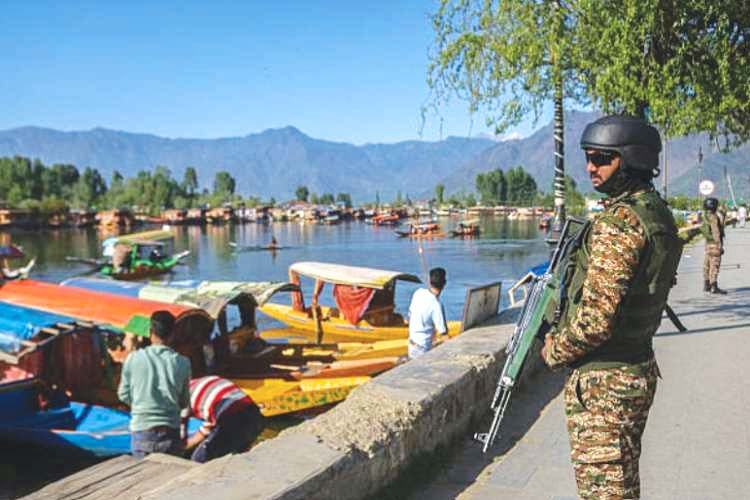
Terrorist attacks are rarely just about the blast. They ripple across diplomacy by exposing old loyalties, forging new alignments and unmasking those postures cloaked in ambiguity. The Pakistan-sponsored strike in Pahalgam on April 22 did precisely that. It jolted India but it also clarified the world. Operation Sindoor, India’s swift military retaliation, was not only a moment of hard power assertion but also a crucible that revealed where the world stands with us in terms of who our friends are, who are our foes and which parties are altogether something more sinister.
At the heart of this moment lies China. That Beijing emerged as Islamabad’s premier arms supplier surprised no one. But its enthusiastic backing in replacing equipment lost in the skirmishes at half-price has left little doubt about the depth of the Sino-Pakistan axis. Chinese military hardware, intelligence and diplomatic cover were unmistakably instrumental in this conflict. Beijing’s refusal to condemn the terrorist origins of the conflict, while calling for restraint, highlights a dual agenda: containment of India and elevation of Pakistan. For China, Islamabad is a pliant irritant with strategic geography.
India must finally abandon any illusion that a border skirmish or a Shanghai Cooperation Organisation summit will warm bilateral ties. ‘Paki-Chini Bhai Bhai’ is not just a jibe but a doctrine.
If China represents the ideological rival, Turkey presents a new, unsettling front. Turkey’s provision of armed drones to Pakistan, knowing they might be used against India, and its continued grandstanding on Kashmir marks a sharp pivot from its traditional neutrality. The Turkey-Pakistan-Azerbaijan axis, rooted in Islamic solidarity but increasingly expressed through joint defence initiatives, poses a major geopolitical challenge. For India, it means that Ankara is an active participant in shaping anti-India coalitions.
Azerbaijan, once seen as a benign partner with historical and cultural ties to India, revealed its hand too. Its one-sided statement after the attack which lamented Pakistani civilian casualties without so much as even acknowledging the Pahalgam terror strike was telling. In diplomacy, silences often speak louder than words. And Azerbaijan’s silence on terrorism, alongside its embrace of Pakistan’s narrative, signals a shift that India must take seriously.
More complex has been the posture of the United States. President Donald Trump’s attempt to play mediator during Operation Sindoor created unwelcome ambiguity. Coupled with Washington’s quiet facilitation of a $1 billion IMF bailout to Pakistan in the attack’s aftermath, the result was a distinctly uncomfortable taste for Indian strategists. The U.S. has long oscillated between treating Pakistan as a necessary nuisance and a dangerous liability. But for India, the question now is whether the strategic embrace with Washington, built on shared Indo-Pacific interests and defence cooperation, can accommodate such moral inconsistency. The answer is not withdrawal but realism. India must continue engaging the U.S., while accepting that on Pakistan, Washington may always hedge.
Even more disappointing was the response from many Middle Eastern countries. Public statements from Arab capitals mostly urged ‘restraint on both sides,’ a diplomatic euphemism that implicitly equates terror with self-defence. Iran’s careful neutrality and Oman’s Grand Mufti openly praising Pakistan suggest that for many in the Gulf, religious affinity still trumps strategic alignment. This, despite India being one of the largest trading partners for several of these states and a major source of remittances from Indian workers. The Middle East’s equivocation has once again highlighted the limits of transactional diplomacy. India will need to rethink how far economic ties can bend regional loyalties.
Amid the ambivalence, however, were countries that stood firm. Israel was unequivocal in its support. Statements from both the ambassador in Delhi and the consul in Mumbai underlined Israel’s solidarity with India’s right to self-defence. Beyond words, Israel has also been a steady supplier of critical defence technologies that have improved India’s tactical capabilities. The alignment between the two democracies is strategic and increasingly indispensable.
Russia, too, demonstrated its value as a time-tested partner. Moscow’s support was less flamboyant than Tel Aviv’s, but no less sincere. A statement by the Russian Foreign Ministry reinforced its commitment to counterterrorism cooperation with India. For a country navigating its own complex relationships (with China, Pakistan and with the West), Russia’s steady hand was a reassuring signal.
Europe, often accused of being diffident in Asian conflicts, was a pleasant surprise. France, Germany, the UK and the EU collectively condemned terrorism and recognised India’s right to respond. Their alignment may have stemmed partly from their own struggles with terrorism, but it also marks an evolution in how the West sees India - not as a passive victim, but as a proactive global actor.
The April 22 attack and its aftermath was far more than a tactical military event. It was a diplomatic watershed of sorts. It enabled India to separate fair-weather friends from durable allies, rhetorical support from material solidarity. Yet, the world does not divide neatly into friend and foe. As India’s ancient master of statecraft Kautilya observed, diplomacy is conducted in greys, not blacks and whites.
India must now build on the stunning success of Operation Sindoor with confidence but not complacency. Alliances will need tending; adversaries must be watched and ambiguous players engaged with shrewd calculation. For the age of formulating idealistic foreign policy is over.
(The writer is a retired Naval Aviation Officer and geopolitical analyst. Views personal.)


Comments