top of page

By:

Shoumojit Banerjee

27 August 2024 at 9:57:52 am

Sands of Empire: Revisiting Khartoum

If you thought Lawrence of Arabia (1962) was the only great desert classic, think again. Overshadowed for decades by David Lean’s masterpiece, Khartoum (1966) remains one of the great neglected historical epics. Directed by Basil Dearden and anchored by commanding performances from Charlton Heston and Laurence Olivier, it deserves a place alongside the decade’s finest large-scale historical dramas. While it falls short of the towering achievement of Lawrence of Arabia, it remains a worthy...

Sands of Empire: Revisiting Khartoum

If you thought Lawrence of Arabia (1962) was the only great desert classic, think again. Overshadowed for decades by David Lean’s masterpiece, Khartoum (1966) remains one of the great neglected historical epics. Directed by Basil Dearden and anchored by commanding performances from Charlton Heston and Laurence Olivier, it deserves a place alongside the decade’s finest large-scale historical dramas. While it falls short of the towering achievement of Lawrence of Arabia, it remains a worthy epic unjustly overshadowed by Lean’s film. More importantly, it belongs to a now-vanished tradition of historical filmmaking that believed audiences could appreciate history, ideas and spectacle in equal measure. Set in 19th century Sudan and Egypt, Khartoum sees the flamboyant General Charles ‘Chinese’ Gordon, played with tremendous conviction by Heston, square off against Muhammad Ahmad, the self-proclaimed ‘Mahdi’ or the ‘Expected One,’ portrayed by Olivier. Amid tangled imperial geopolitics, the British government dispatches Gen. Gordon to oversee the evacuation of Sudan, where the Mahdi has ignited a rebellion against Egyptian and British authority. The Mahdi was a nineteenth-century Osama bin Laden-like prototype – a ruthlessly charismatic religious figure capable of rallying thousands through a potent mix of faith, prophecy and political revolt. The duel between Gordon and the Mahdi is alone worth the price of admission. Heston, relishing the opportunity to play something far more nuanced than his usual larger-than-life heroes, delivers what may well be the finest performance of his career. Sporting a British accent, Heston’s Gordon is a vain man (with a monumental ego) driven equally by courage and conviction. Heston creates a character far more interesting than his celebrated household roles of Judah Ben-Hur or Moses. Indeed, Heston personally regarded Khartoum as one of his favourite films as the role allowed him to move beyond heroic certainty and explore the contradictions of a deeply complex historical figure. Olivier’s performance has long attracted controversy because of his use of blackface. Yet as an acting performance, it remains extraordinarily compelling. His Mahdi is intelligent and magnetic; a man whose seething fanaticism and certainty of purpose makes him a lethal opponent. The conflict between Gordon and the Mahdi is not simply military but philosophical. Each sees himself as the instrument of a higher cause and recognises something admirable in the other. Their exchanges possess an intellectual weight seldom encountered in contemporary blockbusters. That quality owes much to the literate screenplay by playwright Robert Ardrey who has his characters debate faith, empire and political expediency in scintillating dialogues. The supporting cast is equally distinguished. Sir Ralph Richardson is magnificent as the British Prime Minister, William Ewart Gladstone who embodies British pragmatism and Machiavellian statecraft in equal measure. He admires Gordon while recognising that empires cannot be run according to the impulses of heroic individuals. Richardson captures the tension between moral rhetoric and political calculation with a finesse that only a legend of his stature could. One should perhaps be thankful that such a film got made at all. Never mind today’s audiences, the tangled skein of late 19th century British imperial politics was hardly an easy sell for audiences in the 1960s as well. Americans, in particular, would likely have had little clue about Sudan, Khartoum, Gordon or the Mahdist revolt. Yet Khartoum succeeds brilliantly in bringing this forgotten era to life. The political intrigues of Whitehall and the desperate military situation on the Nile acquire genuine dramatic force. It belongs to a period when filmmakers trusted audiences to listen and follow ideas rather than watch mindless action. The 1960s were the golden age of the literate historical epic. Films such as Spartacus, El Cid, The Fall of the Roman Empire and The Charge of the Light Brigade combined spectacle with serious engagement with history. Khartoum stands proudly within that tradition. Gordon and the Mahdi have long gone. The British Empire has vanished. But Sudan remains trapped in seemingly perpetual cycles of conflict. Coups, civil wars, military strongmen, competing centres of authority and devastating violence have haunted the country for decades. The headlines change; the instability persists. That is what makes Khartoum feel unexpectedly contemporary. Beneath its grand costumes and imperial pageantry lies a story about a state struggling to define itself, about rival claims to legitimacy, and about the dangerous collision between political power and religious conviction. 60 years after its release, Khartoum remains not merely a superb film but a haunting reminder that history, especially in Sudan, has a habit of repeating itself.

Rain rave water music festival in Malaysia

Authorities expect boost in visitors’ demand and support to local economy
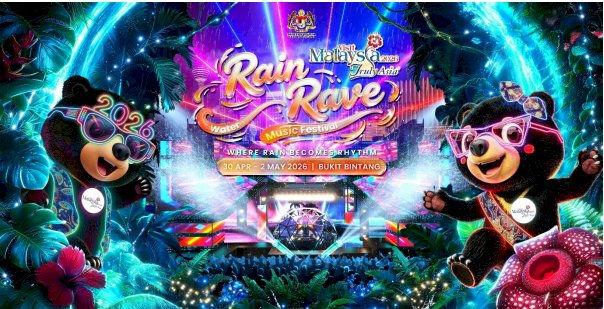
Putrajaya: Kuala Lumpur is prepared to celebrate the World Labour Day Celebration cum Rain Rave Water Music Festival from April 30 to May 3 in Bukit Bintang. The festival presents an opportunity to welcome visitors from across the region and beyond to be part of a shared, cross-cultural experience in Malaysia.


In addition to the main event in Kuala Lumpur, seven states have also expressed their readiness to organise complementary related-themed activities, tailored to their respective local contexts and cultural elements. These include Negeri Sembilan, Johor, Melaka, Kedah, WP Labuan, Pahang and Terengganu, reflecting a broader nationwide participation in celebrating the occasion.


The event is co-organised by ‘Tourism Malaysia’ and ‘The Fame’ as part of the broader Visit Malaysia 2026 tourism ecosystem.


The Rain Rave Water Music Festival is positioned as a strategic urban tourism activation that reflects Malaysia’s multicultural society and promotes inclusivity, bringing together industry players, creative partners and commercial stakeholders, while driving visitor traffic and stimulating spending across retail, hospitality and services sectors.


Beyond entertainment, the festival integrates Malaysian multicultural elements, local creative talent and curated lifestyle experiences, reflecting the strength of Malaysia’s creative industry ecosystem while appealing to both domestic and international audiences. Visitors can expect immersive environments inspired by rain, a diverse lineup of international and regional DJs alongside Malaysian acts, as well as curated local market experiences featuring Malaysian food, culture and creative expressions.


Malaysian Identity

Rain Rave remains rooted in Malaysian identity with a contemporary approach that reflects both tradition and modern creativity. Inspired by rain as a vital natural element in Malaysia’s environment, the festival transforms this familiar element into a creative and cultural expression while showcasing Malaysia’s diverse cultural traditions, through traditional performances, food, and games.


Held in conjunction with Labour Day, the festival serves as a meaningful tribute to the contributions of all working communities and will be developed as a signature annual event, strengthening its role as a key highlight in Malaysia’s tourism calendar and positioning the country as a youthful and energetic destination.


The event is further supported by a network of public and private stakeholders. Cultural and content support is provided by agencies such as Istana Budaya, Malaysian Handicraft Development Corporation, the National Department for Culture and Arts and the Department of National Heritage, enhancing the overall visitor experience.


Comprehensive planning is in place, including traffic management, crowd control measures, safety protocols and coordination with enforcement agencies, to ensure a safe, orderly and well-managed environment for all visitors.

Comments


bottom of page