

Return of the Fighter

Written off after her 2024 defeat, Smriti Irani’s return underlines the BJP’s continuing faith in one of its most combative political voices.
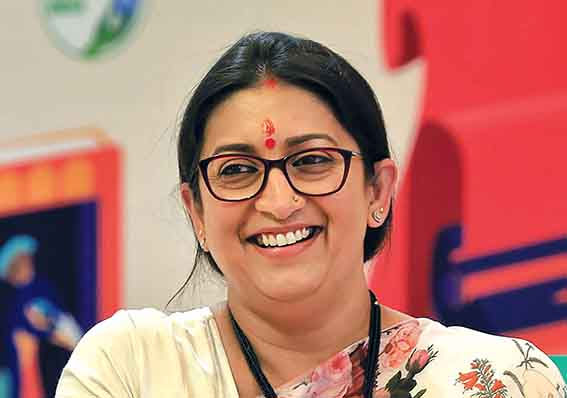
Smriti Irani’s return to the BJP’s organisational high table is a reminder that in politics, defeat is often an intermission rather than an ending. For a politician whose career has been marked by spectacular rises and humiliating reversals, Irani’s latest comeback is almost on brand. Earlier this week, BJP president Nitin Nabin had named the former Union Minister as one of the party’s eight national general secretaries. The appointment restores Irani to the organisation’s inner machinery after the bruising 2024 Lok Sabha defeat that appeared to have abruptly ended her parliamentary career.
In 2019, Irani had acquired the rare political distinction of defeating Congress scion Rahul Gandhi in Amethi, a constituency that had functioned for decades as shorthand for Congress dynastic power. Five years later, the same seat delivered her one of the BJP’s most conspicuous defeats when Congress’s Kishori Lal Sharma, a longtime Gandhi family loyalist, defeated her by 167,196 votes.
For a politician accustomed to being the aggressor, defeat could have been particularly unforgiving. Irani has never been a conventional politician. She entered public life through television, became a familiar face to millions of Indians and then made the improbable transition from soap-opera celebrity to one of the BJP’s most recognisable political combatants. She joined the party in 2003 and rose through its organisation, including a stint as national president of its women’s wing.
Irani’s great strength has been her ability to seize an argument and carry it into the political arena with unusual force. In Parliament and on the campaign trail, she emerged as one of the BJP’s most effective counterpunchers, particularly against the Congress leadership. Her confrontational style has earned her admirers and detractors in equal measure.
Losing the 2024 election from Amethi while serving as a Union cabinet minister removed her from both Parliament and government at one stroke. The BJP itself had suffered a diminished mandate, winning 240 Lok Sabha seats, and several prominent ministers were defeated. But Irani’s defeat carried additional symbolism because of what Amethi had represented after 2019.
But, true to her nature, Irani fought back, playing a conspicuous role during campaigning in the key West Bengal Assembly election this year, which saw the BJP snare power with a historic mandate.
Her return suggests that the BJP has always valued her as a recognisable national voice with campaign experience and organisational familiarity. Her new position is, in some ways, even more consequential than a ‘consolation prize’ for a defeated former minister.
Nitin Nabin’s new team combines experienced politicians with younger faces and gives women a conspicuous presence. Six of the 13 national vice-presidents are women, while women also feature among the secretaries and in other organisational positions. Irani is the sole woman among the eight national general secretaries which is, in itself, telling.
Irani is particularly useful to the party’s vision of women empowerment as she embodies a version of political mobility that does not depend on a traditional political surname. Her journey, from television to the BJP’s national leadership, makes her an unusually legible figure for the party’s narrative of social and political ascent.
Her return is likely to be especially relevant in Uttar Pradesh, where the BJP faces the difficult task of rebuilding after its unexpectedly poor performance in the 2024 Lok Sabha election. Irani knows the state’s political terrain and is already experienced in fighting the Gandhi family on its own turf.
Irani has had the propensity of silencing her detractors with remarkable comebacks. She was once dismissed by opponents as a television actress playing at politics. Then she became a serious parliamentarian. She was then mocked for repeatedly challenging Rahul Gandhi in Amethi. Then she defeated him in an open contest. After that victory, she became one of the most prominent women in the Modi government. Then she lost the very constituency that had made her a national political phenomenon. And yet, she is back again.
Irani’s setbacks have made her return even more interesting. She is peculiarly suited for the BJP’s next phase of growth and consolidation – not as the giant-killer of 2019 who beat Rahul Gandhi but as the survivor of the 2024 Lok Sabha debacle. Her comeback is a test of whether political capital can survive electoral failure. In Irani’s case, the BJP appears to have answered with an emphatic yes.


Comments