

The Great Bengal Slowdown

Once a powerhouse, the state now faces debt, deindustrialisation and a steady flight of capital and labour
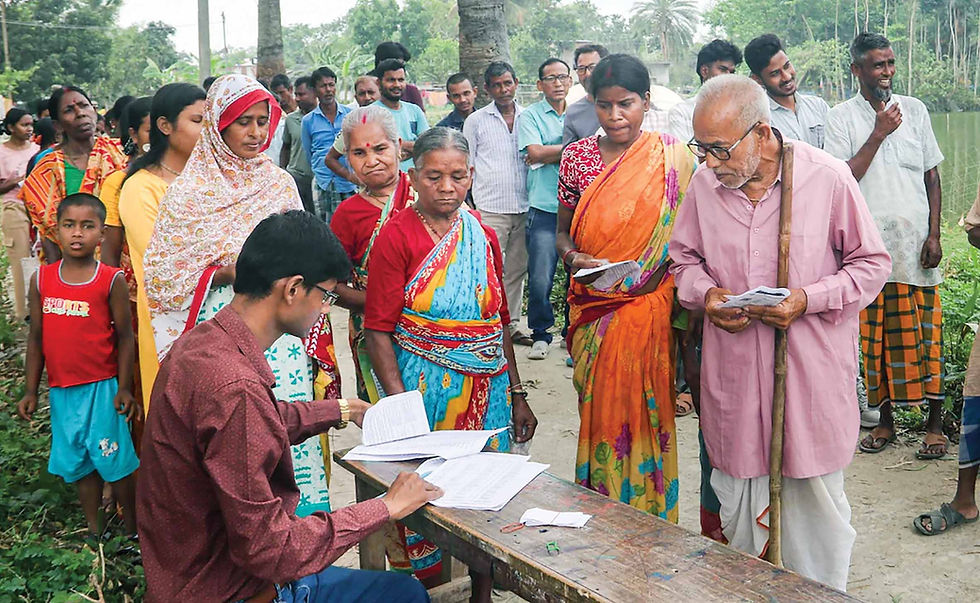
For a state that once stood as one of India’s foremost economic engines, West Bengal, for the better part since Independence, has been caught in a prolonged cycle of stagnation, fiscal stress and outward migration. The promise of political change has come and gone across regimes, from the Communist Party of India (Marxist) to the All India Trinamool Congress, but the underlying economic story has remained disconcertingly consistent. With the state in the midst of a key Assembly election, the central question remains whether Bengal will ever pivot toward growth or continue to drift economically?
The numbers tell a stark story. In 1960-61, West Bengal accounted for 10.5 percent of India's GDP; today, that share has collapsed to roughly 5.5–5.6 percent. Once the third richest state in the country, Bengal now ranks 24th.
The erosion is equally visible in individual prosperity. Per capita income, which was 127.5 percent of the national average in the 1960s, has declined to 83.7 percent. From being among India’s most prosperous regions, Bengal now trails many states that were once considered economically weaker.
Prolonged Stagnation
Partition shocks, the freight equalisation policy, land fragmentation and decades of labour militancy gradually eroded Bengal's industrial base. The roots of West Bengal’s economic stagnation can be traced to the late 1960s and beyond. During the CPM era, industrial relations deteriorated sharply. Trade union militancy surged, with strikes rising from 179 in 1965 to 678 by 1970, while lockouts increased from 49 to 128. The institutionalisation of ‘gherao,’ where factory management was physically confined, created an atmosphere of fear and unpredictability.
By 1977, there were 206 strikes and 191 lockouts, reflecting a deeply unstable industrial climate. Even as strikes declined to 21 by 1991, lockouts surged to 192 , resulting in capital flight and industrial shutdowns. Despite employing only 7 percent of India’s industrial workforce, Bengal accounted for over 40 percent of man-days lost due to lockouts in the early 1990s.
When Mamata Banerjee came to power in 2011 under the rallying cry of ‘Ma, Maati, Manush’ (Mother, Earth, People), expectations were high that Bengal would reclaim its economic dynamism. Instead, the past decade and a half has a continuity of the stagnation that was the hallmark of past governments.
Shrinking Economy
The state’s GDP share has slipped further, from 6.7 percent in 2011 to about 5.5 percent today. Real economic growth between 2011–12 and 2019–20 averaged just 4.2 percent, significantly below the national pace. For FY2024–25, GSDP growth stood at 9.9 percent, the lowest among comparable large states.
Public finances paint an equally troubling picture. State debt has ballooned from Rs. 1.92 lakh crore in 2011 to nearly Rs. 7.7 lakh crore by 2025–26, a fourfold increase. Per capita debt now stands at Rs. 70,653, raising concerns about a mounting burden on future generations. The fiscal deficit has reached 4 percent of GSDP, repeatedly breaching FRBM limits, while interest payments consume between 20 percent and 28 percent of revenue receipts, severely constraining developmental spending. The current fiscal architecture reveals a clear policy bias. The FY2026–27 budget of Rs. 4.06 lakh crore allocates nearly 46 percent (around Rs. 1.8 lakh crore) to welfare and social services. While welfare is essential in addressing immediate socio-economic vulnerabilities, its expansion without parallel long-term investment in productive sectors has created an imbalance.
Spending on minority affairs and madrasa education has increased by over 1,000 percent, making it one of the fastest-growing segments of public expenditure. In contrast, allocations for industry (Rs. 1,484 crore), MSMEs (Rs. 1,250 crore) and IT (Rs. 217 crore) remain modest. Infrastructure spending has fallen to around 3 percent of the budget, far below national benchmarks. Capital expenditure remains limited to 10–12 percent of total spending, and between 2015 and 2021, nearly 33 percent of capital outlays went unspent.
Flight of Capital
Nothing illustrates Bengal’s economic challenges more starkly than the steady exodus of industry. Between April 2011 and September 2025, 6,688 companies shifted their registered offices out of the state, including 110 listed firms. Notable exits include Netweb Technologies, Gallant Ispat, Eureka Forbes, JK Tyre and Greenpanel Industries.
The shadow of Singur still looms large. When Tata Motors was compelled to relocate its Nano project to Sanand in Gujarat in 2008, it sent a powerful signal to investors about policy unpredictability. Combined with the entrenched ‘club-syndicate’ culture and regulatory friction, the business climate remains fraught with implicit costs.
While over 1.3 lakh new firms have reportedly been registered, most are micro or single-person enterprises, unable to compensate for the loss of large-scale investment, employment generation and industrial ecosystems. The state’s credit-deposit ratio of 46–52 percent further indicates that local savings are increasingly financing investments elsewhere.
Migration has become the most visible symptom of Bengal’s economic malaise. Over 22.4 lakh workers from West Bengal have migrated interstate in search of employment. From Kerala to Karnataka to Maharashtra, Bengali workers form a significant part of the informal labour force, often in construction, services and low-wage sectors.
This migration is not driven by aspiration alone; it is a compulsion born of necessity. Plantation workers, rural labourers and even educated youth are leaving their homes to take up low-wage, insecure jobs elsewhere, often without contracts or social protection because opportunities at home remain scarce. The state’s unemployment allowance schemes offer temporary relief but do little to address the structural deficit of jobs.
Infrastructure deficits and investment bottlenecks further compound the crisis. Weak infrastructure, regulatory friction and entrenched rent-seeking networks impose hidden costs on investors. The persistent underutilisation of capital outlays and low infrastructure spending restrict the creation of productive assets.
A recent report by FinSkepTics, authored by Prof. Vidhu Shekhar and Dr. Milan Kumar describes this as a “low-growth, high-debt equilibrium” driven by structural weaknesses, policy choices and political priorities that have remained largely unchanged across regimes.
Decades of policy choices have prioritised short-term political gains over long-term economic competitiveness. Industrial revival, infrastructure development and regulatory reform have remained secondary to populist imperatives.
Regardless of the poll outcome, the state is in urgent need of a reset that would require a shift from welfare-led to production-led growth, revitalisation of industrial policy and investor confidence among other things.
Above all, it would require reclaiming the spirit of ‘Ma, Maati, Manush’ not as a political slogan but as an economic framework where the state becomes a nurturing ground for enterprise rather than an exporter of labour.
From Aroma to Agony
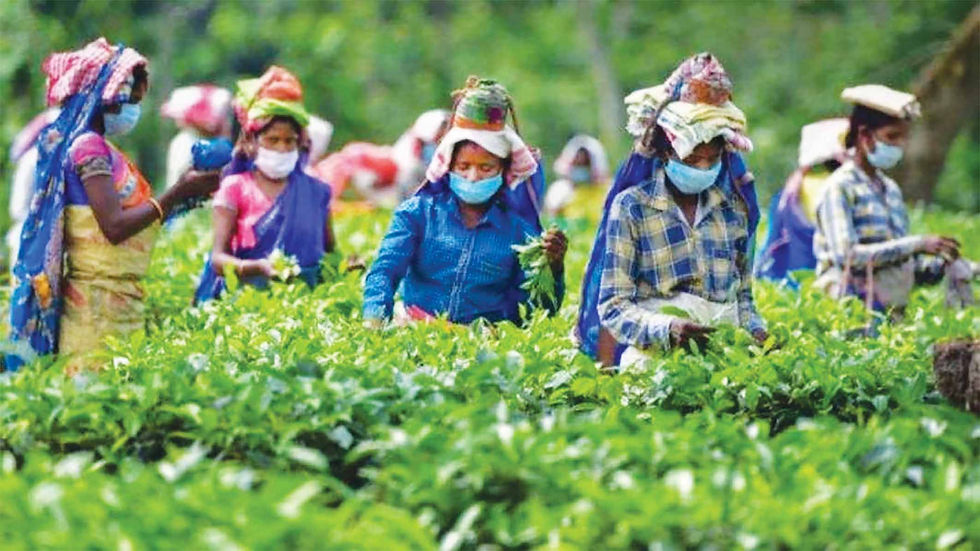
Once a byword for quality and global prestige, West Bengal’s tea industry now tells a harsher story of economic strain and quiet human distress. This is not a sudden collapse, but the outcome of structural weaknesses that have festered for decades, where the sheen of development has come at the cost of pushing workers' lives into the shadows.
Spread across nearly 139,000 hectares with over 400 tea gardens, the sector contributes roughly 25-26 percent of India's total tea production. The districts of Darjeeling, Dooars, and the Terai region in North Bengal form the backbone of this industry, while small tea growers account for a significant 32.5 percent share of output. Around 350,000 workers are directly employed in tea estates, and more than 2.5 million people, including their families, depend on this ecosystem for survival.
Yet, the foundations of this vast structure are steadily crumbling. Tea production in Darjeeling has plummeted from over 14 million kilograms in the 1990s to just 5.19 million kilograms in 2025. The crisis deepens when one considers that the average auction price stands at 420 per kilogram, while production costs have surged to nearly 650 per kilogram, rendering large parts of the industry economically unviable.
According to reports, nearly 80 percent of tea gardens in North Bengal have either shut down or ceased operations. The impact on workers’ livelihoods has been devastating. Displaced labourers are migrating to other states, where they are compelled to work in the informal construction sector without stable contracts or any form of social security.
This is not merely an economic downturn, but it is a grave humanitarian crisis. The collapse of plantation-based livelihoods has heightened social vulnerability and increased the risk of crimes such as human trafficking. Reports suggest that in severely affected areas, 8 to 10 out of every 100 children are going missing; If this statistic is true, it serves as a warning for any sensitive society.
It is evident that the crisis in the tea sector is not just about markets or production; but it is a failure of policy and social protection. If West Bengal is to move toward genuine development, it must place this human crisis at the center of its policy response. Immediate financial support, assured minimum pricing, and meaningful labour reforms are imperative to revive this once core industry. Otherwise, the famed aroma of Darjeeling may soon fade into history.
When Scandal Becomes System

Corruption in West Bengal is quotidian today. Its adverse impact on the state’s economy and industrial growth is jarringly evident as investors and industrialists are reluctant to commit capital investment in an environment where policy transparency is overshadowed by uncertainty and irregularities.
A series of major scandals that surfaced during the Mamata Banerjee-led TMC government’s tenure have aggravated the situation. The 2016 teacher recruitment scam stands out as an infamous example, where meritorious candidates were allegedly sidelined in favour of those with lower scores. The controversy surrounding the elevation of Minister Paresh Adhikari’s daughter, Ankita, to the position of a ‘topper’ rocked the state. Former minister Partha Chatterjee and his associate Arpita Mukherjee are currently in jail in connection with this case.
The 2013 Saradha chit fund scam, widely described as Bengal’s largest financial fraud, duped nearly one million people, with an estimated misappropriation of around Rs. 40,000 crore had rattled the nation. Despite the passage of several years, investigations by the CBI and the ED remain incomplete. The Rose Valley scam (2013) forms another link in this chain, involving a fraud of Rs. 464 crore, with the accused Gautam Kundu imprisoned since 2015.
The coal smuggling case of 2020 seriously undermined the state’s administrative credibility. This illegal mining scandal, pegged at a staggering Rs. 1,352 crore, has drawn scrutiny up to Member of Parliament Abhishek Banerjee. Meanwhile, the 2016 Narada sting operation, which allegedly showed ministers and legislators accepting bribes, continues to symbolize the persistence of incomplete investigations.
The crisis extends beyond isolated scams. Ministers and legislators have come under the scanner of investigative agencies in cases involving cattle smuggling, coal smuggling, and the SSC scam. The arrest of Birbhum leader Anubrata Mondal and revelations concerning 49 properties linked to him underscore the depth of the problem. The summoning of eight IPS officers for questioning further indicates that the administrative machinery itself has not remained untouched.
Ongoing investigations involving figures such as Abhishek Banerjee, Partha Chatterjee, Manik Bhattacharya, and Vinay Mishra suggest that the issue is no longer merely individual misconduct, but a systemic crisis.
In such a climate, growth becomes incidental. Without a decisive political break from the past, Bengal will continue to lose not just investment, but trust as well.


Comments