top of page

By:

Rahul Kulkarni

30 March 2025 at 3:32:54 pm

The Boundary Collapse

When kindness becomes micromanagement It started with a simple leave request.   “Hey, can I take Friday off? Need a personal day,” Meera messaged Rohit. Rohit replied instantly:   “Of course. All good. Just stay reachable if anything urgent comes up.”   He meant it as reassurance. But the team didn’t hear reassurance. They heard a rule.   By noon, two things had shifted inside The Workshop:   Meera felt guilty for even asking. Everyone else quietly updated their mental handbook: Leave is...

The Boundary Collapse

When kindness becomes micromanagement It started with a simple leave request.   “Hey, can I take Friday off? Need a personal day,” Meera messaged Rohit. Rohit replied instantly:   “Of course. All good. Just stay reachable if anything urgent comes up.”   He meant it as reassurance. But the team didn’t hear reassurance. They heard a rule.   By noon, two things had shifted inside The Workshop:   Meera felt guilty for even asking. Everyone else quietly updated their mental handbook: Leave is allowed… but not really. This is boundary collapse… when a leader’s good intentions unintentionally blur the limits that protect autonomy and rest. When care quietly turns into control Founders rarely intend to micromanage.   What looks like control from the outside often starts as care from the inside. “Let me help before something breaks.” “Let me stay involved so we don’t lose time.” “Loop me in… I don’t want you stressed.” Supportive tone.   Good intentions.   But one invisible truth defines workplace psychology: When power says “optional,” it never feels optional.
So when a client requested a revision, Rohit gently pinged:   “If you’re free, could you take a look?” Of course she logged in.   Of course she handled it.   And by Monday, the cultural shift was complete: Leave = location change, not a boundary.   A founder’s instinct had quietly become a system. Pattern 1: The Generous Micromanager Modern micromanagement rarely looks aggressive. It looks thoughtful :   “Let me refine this so you’re not stuck.” “I’ll review it quickly.”   “Share drafts so we stay aligned.”   Leaders believe they’re being helpful. Teams hear:   “You don’t fully trust me.” “I should check with you before finishing anything.”   “My decisions aren’t final.” Gentle micromanagement shrinks ownership faster than harsh micromanagement ever did because people can’t challenge kindness. Pattern 2: Cultural conditioning around availability In many Indian workplaces, “time off” has an unspoken footnote: Be reachable. Just in case. No one says it directly.   No one pushes back openly.   The expectation survives through habit: Leave… but monitor messages. Rest… but don’t disconnect. Recover… but stay alert. Contrast this with a global team we worked with: A designer wrote,   “I’ll be off Friday, but available if needed.” Her manager replied:   “If you’re working on your off-day, we mismanaged the workload… not the boundary.”   One conversation.   Two cultural philosophies.   Two completely different emotional outcomes.   Pattern 3: The override reflex Every founder has a version of this reflex.   Whenever Rohit sensed risk, real or imagined, he stepped in: Rewriting copy.   Adjusting a design.   Rescoping a task.   Reframing an email. Always fast.   Always polite.   Always “just helping.” But each override delivered one message:   “Your autonomy is conditional.” You own decisions…   until the founder feels uneasy.   You take initiative…   until instinct replaces delegation.   No confrontation.   No drama.   Just quiet erosion of confidence.   The family-business amplification Boundary collapse becomes extreme in family-managed companies.   We worked with one firm where four family members… founder, spouse, father, cousin… all had informal authority. Everyone cared.   Everyone meant well.   But for employees, decision-making became a maze: Strategy approved by the founder.   Aesthetics by the spouse.   Finance by the father. Tone by the cousin.   They didn’t need leadership.   They needed clarity.   Good intentions without boundaries create internal anarchy. The global contrast A European product team offered a striking counterexample.   There, the founder rarely intervened mid-stream… not because of distance, but because of design:   “If you own the decision, you own the consequences.” Decision rights were clear.   Escalation paths were explicit.   Authority didn’t shift with mood or urgency. No late-night edits.   No surprise rewrites.   No “quick checks.”   No emotional overrides. As one designer put it:   “If my boss wants to intervene, he has to call a decision review. That friction protects my autonomy.” The result:   Faster execution, higher ownership and zero emotional whiplash. Boundaries weren’t personal.   They were structural .   That difference changes everything. Why boundary collapse is so costly Its damage is not dramatic.   It’s cumulative.   People stop resting → you get presence, not energy.   People stop taking initiative → decisions freeze.   People stop trusting empowerment → autonomy becomes theatre.   People start anticipating the boss → performance becomes emotional labour.   People burn out silently → not from work, but from vigilance.   Boundary collapse doesn’t create chaos.   It creates hyper-alertness, the heaviest tax on any team. The real paradox Leaders think they’re being supportive. Teams experience supervision.   Leaders assume boundaries are obvious. Teams see boundaries as fluid. Leaders think autonomy is granted. Teams act as though autonomy can be revoked at any moment. This is the Boundary Collapse → a misunderstanding born not from intent, but from the invisible weight of power. Micromanagement today rarely looks like anger.   More often,   it looks like kindness without limits. (Rahul Kulkarni is Co-founder at PPS Consulting. He patterns the human mechanics of scaling where workplace behavior quietly shapes business outcomes. Views personal.)

The Konkan Strongmen

Updated: Oct 21, 2024

The Konkan Strongmen

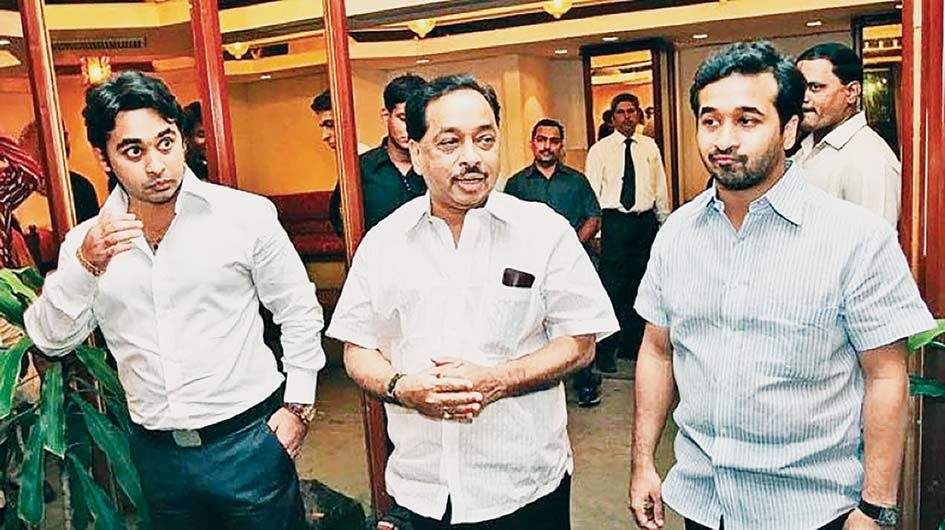
The Konkan region of coastal Maharashtra has resonated with one name for the past three decades now—Narayan Rane. Admiration, fear, awe, loyalty, anger—he’s evoked varied emotions in the people, depending which side you are on. He’s considered Sindhudurg as his fiefdom, winning six elections to the state legislature from Kudal since 1991. A resident of Chembur, Rane shot to prominence when his efforts at spreading the Shiv Sena’s presence was noticed by Bal Thackeray. He then contested elections to the municipal corporation and He won the elections to the state legislature in1991 from his hometown in Sindhudurg and was handpicked by Thackeray to replace Manohar Joshi as the chief minister of Maharashtra in 1999 although his term lasted for a mere nine months. Rane is as known for his administrative skills as he is derided for his strongarm politics.


Immensely loyal to the senior Thackeray who he considers his political guru, Rane quit the Shiv Sena in 2005 after a rift with Uddhav. Relations between them had started souring for a while before his exit. Since then, they’ve been bitter opponents, never missing an opportunity to trade barbs. Rane has changed three parties in his political career, each of different ideologies. After moving away from the Sena, he is believed to have weighed his options and joined the Congress on an assurance that he would be considered for the chief minister’s job. However, the post has, for long, evaded him.


In a surprise turn of events, Rane lost the 2014 elections from Kudal-Malvan, a constituency he had held for six terms, to the Sena’s Vaibhav Naik. He subsequently lost the by-elections to the Bandra East constituency the same year. But not one to be defeated, Rane worked his way into the BJP. His sons followed him across the three parties. In 2009, his older son Nilesh won the Parliamentary elections from Ratnagiri-Sindhudurg but couldn’t win an election after that. Younger  son Nitesh has been a member of the legislative assembly since 2014 from Kankavali and is aiming for a third term. The trio’s ability to sway votes towards the BJP in the Konkan area and their bitter attacks on the Thackerays have won them the favour of the state BJP. Over the years, the Rane politicians have won unflinching support of their loyalists and also the anger of the locals when Rane supported a controversial nuclear power project.


The 2024 Lok Sabha elections saw a change in Rane’s declining fortunes; in a closely fought election from the Ratnagiri-Sindhudurg seat, Rane won, defeating his opponent from the Uddhav Thackeray’s faction of the Shiv Sena. In the upcoming elections, Rane’s two sons are vying for seats from neighbouring constituencies.

Comments


bottom of page