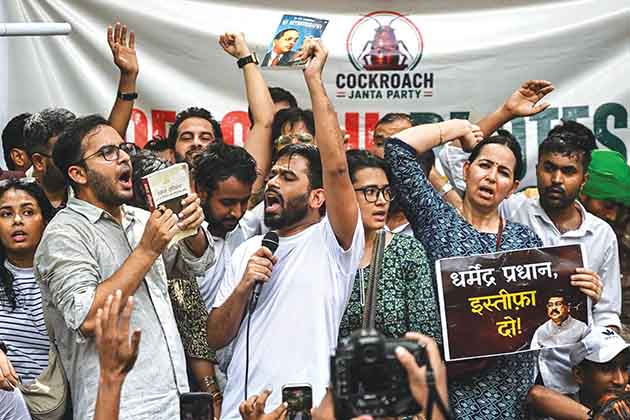
We often complain that today's youth are difficult to understand. Perhaps the real problem, however, is not Generation Z-it is our inability to communicate with them. Instead of learning how they think, speak, and engage with the world, we often expect them to fit into frameworks created by previous generations. Generation Z is among the most informed, courageous, and globally connected generations in history. Born into the age of the internet and social media, they have grown up with instant access to information and diverse perspectives. They are aware not only of events in India but also of developments across the world-from Iran and the United States to Nigeria, Europe, and beyond. This global exposure has shaped a generation that is confident, informed, and willing to express its opinions. Yet they are frequently judged by outdated standards. Rather than trying to understand their aspirations, their language, and their methods of communication, many continue to measure them by the expectations of an earlier era. This is where the disconnect begins. Generation Z has developed a new language of civic and political expression-one that traditional institutions have often struggled to understand. To engage meaningfully with this generation, we must first learn this new language instead of dismissing it. Recent events have demonstrated how a seemingly simple demand can evolve into a broader movement centred on justice, accountability, freedom, and democratic values. When young people feel unheard or misunderstood, their concerns naturally expand into deeper questions about governance and the systems that shape their lives. This is no longer a phenomenon confined to one city or one state. Across Maharashtra and throughout India, young people are actively participating in conversations about democracy, public policy, and social change. Many who once remained indifferent to politics now believe that governance directly affects their education, employment, rights, and future. One of the greatest mistakes society can make is to underestimate this generation. They are digitally connected, socially aware, and capable of mobilising support within hours. Their movements are often driven not by political parties but by shared experiences, collective concerns, and a strong sense of justice. Unlike previous generations, Generation Z communicates through humour, satire, memes, and social media. These are not merely forms of entertainment; they have become powerful tools for political expression, civic engagement, and questioning authority. History has repeatedly shown that confident leadership welcomes criticism, while insecurity often responds with fear. Perhaps the most striking characteristic of this generation is its refusal to be governed by fear. Earlier generations often remained silent because they feared losing their jobs, facing social consequences, or inviting trouble. Increasingly, Generation Z believes that silence is no longer an acceptable response to injustice. This generation has found its voice, forged its identity, and developed the confidence to participate in public life. It understands that individual well-being cannot be separated from the well-being of society. If injustice is ignored today because it affects someone else, it may eventually affect everyone. India has witnessed numerous social movements throughout its history. What distinguishes many contemporary youth movements is that they are largely youth-led, digitally organised, and focused not only on immediate grievances but also on broader structural reforms rooted in fairness, transparency, accountability, and equal opportunity. Digital platforms have played a transformative role in this process. For Generation Z, social media is far more than a communication tool-it is a platform for building communities, organising campaigns, sharing information, and amplifying voices. Young people no longer feel isolated because they know that thousands of others stand with them, regardless of geographical distance. Equally inspiring is the compassion demonstrated by many young participants in public movements. Reports of volunteers organising food, supporting fellow participants, and even extending assistance to police personnel highlight that these movements are driven not only by resistance but also by empathy, solidarity, and a sense of shared responsibility. Their methods may be modern, but their values remain timeless. The future of India increasingly rests in the hands of a generation that is globally connected, socially conscious, technologically empowered, and unafraid to question injustice. Whether one agrees with every demand they raise or not, one reality is impossible to ignore: Generation Z has found its voice. Instead of attempting to silence, stereotype, or dismiss them, society must choose to listen, engage, and learn. Every generation reshapes the future in its own way. This generation has chosen courage over fear, participation over silence, and hope over indifference. (The writer is the Principal of Podar International School, Ausa, Latur. Views personal.)




Comments