
What happens now that India has suspended the Indus Water Treaty with Pakistan?
- Correspondent
- Apr 24, 2025
- 3 min read

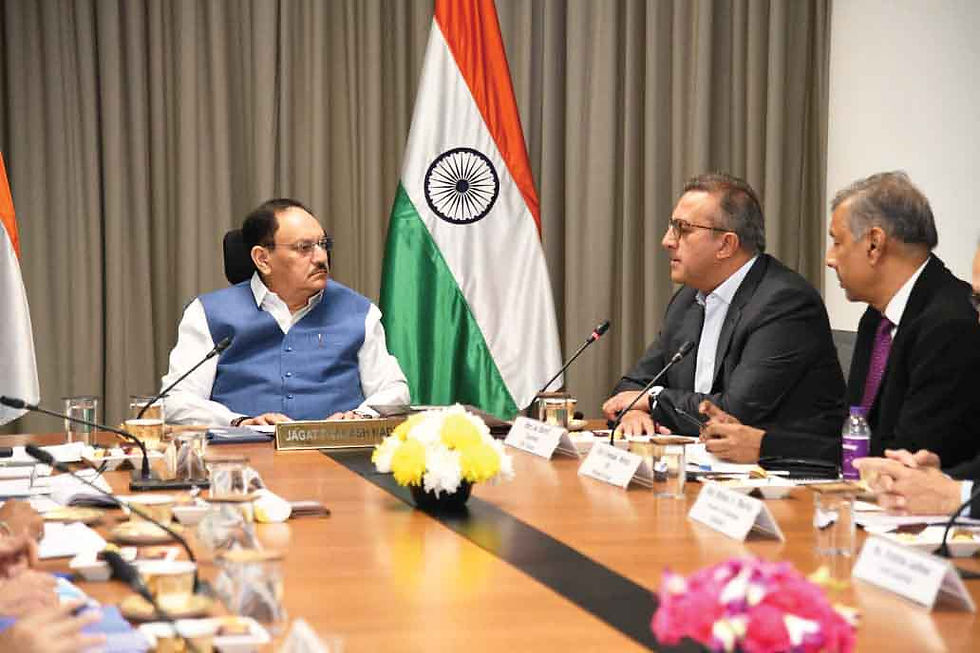
In a major diplomatic and strategic shift, India on Wednesday suspended the Indus Waters Treaty (IWT) with Pakistan. This move came just a day after a deadly terrorist attack in Jammu and Kashmir’s Pahalgam, where 26 people, including tourists, were killed. The decision was taken during a high-level Cabinet Committee on Security (CCS) meeting, chaired by Prime Minister Narendra Modi and attended by Union Home Minister Amit Shah.
The suspension is one of five key punitive steps taken by India in response to the terror attack, signaling a significant escalation in its stance towards Pakistan. But what does this mean for both countries, and what are the potential consequences?
The Indus Waters Treaty: A Brief Overview
Signed in 1960 and brokered by the World Bank, the Indus Waters Treaty governs the sharing of the Indus River and its tributaries between India and Pakistan. The river system consists of six major rivers — the Ravi, Beas, and Sutlej (Eastern Rivers) and the Indus, Jhelum, and Chenab (Western Rivers).
India, as the upper riparian country, controls the flow of these rivers before they enter Pakistan.
The treaty granted India control over the Eastern Rivers, while Pakistan was allotted the waters of the Western Rivers. Despite multiple wars and diplomatic crises, the IWT had remained intact for over six decades, considered a rare example of successful conflict resolution between the two neighbors.
Why Is the Treaty Being Suspended?
India’s decision to suspend the treaty follows rising tensions over Pakistan-based terrorism. The latest attack in Pahalgam prompted calls for stronger retaliatory action. According to Pradeep Kumar Saxena, a former Indus Water Commissioner for India, this move could be a precursor to a full abrogation of the treaty.
While the Indus Waters Treaty itself does not have a provision for unilateral termination, India could rely on Article 62 of the Vienna Convention on the Law of Treaties. This article allows treaties to be ended or modified due to “fundamental changes of circumstances,” which India may argue includes ongoing acts of terrorism originating from Pakistan.
What Can India Do Next?
India had already issued a notice to Pakistan in 2023 seeking to review and amend the treaty. With the suspension in place, India now has more room to maneuver. Several projects, particularly in Jammu and Kashmir, had faced constraints under the treaty’s terms. These include limitations on dam designs, storage capacities, and reservoir flushing practices.
India can now potentially bypass those restrictions. For example, under the treaty, reservoir flushing — a technique used to remove sediment buildup — had tight rules, especially regarding timing. These restrictions are no longer binding, giving India flexibility to manage its dams and reservoirs as it sees fit.
Importantly, this could affect Pakistan’s irrigation patterns. The sowing season in Pakistan’s Punjab region heavily relies on a steady flow of water from the Western Rivers. Any changes in timing or volume of water releases could harm agriculture.
India may also stop sharing crucial flood data with Pakistan — a key provision of the treaty. This information helps Pakistan prepare for monsoon-related flooding. Without it, the risk of natural disasters could increase.
What About Existing and Future Projects?
In the past, Pakistan raised objections to nearly every Indian hydroelectric project on the Western Rivers, including Kishanganga, Ratle, and Baglihar.
But if the treaty is no longer honored, India could go ahead with these projects without Pakistani input. This would be a major change in the way infrastructure is developed in the region.
India could also start new projects in Jammu, Kashmir, and Ladakh that were earlier stalled or delayed due to treaty constraints. After the Pulwama attack in 2019, India had already approved eight new hydropower projects — now these could move forward more aggressively.
A New Era of Water Diplomacy?
The suspension of the treaty could halt the regular visits and inspections between Indian and Pakistani officials that were mandatory under the agreement. It also represents a serious challenge to peace in the region. The boundary between the two nations runs right through the Indus Basin — any disruption in water sharing could have long-term consequences for agriculture, drinking water, and even diplomacy.
As things stand, this move could mark the beginning of a new and uncertain phase in India-Pakistan relations — one where water, already a scarce resource, becomes a new battleground in an already fragile equation.


Comments