

Why Travel Is a Woman’s Expression of Freedom

What women need is not permission to dream but encouragement, understanding, safety and supportive surroundings.

Freedom means different things to each of us. For some, it is the freedom to speak, think and make our own choices. For others, it is financial independence, pursuing a profession or dream, or simply living life on one’s own terms. But for a traveller, freedom has a particularly beautiful meaning: stepping beyond the familiar, discovering new places, meeting different people and understanding the world with an open heart.
I believe freedom is, first and foremost, psychological. When we feel free in our minds, we gain the confidence to explore. True freedom means making our own choices while remaining aware, disciplined and respectful towards ourselves and others.
For women, this feeling of freedom is particularly meaningful.
Indian women have carried strength within them for centuries. From ancient scholars Gargi and Maitreyi to courageous leaders such as Rani Durgavati and Ahilyabai Holkar, history is filled with women who followed their own thoughts and created their own identities. They lived with purpose, courage and dignity.
Even today, women manage homes, careers, children, relationships and countless responsibilities while carrying their own dreams quietly in their hearts. What women need is not permission to dream, but encouragement, understanding, safety and supportive surroundings.
Travel becomes a wonderful expression of that freedom.
When a woman travels, especially alone, she learns to make decisions, manage her time, navigate unfamiliar places, communicate with strangers and handle unexpected situations. Every successful journey builds confidence. The question, “Can I travel alone?” gradually becomes, “Yes, I can.”
The changing travel patterns of Indian women reflect this growing confidence. According to India’s Ministry of Tourism, women accounted for 43.14% of foreign tourist arrivals to India in 2024, compared with 40.60% in 2011. Surveys and travel-platform data also show a significant rise in solo travel among Indian women. Behind every statistic is a woman who chose to step outside her comfort zone.
Technology has made travel easier. We can research destinations, book flights and hotels, use digital maps and payments, communicate through translation apps and remain connected with our families. Yet accessibility alone is not freedom. The right attitude matters equally.
A truly free traveller is also responsible. She researches her destination, understands local customs, chooses reliable accommodation and transport, keeps emergency contacts and remains alert. Being cautious does not reduce freedom; awareness protects it.
Freedom also does not mean forgetting the people we love. We have responsibilities towards our parents, children, partners, families and society. But caring for ourselves and our dreams is equally important. Our wishes are not selfish simply because they belong to us.
The desire to see a new country, walk through an unfamiliar village, watch a mountain sunrise or experience another culture is a sign of being alive. We should never stop having dreams.
For me, the Himalayas and the Alps beautifully express this feeling.
Whenever I stand before those enormous mountains, I feel incredibly small. They remind me of nature’s vastness and the tiny space I occupy in this magnificent world, while filling me with gratitude for the ability to experience such beauty.
The Himalayas are among my favourite places in the world. Kashmir, Ladakh, Sikkim, Himachal Pradesh and Uttarakhand offer snow-covered peaks, peaceful valleys, monasteries, forests, rivers, lakes and welcoming mountain communities. The Alps are equally magical, from Switzerland’s Zermatt and Jungfrau region to Austria’s Tyrol, Italy’s Dolomites, France’s Chamonix and Germany’s Bavarian Alps, where mountains, villages, culture and nature come together beautifully.
These are not merely destinations on a map. They are experiences that remain in our hearts.
As India moves towards its 80th year of independence, we should celebrate freedom not only by remembering our nation’s remarkable journey but also by understanding what it means in our own lives.
For a woman, freedom may mean taking her first solo trip, travelling with friends, joining a group tour, taking her children on an international holiday or finally choosing a destination she has dreamed about for years.
There is no age for exploration.
The world is waiting—with its mountains, oceans, cultures, cities, villages and countless stories. We should travel as much as we can, responsibly, intelligently and with an open heart.
Perhaps the greatest boundary we need to cross is not a national border or mountain pass but the invisible boundary created by fear and self-doubt.
Let us replace “Can I?” with “Why not?”
Because ultimately, freedom is having the courage to know ourselves, care for the people we love, respect the world around us and still follow our dreams.
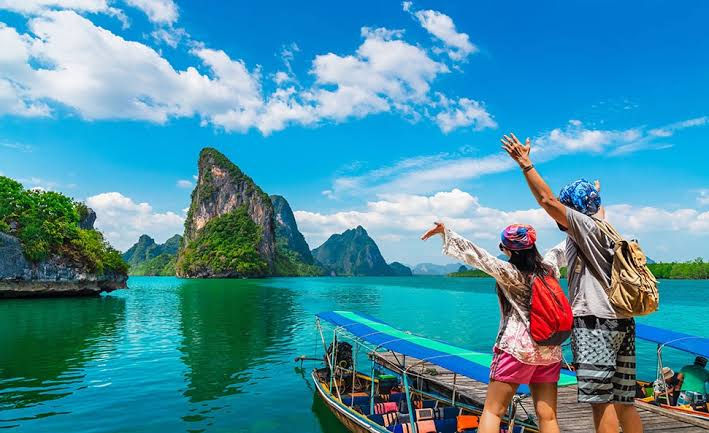
And sometimes, the most beautiful expression of that freedom is simply packing a bag, stepping out of the door and saying:
“The world is waiting for me. Let me go and discover it.”
(The writer is a tourism professional and runs a company, Global Voyages. She could be contacted at goglobalvoyages@gmail.com. Views personal.)

Comments