The Farmer Is the Frontline
Across the world’s most vulnerable river basins, a deeper crisis is unfolding. Climate change and the strategic manipulation of river flows are turning agriculture into a theatre of geopolitical competition, threatening not merely harvests but the livelihoods and health of millions of farmers.
From the Nile and Tigris-Euphrates to the Mekong and the Horn of Africa, upstream control over water resources is acquiring strategic significance. Dams, diversions and reservoir management give upstream states considerable leverage over downstream economies. The consequences include shrinking irrigation supplies, declining soil fertility, salinisation, depleted fisheries and the erosion of traditional livelihoods. But one dimension is often missing from this debate: the farmer.
Human Equation
Water is indispensable to agriculture, but so is the biological capacity of those who work the land. The Farmers’ Health Capital (FHC) framework offers a useful way of understanding this relationship. It treats farmers’ health not merely as a welfare concern but as an essential productive asset.
That asset is increasingly under pressure. Prolonged exposure to extreme heat, contaminated water, malnutrition and environmental degradation diminishes agricultural workers’ physical capacity. This amounts to a depreciation of human capital, one that cannot always be reversed through investment or replacement.
As irrigation becomes unreliable and soils deteriorate, farmers face declining incomes, longer working hours and mounting physical stress. Ecological distress thus becomes an economic and human crisis, accelerating migration, social instability and conflict.
Food security, therefore, cannot be measured by crop output alone. The health of the agricultural workforce must also enter the equation.
The Nile basin illustrates the stakes. Egypt depends on the river for more than 90 percent of its freshwater requirements, making the filling and operation of Ethiopia’s Grand Ethiopian Renaissance Dam (GERD) a matter of strategic concern. Sudan, too, faces downstream vulnerabilities. The dispute concerns competing claims of development, sovereignty and the security of millions dependent on Nile-fed agriculture.
In Central Asia, the Syr Darya and Amu Darya basins expose a structural contradiction. Upstream countries favour winter hydropower generation, while downstream agricultural economies need water during the summer growing season. This seasonal mismatch affects cotton and wheat cultivation in Uzbekistan, Turkmenistan and Kazakhstan, with consequences for rural employment and export earnings.
The Tigris-Euphrates basin faces similar pressures. Turkey’s dam-building under the Southeastern Anatolia Project (GAP) has altered the regional water equation, intensifying concerns in downstream Syria and Iraq. Reduced flows, soil salinisation and deteriorating irrigation conditions threaten traditional farming communities and the region’s historic date-palm economy.
Further east, the Lower Mekong faces the cumulative effects of upstream dams, climate variability and changing sediment flows. China’s Lancang river dams influence the water regime of a river system on which millions downstream depend. In Vietnam’s Mekong Delta, saltwater intrusion threatens rice cultivation, while altered seasonal flows imperil Cambodia’s Tonle Sap fisheries.
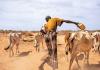
In the Horn of Africa, recurrent droughts across Somalia, Ethiopia and Kenya have devastated pastoral livelihoods, depleted livestock and intensified competition over shrinking grazing lands and water sources.
India’s Opportunity
For India, these developments present an opportunity for meaningful South-South cooperation. Its experience in dryland agriculture, irrigation management, climate-resilient crops and digital agricultural infrastructure could help vulnerable countries strengthen their food systems.
The first priority is water efficiency. Technologies promoted under initiatives such as Per Drop More Crop, including drip irrigation, sprinklers, improved canal management and fertigation, could help water-stressed countries raise productivity with limited supplies.
Second, digital intelligence can improve agricultural preparedness. India’s agricultural digital infrastructure, predictive crop modelling, climate-risk analytics and pest surveillance systems offer possibilities for cooperation with countries in Africa and Central Asia. Better forecasting would help governments and farmers anticipate droughts, pests and production shocks.
Third, India could expand cooperation in climate-resilient agriculture. Salinity-tolerant rice varieties such as CSR36, CR Dhan 405 and Pokkali could help protect vulnerable deltaic regions. Its experience with millets, pulses and dryland crops could also benefit arid agricultural economies.
A fourth avenue is hydro-diplomacy. Platforms such as the Mekong-Ganga Cooperation could evolve into forums for technical dialogue, satellite-based monitoring and water-resource management. ISRO’s earth-observation capabilities could assist in tracking river flows, reservoir levels and agricultural conditions. India’s One Sun, One World, One Grid initiative could complement these efforts by expanding renewable-energy cooperation and reducing dependence on river-based hydropower.
The twenty-first century requires a broader understanding of food security, recognising the farmer as both an economic producer and a repository of human capital. Preserving Farmers’ Health Capital must become an integral consideration in agricultural policy, international development and water diplomacy.
(The writer is a member of Maharashtra Agriculture Price Commission. Views personal.)