top of page

By:

Abhijit Mulye

21 August 2024 at 11:29:11 am

High-stakes chess beneath the surface

BJP Candidates coming out after filing their nomination for the upcoming Legislative Council Polls from Vidhan Bhavan in Mumbai on Thursday. Pic: Bhushan Koyande Mumbai: Typically, when a ruling coalition enjoys a formidable and comfortable majority, elections to the Rajya Sabha and the State Legislative Council are quiet, predictable affairs. They are often viewed as mere formalities, rarely capturing the public imagination or dominating front-page headlines. Historically, these indirect...

High-stakes chess beneath the surface

BJP Candidates coming out after filing their nomination for the upcoming Legislative Council Polls from Vidhan Bhavan in Mumbai on Thursday. Pic: Bhushan Koyande Mumbai: Typically, when a ruling coalition enjoys a formidable and comfortable majority, elections to the Rajya Sabha and the State Legislative Council are quiet, predictable affairs. They are often viewed as mere formalities, rarely capturing the public imagination or dominating front-page headlines. Historically, these indirect elections only become newsworthy under specific conditions: either the ruling coalition is plagued by internal fissures, or the opposition is too fragmented to put up a united front. In Maharashtra, however, the political landscape remains highly volatile. Recently, the Rajya Sabha elections became the center of intense media scrutiny, and over the past week, the Legislative Council polls followed suit. Although all ten candidates—nine from the ruling alliance and one from the opposition Maha Vikas Aghadi (MVA)—are now set to be elected unopposed, the intricate backroom maneuvers that led to this truce kept the state’s political circles buzzing. Interestingly, the reason for this heightened news value can be traced to both a subtle tug-of-war within the ruling combine and a visibly weakened opposition. Shifting Strategy The maneuvering within the opposition ranks has been particularly telling. A major focal point of the election buildup was the anticipated candidacy of Shiv Sena (UBT) Chief Uddhav Thackeray. After generating considerable hype and speculation about a potential return to the legislature, Thackeray ultimately chose to withdraw from the electoral fray. This sudden pullback forced a rapid recalibration within the MVA. Initially, the Congress party had adopted an aggressive posture, declaring its intention to field a candidate if Thackeray decided against contesting. However, following closed-door deliberations with Shiv Sena (UBT) leadership, the Congress quietly backed down. Why the state Congress leadership so readily acquiesced to this sudden change in strategy, sacrificing a potential seat, remains a mystery and a subject of intense debate among political observers. On the other side of the aisle, the ruling Mahayuti coalition maximized this electoral opportunity to consolidate its political base, reward loyalists, and balance complex regional equations. The Nationalist Congress Party (NCP) strategically paved the way for the political rehabilitation of former Congress legislator Zishan Siddique by nominating him to the Legislative Council. This calculated move introduces a prominent new Muslim face for the party, likely intended to fill the leadership vacuum in Mumbai left by veteran leader Nawab Malik. Meanwhile, Chief Minister Eknath Shinde used his nominations to send a definitive message about the premium he places on loyalty. By securing another term for Dr. Neelam Gorhe, Shinde demonstrated that those who stood by his faction would be adequately rewarded. Furthermore, by bringing Vidarbha strongman Bachchu Kadu into the fold, Shinde has attempted to anchor his party’s future and expand its footprint in a region predominantly controlled by his senior alliance partner, the BJP. The Bharatiya Janata Party, playing its characteristic long game, meticulously ensured that its list of six candidates struck the perfect organizational, social, and political balance. Battle for LOP Despite these broader alliance strategies, the most consequential nomination in this electoral cycle is arguably that of Ambadas Danve. Barely six months after completing his tenure in the Upper House and stepping down from the prestigious post of Leader of the Opposition in the Legislative Council, Danve has been nominated once again by the Shiv Sena (UBT). With his return to the house, there is a strong possibility that he will reclaim his former post. This specific development highlights a much deeper crisis within the Congress. Following Danve’s brief retirement, the Congress had naturally emerged as the largest opposition party in the Upper House. This mathematical advantage theoretically paved the way for their Kolhapur strongman, Satej “Banti” Patil, to lay claim to the Leader of the Opposition’s chair. However, the sudden defection of Congress MLC Pradnya Satav, who switched loyalties to the BJP, severely dented the party’s numbers. Her departure brought the Congress’s strength in the house just below that of the Shiv Sena (UBT). Stripped of its numerical superiority overnight, the Congress was relegated to being a mute spectator, unable to assert its rightful claim. Internal Dissent This series of tactical defeats has triggered palpable frustration within the Congress’s state unit. One senior Congress leader, speaking on the condition of anonymity, expressed deep disappointment with the state leadership’s inability to protect the party’s interests. “Everyone has personal political ambitions, but leaders must learn the ways to collectively move ahead and strategize,” the leader remarked, attributing the party’s current stagnation in Maharashtra to this lack of cohesive vision. In short, these Legislative Council elections have delivered one message loud and clear: even when everything appears calm and stable on the surface, the relentless machinery of politics continues to churn behind the scenes. No political player in Maharashtra can afford to rest assured or sit idle under the illusion that there are no major state elections until 2029.

Battle royale at Prabhadevi-Mahim belt

Amidst cut-throat competition, five seats up for grabs
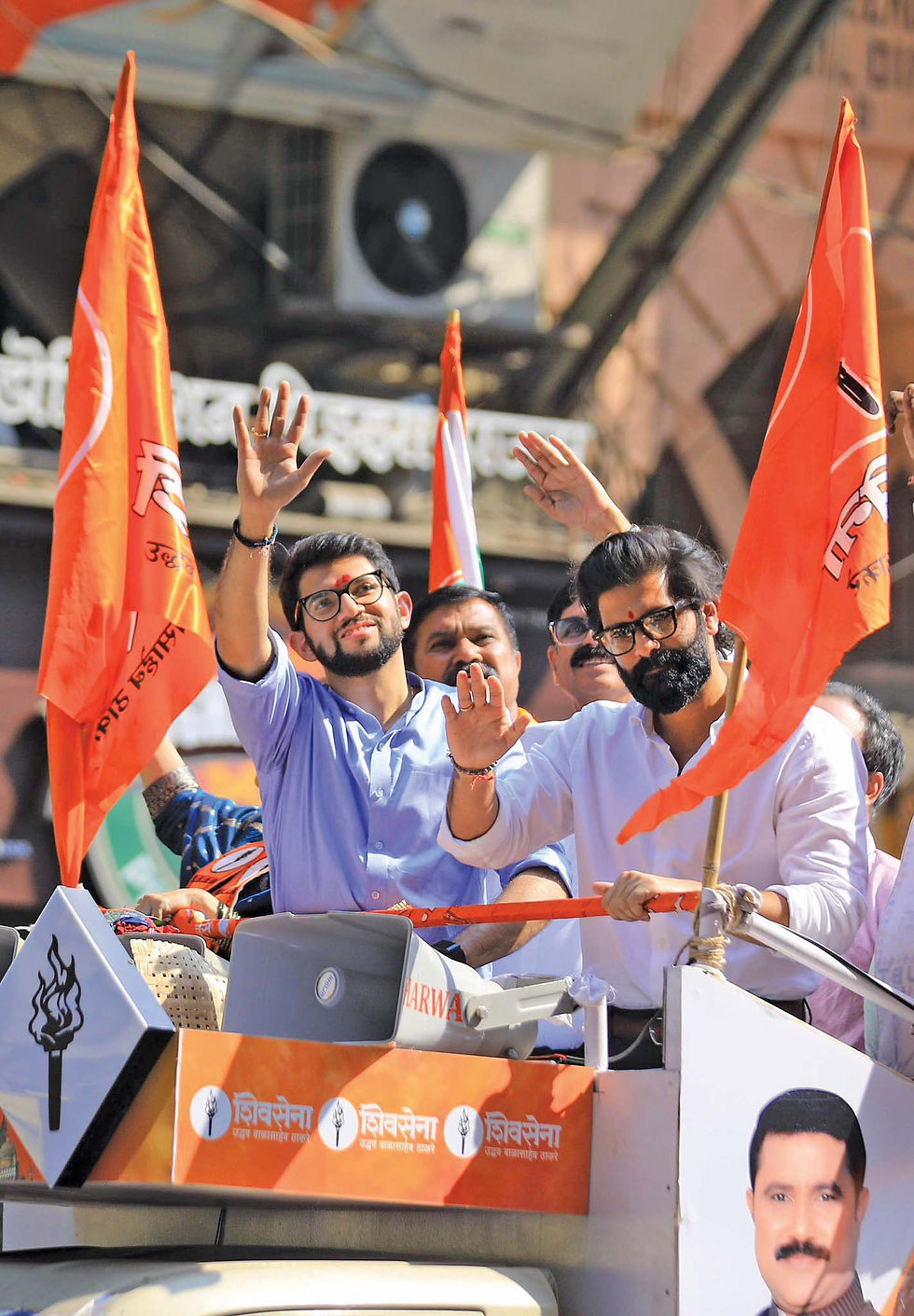
Mumbai: South Central Mumbai’s Prabhadevi-Mahim belt, an epicentre of Mumbai’s politics, promises a cut-throat competition as the two combines – Mahayuti and the Shiv Sena (UBT)-Maharashtra Navnirman Sena (MNS) combine – sweat it out in the upcoming BrihanMumbai Municipal Corporation (BMC) polls.


It is the same ward where Shiv Sena founder Bal Thackeray used to address mammoth rallies at Shivaji Park and also the residence of MNS chief Raj Thackeray.


This belt has five wards and boasts of famous landmarks like the Siddhivinayak temple, Mahim Dargah and Mahim Church, and Chaityabhoomi, along with the Sena Bhavan, the headquarters of Shiv Sena (UBT) combine.


This belt is dominated by the Maharashtrians, and hence the Shiv Sena (UBT)-MNS has been vocal about upholding the Marathi pride.


This narrative is being challenged by Shiv Sena (Shinde) leader Sada Sarvankar, who is at the front. In fact, Sada has fielded both his children Samadhan and Priya, from two of these five wards.


Take the case of Ward number 192, where the MNS has fielded Yeshwant Killedar, who was the first MNS candidate announced by its chief, Raj Thackeray. This announcement created a controversy as former Shiv Sena (UBT) corporator Priti Patankar overnight jumped to the Eknath Shinde camp and secured a ticket. This raised heckles among the existing Shiv Sena (Shinde) loyalists who raised objections. “We worked hard for the party for years, and here Priti has been thrust on us. My name was considered till the last moment, and overnight everything changed,” rued Kunal Wadekar, a Sada Sarvankar loyalist.


‘Dadar Neglected’

Killedar said that Dadar has been neglected for years. “The people in chawls don’t get proper water supply, and traffic is in doldrums,” said Killadar.


Ward number 191 Shiv Sena (UBT) candidate Vishaka Raut, former Mumbai mayor, is locked in a tough fight against Priya Sarvankar, who is fighting on the Shiv Sena (Shinde) ticket. Priya’s brother Samadhan is fighting for his second term from neighbouring ward 194 against Shiv Sena (UBT) candidate Nishikant Shinde. Nishikant is the brother of legislator Sunil Shinde, a popular figure in this belt who vacated his Worli seat to accommodate Sena leader Aaditya Thackeray.


Sada Sarvankar exudes confidence that both his children will be victorious. “Samadhan has served the people with all his dedication so much that he put his life at stake during the Covid-19 epidemic,” said Sada. “Priya has worked very hard for years and has secured this seat on merit. She will win, as people want a fresh face who will redress their grievances, as Vishaka Raut has been ineffective,” he added. He says the Mahayuti will


Ward number 190 is the only ward where the BJP was the winner last term (2017) in this area, and the party has once nominated its candidate, Sheetal Gambhir Desai. Sheetal is being challenged by Shiv Sena (UBT) candidate Vaishali Patankar. Sheetal vouches for the BJP, saying it’s time to replace the Shiv Sena (UBT) from the BMC. “They did nothing in the last 25 years, and people should now give a chance to the BJP,” said Sheetal.


Incidentally, Sheetal is the daughter of Suresh Gambhir, a hardcore Shiv Sena founder Bal Thackeray loyalist, who has been a Mahim legislator for 4 terms and even won the 1985 BMC with the highest margin in Mumbai.


In the neighbouring ward number 182, Shiv Sena (UBT) has given a ticket to former mayor and veteran corporator Milind Vaidya. He is being challenged by BJP candidate Rajan Parkar.


Like the rest of Mumbai, this belt is also plagued by inadequate infrastructure to support the large-scale redevelopment projects. The traffic is in the doldrums, especially due to the closure of the Elphinstone bridge. There are thousands of old buildings and chawls which are in an extremely dilapidated state.


The belt is significant, as top leaders like Manohar Joshi, Diwakar Raote and Suresh Gambhir have dominated local politics for years. In fact, Shiv Sena party’s first Chief Minister, Manohar Joshi, hailed from this belt.
Comments


bottom of page