top of page

By:

Sumit Ranjan Das

21 August 2024 at 4:08:59 pm

EPFO’s Big Wage-Band Reset

Twelve years is a long time for a wage ceiling to remain unchanged. The last revision came in September 2014, when the limit was raised from Rs.6,500 to Rs.15,000. Last week, the Union Cabinet approved another increase, taking the ceiling to Rs.25,000 a month with effect from 17 September 2026. The government’s estimate is that more than 51 lakh additional employees will come within mandatory EPFO coverage as a result of the change. For employers and payroll professionals, however, the...

EPFO’s Big Wage-Band Reset

Twelve years is a long time for a wage ceiling to remain unchanged. The last revision came in September 2014, when the limit was raised from Rs.6,500 to Rs.15,000. Last week, the Union Cabinet approved another increase, taking the ceiling to Rs.25,000 a month with effect from 17 September 2026. The government’s estimate is that more than 51 lakh additional employees will come within mandatory EPFO coverage as a result of the change. For employers and payroll professionals, however, the headline number is only the starting point. The more important questions are who will be covered, which wages will be taken into account and how the revised provisions will be implemented. Wage Ceiling The existing wage ceiling of Rs.15,000 a month is being raised by Rs.10,000, or 66.7 percent, to Rs.25,000. The change takes effect from 17 September 2026 and marks the first revision since September 2014. The government expects more than 51 lakh additional employees to be covered. Estimated expenditure is about Rs.56,696 crore over five years, while annual government outgo is expected to rise to approximately Rs.11,339 crore. The standard contribution remains 12 percent each from the employee and employer, subject to applicable provisions. The Cabinet said the decision will expand access to provident-fund savings, pension protection under the Employees’ Pension Scheme (EPS) and insurance protection under the Employees’ Deposit Linked Insurance Scheme (EDLI), in accordance with the applicable scheme provisions. The wage ceiling is not merely an administrative threshold. It determines the point at which mandatory EPF coverage applies under the existing framework. At present, a fresh employee joining employment at wages above Rs.15,000 a month is not automatically brought within mandatory EPF coverage and may remain outside mandatory provident-fund, pension and associated insurance protection, subject to applicable statutory provisions. The revised ceiling will bring a substantial section of employees earning between Rs.15,000 and Rs.25,000 within the mandatory coverage framework. The government has also quantified the fiscal impact. The estimated expenditure is about Rs.56,696 crore over five years, while annual government outgo is expected to rise to approximately Rs.11,339 crore, compared with existing annual budgetary support of about Rs.10,250 crore. The Labour Ministry has linked the revision to sustained wage growth, rising incomes and the continued expansion of formal employment since the previous revision in 2014. Payroll Illustration Consider an employee earning Rs.22,000 a month who becomes subject to mandatory coverage under the revised ceiling. At the standard 12 percent contribution rate, if the full eligible wage is used as the contribution base, the employee’s contribution would rise from Rs.1,800 to Rs.2,640 a month, while the employer’s contribution would similarly rise from Rs.1,800 to Rs.2,640. Total monthly contributions would therefore increase from Rs.3,600 to Rs.5,280 — a combined increase of Rs.1,680. However, this should not be treated simply as Rs.1,680 of additional employee savings. Contributions are allocated between EPF and EPS components as prescribed, with the EPF component accumulating in the employee’s account and the EPS component providing pension benefits subject to scheme conditions. The Rs.22,000 example is illustrative, not a universal payroll formula. The final treatment of wage components, existing employees in this band, EPS allocation and transitional matters will depend on the statutory notification and EPFO implementation instructions. For payroll professionals, the immediate task is to assess the operational impact. Key questions include the effective date for existing employees and new joiners, which wage components will count towards PF, whether the 10 percent concessional rate for notified establishments will continue, how the revised ceiling will interact with EPS pensionable wages, and what changes will be required in payroll systems. The Cabinet approval establishes the policy decision; the formal Gazette notification and EPFO instructions will determine how it is translated into payroll processes. The revised ceiling is the first increase since September 2014 and is expected to bring more than 51 lakh additional employees, particularly those in the Rs.15,000-Rs.25,000 wage band, under mandatory EPFO coverage. For them, the change can expand access to provident-fund savings, EPS pension and EDLI insurance, subject to scheme provisions. For employers, it means reviewing payroll costs, employee data, eligible wage components, contribution calculations and compliance systems. The government has described the move as part of efforts to extend statutory social security and strengthen formal employment. The policy has been announced. For payroll professionals, the next chapter is implementation. (The writer is a Cost and Management Accountant and founder of TaxoDas. Views personal

Seventy-six mayors ruled BMC since 1931

Jan 21
3 min read

After four years, Mumbai to salute its first citizen
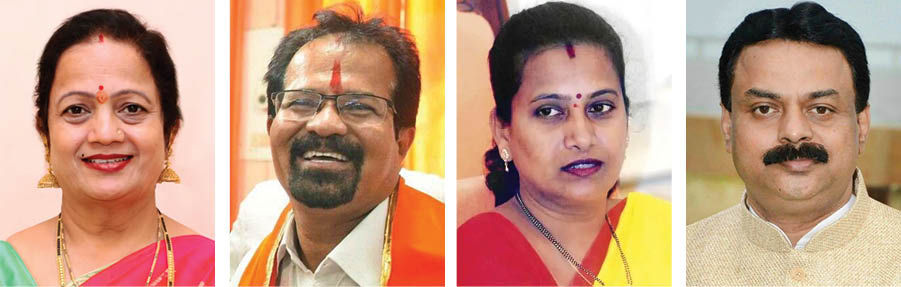
      Kishori Pednekar          Vishwanath Mahadeshwar               Snehal Ambekar                      Sunil Prabhu
Kishori Pednekar Vishwanath Mahadeshwar Snehal Ambekar Sunil Prabhu

Mumbai: As the date for appointing Mumbai’s First Citizen looms closer, various political parties have adopted tough posturing to foist their own person for the coveted post of Mayor – the ‘face’ of the country’s commercial capital.

Ruling Mahayuti allies Bharatiya Janata Party (BJP) and Shiv Sena have vowed that the city will get a ‘Hindu Marathi’ person to head India’s richest civic body, while the Opposition Shiv Sena (UBT)-Maharashtra Navnirman Sena also harbour fond hopes of a miracle that could ensure their own person for the post.


The Maharashtra Vikas Aghadi (MVA) optimism stems from expectations of possible political permutations-combinations that could develop with a realignment of forces as the Supreme Court is hearing the cases involving the Shiv Sena-Nationalist Congress Party this week.


Catapulted as the largest single party, the BJP hopes to install a first ever party-man as Mayor, but that may not create history. Way back in 1982-1983, a BJP leader Dr. Prabhakar Pai had served in the top post in Mumbai (then Bombay).


Incidentally, Dr. Pai hailed from Udupi district of Karnataka, and his appointment came barely a couple of years after the BJP was formed (1980), capping a distinguished career as a city father, said experts.


Originally a Congressman, Dr. Pai later shifted to the Bharatiya Janata Party, then back to Congress briefly, founded the Janata Seva Sangh before immersing himself in social activities.


Second Administrator

The 2026 Mayoral elections have evoked huge interest not only among Mumbaikars but across the country as it comes after nearly four years since the BMC was governed by an Administrator.


This was only the second time in the BMC history that an Administrator was named after April 1984-May 1985. On both occasions, there were election-related issues, the first time the elections got delayed for certain reasons and the second time the polling was put off owing to Ward delimitations and OBC quotas as the matter was pending in the courts.


From 1931 till 2022, Mumbai has been lorded over by 76 Mayors, men and women, hailing from various regions, backgrounds, castes and communities.


They included Hindus, Muslims, Christians, Parsis, Sikhs, even a Jew, etc., truly reflecting the cosmopolitan personality of the coastal city and India’s financial powerhouse.


In 1931-1932, the Mayor was a Parsi, J. B. Boman Behram, and others from his community followed like Khurshed Framji Nariman (after whom Nariman Point is named), E. A. Bandukwala, Minoo Masani, B. N. Karanjia and other bigwigs.


There were Muslims like Hoosenally Rahimtoola, Sultan M. Chinoy, the legendary Yusuf Meherally, Dr. A. U. Memon and others.


The Christian community got a fair share of Mayors with Joseph A. D’Souza – who was Member of Constituent Assembly representing Bombay Province for writing-approving the Constitution of India, M. U. Mascarenhas, P. A. Dias, Simon C. Fernandes, J. Leon D’Souza, et al.


A Jew Elijah Moses (1937-1938) and a Sikh M. H. Bedi (1983-1984), served as Mayors, but post-1985, for the past 40 years, nobody from any minority community occupied the august post.


During the silver jubilee year of the post, Sulochana M. Modi became the first woman Mayor of Mumbai (1956), and later with tweaks in the rules, many women ruled in this post – Nirmala Samant-Prabhavalkar (1994-1995), Vishakha Raut (997-1998), Dr. Shubha Raul (March 2007-Nov. 2009), Shraddha Jadhav (Dec. 2009-March 2012), Snehal Ambedkar (Sep. 2014-March 2017).


The last incumbent (before the Administrator) was a government nurse, Kishori Pednekar (Nov. 2019-March 2022) - who earned the sobriquet of ‘Florence Nightingale’ of Mumbai - as she flitted around in her full white uniform at the height of the Covid-19 Pandemic, earning the admiration of the citizens.


Mumbai Mayor – high-profile post

The Mumbai Mayor’s post is considered a crucial step in the political ladder and many went on to become MLAs, MPs, state-central ministers, a Lok Sabha Speaker, Chief Ministers and union ministers.


The formidable S. K. Patil was Mayor (1949-1952) and later served in the union cabinets of PMs Jawaharlal Nehru, Lah Bahadur Shastri and Indira Gandhi; Dahyabhai V. Patel (1954-1955) was the son of India’s first Home Minister Sardar Vallabhbhai Patel; Manohar Joshi (1976-1977) became the CM of Maharashtra, later union minister and Speaker of Lok Sabha; Chhagan Bhujbal (1985-1986 – 1990-1991) became a Deputy CM.

Comments


bottom of page