top of page

By:

Sumit Ranjan Das

21 August 2024 at 4:08:59 pm

EPFO’s Big Wage-Band Reset

Twelve years is a long time for a wage ceiling to remain unchanged. The last revision came in September 2014, when the limit was raised from Rs.6,500 to Rs.15,000. Last week, the Union Cabinet approved another increase, taking the ceiling to Rs.25,000 a month with effect from 17 September 2026. The government’s estimate is that more than 51 lakh additional employees will come within mandatory EPFO coverage as a result of the change. For employers and payroll professionals, however, the...

EPFO’s Big Wage-Band Reset

Twelve years is a long time for a wage ceiling to remain unchanged. The last revision came in September 2014, when the limit was raised from Rs.6,500 to Rs.15,000. Last week, the Union Cabinet approved another increase, taking the ceiling to Rs.25,000 a month with effect from 17 September 2026. The government’s estimate is that more than 51 lakh additional employees will come within mandatory EPFO coverage as a result of the change. For employers and payroll professionals, however, the headline number is only the starting point. The more important questions are who will be covered, which wages will be taken into account and how the revised provisions will be implemented. Wage Ceiling The existing wage ceiling of Rs.15,000 a month is being raised by Rs.10,000, or 66.7 percent, to Rs.25,000. The change takes effect from 17 September 2026 and marks the first revision since September 2014. The government expects more than 51 lakh additional employees to be covered. Estimated expenditure is about Rs.56,696 crore over five years, while annual government outgo is expected to rise to approximately Rs.11,339 crore. The standard contribution remains 12 percent each from the employee and employer, subject to applicable provisions. The Cabinet said the decision will expand access to provident-fund savings, pension protection under the Employees’ Pension Scheme (EPS) and insurance protection under the Employees’ Deposit Linked Insurance Scheme (EDLI), in accordance with the applicable scheme provisions. The wage ceiling is not merely an administrative threshold. It determines the point at which mandatory EPF coverage applies under the existing framework. At present, a fresh employee joining employment at wages above Rs.15,000 a month is not automatically brought within mandatory EPF coverage and may remain outside mandatory provident-fund, pension and associated insurance protection, subject to applicable statutory provisions. The revised ceiling will bring a substantial section of employees earning between Rs.15,000 and Rs.25,000 within the mandatory coverage framework. The government has also quantified the fiscal impact. The estimated expenditure is about Rs.56,696 crore over five years, while annual government outgo is expected to rise to approximately Rs.11,339 crore, compared with existing annual budgetary support of about Rs.10,250 crore. The Labour Ministry has linked the revision to sustained wage growth, rising incomes and the continued expansion of formal employment since the previous revision in 2014. Payroll Illustration Consider an employee earning Rs.22,000 a month who becomes subject to mandatory coverage under the revised ceiling. At the standard 12 percent contribution rate, if the full eligible wage is used as the contribution base, the employee’s contribution would rise from Rs.1,800 to Rs.2,640 a month, while the employer’s contribution would similarly rise from Rs.1,800 to Rs.2,640. Total monthly contributions would therefore increase from Rs.3,600 to Rs.5,280 — a combined increase of Rs.1,680. However, this should not be treated simply as Rs.1,680 of additional employee savings. Contributions are allocated between EPF and EPS components as prescribed, with the EPF component accumulating in the employee’s account and the EPS component providing pension benefits subject to scheme conditions. The Rs.22,000 example is illustrative, not a universal payroll formula. The final treatment of wage components, existing employees in this band, EPS allocation and transitional matters will depend on the statutory notification and EPFO implementation instructions. For payroll professionals, the immediate task is to assess the operational impact. Key questions include the effective date for existing employees and new joiners, which wage components will count towards PF, whether the 10 percent concessional rate for notified establishments will continue, how the revised ceiling will interact with EPS pensionable wages, and what changes will be required in payroll systems. The Cabinet approval establishes the policy decision; the formal Gazette notification and EPFO instructions will determine how it is translated into payroll processes. The revised ceiling is the first increase since September 2014 and is expected to bring more than 51 lakh additional employees, particularly those in the Rs.15,000-Rs.25,000 wage band, under mandatory EPFO coverage. For them, the change can expand access to provident-fund savings, EPS pension and EDLI insurance, subject to scheme provisions. For employers, it means reviewing payroll costs, employee data, eligible wage components, contribution calculations and compliance systems. The government has described the move as part of efforts to extend statutory social security and strengthen formal employment. The policy has been announced. For payroll professionals, the next chapter is implementation. (The writer is a Cost and Management Accountant and founder of TaxoDas. Views personal

Civic polls ‘circus’

Dec 31, 2025
3 min read

Ticket-seekers unleash chaos, confusion and mayhem
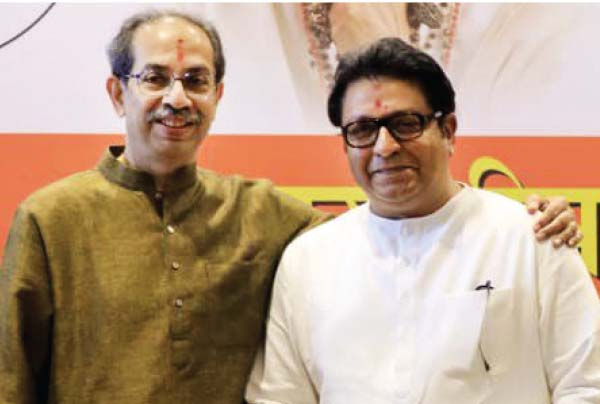
Mumbai: The last day of filing nominations for Maharashtra’s first civic body elections since 2017 erupted into chaos, rebellion and high political drama across major urban centres, exposing deep fissures within almost every major political party.


From Mumbai to Thane, Navi Mumbai, Pune, Pimpri-Chinchwad, Nagpur, Nashik, Amravati and Chhatrapati Sambhajinagar, thousands of hopefuls denied tickets turned their rage inward - targeting party leaderships - in scenes rarely witnessed even during Assembly or Lok Sabha elections.


Massive uproar, slogan-shouting, heated confrontations or near-fisticuffs with local office-bearers, open threats of sabotage and dramatic last-minute defections marked the day when nomination filings closed across the state.


In several cities, frustrated workers laid siege to party offices and leaders’ residences, while others accused their own parties of nepotism, favouritism and even ticket “auctioning” for a staggering Rs 2-crore.


Shaken by the ugly mood of the grassroots cadres, local leaders in some civic bodies were forced to distribute AB forms secretly, with candidates reportedly summoned in the dead of night to avoid backlash.


The unrest cut across party and ideological lines but seemed more vicious within the MahaYuti constituents - the BJP and the Shiv Sena - and also the Nationalist Congress Party, which is contesting outside the alliance in several civic bodies.


A senior Congress leader from Pune described the unprecedented turbulence as a sign of “extraordinary political stakes” attached to local body control, noting that such upheaval was absent even during state Assembly or Parliament elections.


With civic bodies commanding massive budgets, local patronage networks and organisational control ahead of future Assembly battles, the denial of tickets triggered raw anger among field workers feeling sidelined in favour of family members, defectors and controversial figures, while their parties bedded with strange allies.


Goons, dons, gangsters poised to be civic Big Daddies !

Pune: Raising eyebrows, the NCP has fielded Jayshree Marne, wife of jailed local don Gajanan Marne - who was part of the police’s ‘Black Parade’ along with many other criminals and goons in Feb. 2024. Boasting Marne’s clout, his pictures with ex-CM Eknath Shinde and Parth (Ajit) Pawar in early 2024 had created a huge political storm.


The NCP has also given tickets to 3 prime accused in the sensational murder of an ex-corporator Vanraj Andekar in Sep. 2024. They are: Bandu Andekar, Laxmi Andekar and Sonali Andekar, who were granted special court permission to file their nomination papers amid tight police security.


Mumbai: In Mumbai, accusations of dynastic politics flew thick and fast. The BJP faced embarrassment after Assembly Speaker Rahul Narvekar’s family members - his brother Makarand Narvekar, sister-in-law Harshita Narvekar and cousin Gauravi Shivalkar-Narvekar - secured tickets.


There were red faces even in the NCP when multiple members of the Nawab Malik family – his brother Kaptan Malik, Bushra Malik and Saeeda Khan-Malik – got tickets.


The Shiv Sena (UBT) witnessed a mini-rebellion in its traditional strongholds of Worli and Mahim. Angered aspirants laid siege to ex-CM Uddhav Thackeray’s residence ‘Matoshree’ in Bandra. Several former corporators, Shakha Pramukhs and office-bearers have reportedly resigned, though there is no official confirmation.


A miffed Union Minister and RPI(A) President Ramdas Athawale also called up CM Devendra Fadnavis to express displeasure over getting a raw deal in the ticket distribution despite remaining loyal to the NDA for over a decade.


Parties cower over retaliation

Chhatrapati Sambhajinagar: In a dramatic development, the BJP-Shiv Sena alliance collapsed at the last minute. A BJP worker attempted self-immolation by dousing himself with petrol but was stopped by police. Dejected activists stormed the BJP office, openly slamming local leaders. Women aspirants were seen crying, shouting and collapsing from exhaustion.


Denied a BJP ticket, ex-deputy mayor Lata Shinde crossed over to the Shiv Sena and was immediately rewarded with a nomination. After allegations were hurled that tickets were “auctioned” for up to Rs 2-cr, Minister Girish Mahajan promised an investigation.


Nagpur: The opposition Maha Vikas Aghadi (MVA) alliance between Congress-NCP (SP) collapsed after barely 15 minutes of negotiations! NCP (SP) leader Anil Deshmukh accused Congress of betrayal and later, his colleague Duneshwar S. Pethe claimed that the Congress back-stabbing will benefit the BJP, triggering sharp counter-allegations of “treachery” from Congress leaders.


Thane, Amravati, Nashik: Shiv Sena workers created ruckus in Amravati and Pune, while similar scenes unfolded in Thane, Nashik and several other cities. Unconfirmed reports suggest the BJP-Shiv Sena alliance has collapsed in at least 15-17 civic bodies, setting the stage for direct contests between allies-turned-rivals.
Comments


bottom of page