top of page

By:

Rashmi Kulkarni

23 March 2025 at 2:58:52 pm

Loss Aversion Is Why Your Good Idea Fails

Your upgrade is their loss until you prove otherwise. Last week, Rahul wrote about a simple truth: you’re not inheriting a business, you’re inheriting an equilibrium. This week, I want to talk about the most common reason that equilibrium fights back even when your idea is genuinely sensible. Here it is, in plain language: People don’t oppose improvement. They oppose loss disguised as improvement. When you step into a legacy MSME, most things are still manual, informal, relationship-driven....

Loss Aversion Is Why Your Good Idea Fails

Your upgrade is their loss until you prove otherwise. Last week, Rahul wrote about a simple truth: you’re not inheriting a business, you’re inheriting an equilibrium. This week, I want to talk about the most common reason that equilibrium fights back even when your idea is genuinely sensible. Here it is, in plain language: People don’t oppose improvement. They oppose loss disguised as improvement. When you step into a legacy MSME, most things are still manual, informal, relationship-driven. People have built their own ways of keeping work moving. It’s not perfect, but it’s familiar. When you introduce a new system, a new rule, a new “professional way,” you may be adding order but you’re also removing something  they were using to survive. And humans react more strongly to removals than additions. Behavioral economists Daniel Kahneman and Amos Tversky called this loss aversion where we feel losses more sharply than we feel gains. That’s why your promised “future benefit” struggles to compete with someone’s immediate fear. Which seat are you stepping into? Inherited seat:  People assume you’ll change things quickly to “prove yourself”. They brace for loss even before you speak. Hired seat:  People watch for hidden agendas: “New boss means new rules, new blame.” They protect themselves. Promoted seat:  Your peers worry the old friendship is now replaced by authority. They fear loss of comfort and access. Different seats, same emotion underneath: don’t take away what keeps me safe. Weighing Scale Think of an old kirana shop. The weighing scale may not be fancy, but it’s trusted. The shopkeeper has used it for years. Customers have seen it. Everyone has settled into that comfort. Now imagine someone walks in and says, “We’re upgrading your weighing scale. This is digital. More accurate. More modern.” Sounds good, right? But what does the shopkeeper hear ? “My customers might think the old scale was wrong.” (loss of trust) “I won’t be able to adjust for small realities.” (loss of flexibility) “If the digital scale shows something different, I’ll be accused.” (loss of safety) “This was my shop. Now someone else is deciding.” (loss of control) So even if the new scale is better, the shopkeeper will resist or accept it politely and quietly return to the old one when nobody is watching. That is exactly what happens in companies. Modernisation Pitch Most leaders pitch change like this: “We’ll become world-class.” “We’ll digitize.” “We’ll improve visibility.” “We’ll build a process-driven culture.” But for the listener, these are not benefits. These are threats, because they translate into losses: Visibility can mean exposure . Process can mean loss of discretion . Digitization can mean loss of speed  (at least initially). “Professional” can mean loss of status  for the old guard. So the person across the table is not debating your logic. They’re calculating their losses. Practical Way Watch what happens when you propose something simple like daily reporting. You say: “It’s just 10 minutes. Basic discipline.” They hear: “Daily reporting means daily scrutiny.” “If numbers dip, I will be questioned.” “If I show the truth, it will create conflict.” “If I don’t show the truth, I’ll be accused later.” In their mind, the safest response is: nod, agree, delay. Then you label them “resistant.” But they’re not resisting change. They’re resisting loss . Leader’s Job If you want adoption in an MSME, don’t sell modernization as “upgrade”. Sell it as protection . Instead of: “We need an ERP.” Try: “We need to stop money leakage and order confusion.” Instead of: “We need systems.” Try: “We need fewer customer escalations and less rework.” Instead of: “We need transparency.” Try: “We need fewer surprises at month-end.” This is not manipulation. This is translation. You’re speaking the language the system understands: risk, leakage, blame, customer loss, cash loss, fatigue. Field Test: Rewrite your pitch in loss-prevention language Pick one change you’re pushing this month. Now write two versions: Version A (your current pitch): What you normally say: upgrade, modern, efficiency, best practices. Version B (loss prevention pitch): Use this template: What are we losing today?  (money, time, customers, reputation, peace) Where is the leakage happening?  (handoffs, approvals, rework, vendor delays) What small protection will this change create? (fewer disputes, faster closure, less follow-up) What will not change?  (no layoffs, no humiliation, no sudden policing) What proof will we show in 2 weeks?  (one metric, one visible win) Now do one more important step: For your top 3 stakeholders, write the one loss they think they will face  if your change happens. Don’t argue with it. Just name it. Because once you name the fear, you can design around it. The close If you remember only one thing from this week, remember this: A “good idea” is not enough in a legacy MSME. People need to feel safe adopting it. You don’t have to dilute your standards. You just have to stop selling change like a TED talk and start selling it like a protection plan. Next week, we’ll deal with another invisible force that keeps companies stuck even when they agree with you: the status quo isn’t a baseline. It’s a competitor. (The writer is CEO of PPS Consulting, can be reached at rashmi@ppsconsulting.biz )

Four ex-Mumbai mayors in fray

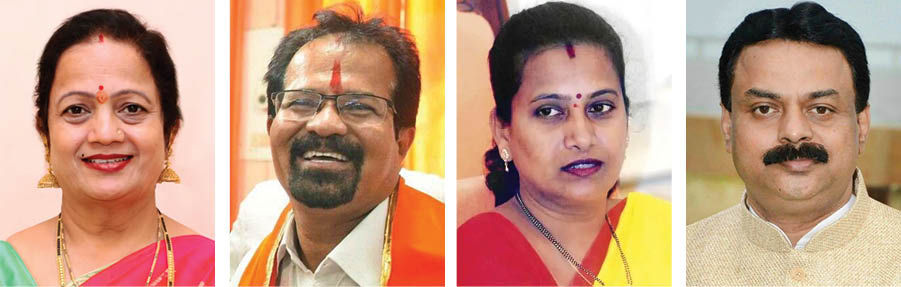
Mumbai: The upcoming BrihanMumbai Municipal Corporation (BMC) elections are all set to witness interesting contests as four formers Mayors of Mumbai are locked up in interesting fights which promises to be the toughest one in their political career.


All four are veterans in the BMC…Shraddha Jadhav, Kishori Pednekar, Vishakha Raut and Milind Vaidya who have stood out among their peers for decades and headed various civic committees apart from being the First Citizen of this metropolis. They all are contesting from Shiv Sena (UBT) party headed by Uddhav Thackeray.


Take the case of Shraddha Jadhav, who has been a corporator from 1992 onwards and is contesting for her 7th term. Standing from ward number 202 in Parel, Shraddha is being challenged by Shiv Sena (UBT) activist Vijay Indulkar who is standing as a rebel. After Shraddha’s candidature was announced last week, 128 local Sena office bearers resigned in protest, which was shocking considering that this area is considered as a Sena citadel right from 1970’s. The BJP side is represented by Parth Bavkar, who is a close confidant of popular Wadala legislator Kalidas Kolambkar and there is fear that Parth may sail through if votes are split between Shraddha and Indulkar. Indulkar accuses Shraddha of neglecting this area. “She has undertaken no developmental work in this constituency and the people are against her,” said Indulkar. Shraddha however dismisses Indulkar’s claim as baseless. “This is plain jealously and an attempt to defame our family. If I don’t work how did I get elected from the last 6 terms? I am confident of winning for the 7th term,” countered Shraddha. She was the Mayor of Mumbai from 2009 to 2012.


The second high profile battle is ward number 191 which encompass areas like Siddhivinayak Mandir and Shivaji Park. Here veteran corporator Vishakha Raut who has also served as Dadar legislator is pitted against Priya Sarvankar, daughter of former legislator Sada Sarvankar. Vishakha who served as Mumbai’s Mayor during 1997-1998 is representing Shiv Sena (UBT) while her rival Priya is contesting from Shiv Sena (Shinde) faction. Priya calls Vishakha a failure. “She has been an inaccessible corporator and citizens were left to fend for themselves from the last eight years. People want a young face to represent them,” said Priya. Vishakha Raut laughs down Priya’s claim saying Shiv Sena has a legacy of doing people centric activities from this belt. “We have served the Dadar citizens for decades and this relationship is familial. What are Priya’s achievements except praising her father’s work who was incidentally with our party only,” said Vishakha.


In her neighbourhood, Kishori Pednekar who the mayor from 2019 to 2022 is fighting from ward number 199 at Worli area. The local Maharashtra Navnirman Sena (MNS) activists are angry with her for bad mouthing their leader Raj Thackeray during her tenure as Mayor. In addition, a section of her own party are also up in arms against her. However Pednekar downplays the incident. “If I have said anything wrong about Rajsahjeb, I apologise for the same. Currently both Raj and Uddhav are our leaders and we are fighting the elections under their leadership,” said Pednekar. She had enlisted the help of senior MNS leader Bala Nandgaonkar to convince the local MNS cadre to work for her.


The fourth incumbent Milind Vaidya who served as Mumbai Mayor during 1996-1997 had to shift his ward and is contesting from ward number 182 at Mahim from number 183. He is being challenged by BJP candidate Rajan Parkar, who is popular figure from this constituency.
Comments


bottom of page