

Hindu aspirations and the BJP's test of governance

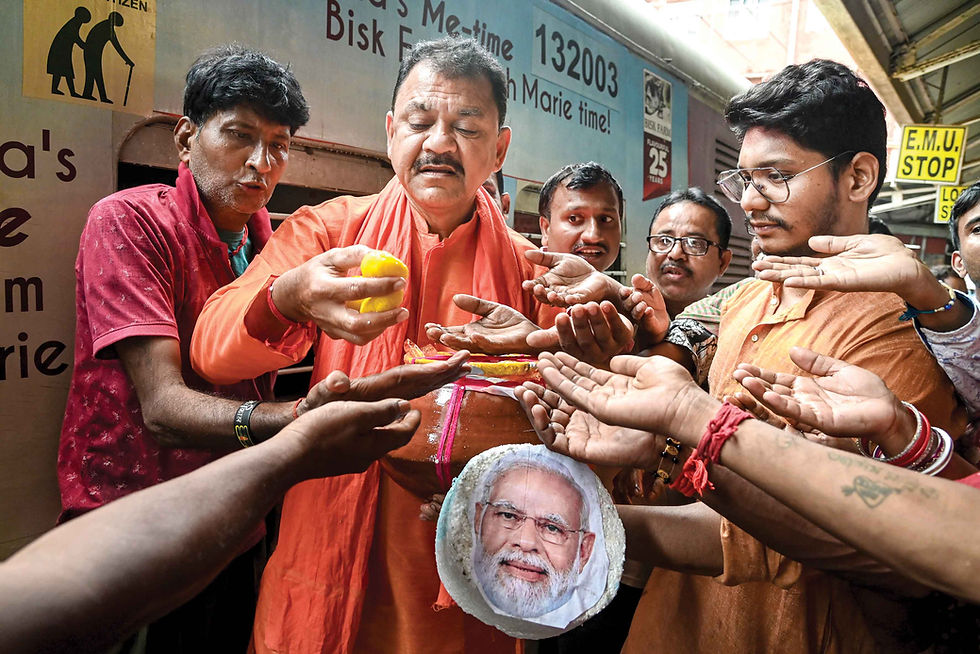
New Delhi: The recent electoral outcomes in West Bengal are more than mere numbers, but they carry a clear message that Bengali Hindus are now openly voicing their demands for security, dignity, and a future of young and next generation. For the past fifty years, and especially over the last fifteen, the Hindu community in the state has often been treated as second-class citizens. Their lands have been encroached upon, their homes and families threatened, and their social, cultural, and religious rights repeatedly violated.
For the BJP, this represents both a challenge and an opportunity. The challenge lies in whether it can truly secure these rights for Hindus, while the opportunity is that the model established in West Bengal could serve as an example for the entire country. Bengali Hindus no longer wish to hear mere promises, but they seek tangible results, as seen in Uttar Pradesh and Assam. They demand governance and administration like Bulldozer Baba.
Over the last fifteen years, Bengali Hindus have faced numerous hardships. Bangladeshi infiltrators have seized land and created an atmosphere of fear, particularly for women. Incidents in places like Sandeshkhali, Murshidabad, and Basirhat highlighted how perpetrators often enjoyed political protection until intervention came from the central government. Cultural events like Durga Puja have sometimes been marred by stone-pelting and vandalism of idols, denting the morale of the Hindu community.
Bias within the state administration has also been a persistent problem. Preferential recruitment, from sub-inspectors to DSPs, often favored certain communities, including officers who supported antisocial elements that harassed Hindus. In this context, the BJP government will need to implement administrative reforms to restore law and order at its core. The police must be removed from serving political interests and tasked with protecting the public.
Political Arm
Accusations have long been made that West Bengal police have effectively functioned as the political arm of the TMC. The fact that TMC chief Mamata Banerjee, while holding the office of Chief Minister, staged a sit-in protest when the CBI was interrogating the then Kolkata Police Commissioner, Rajeev Kumar, serves as proof of this. Reports of violence against Hindus, sexual offenses, attacks on BJP workers, and assaults on political opponents' homes underscore the need for a law-and-order system free of leniency toward criminals.
Additionally, for the sake of security and justice, it is imperative to expedite the NRC process in the state, identify illegal immigrants, and enforce strict deportation policies. The BSF should be empowered with authority similar to that in Jammu-Kashmir to prevent cross-border infiltration, including the right to use lethal force if necessary. Furthermore, their operational jurisdiction should not be restricted to a 50 km border zone but extended across the state to curb illegal entry comprehensively.
Safeguarding the religious rights of Hindus is equally crucial. Measures should include preventing attacks on temples, enacting strict non-bailable laws against those who vandalize Durga Puja and other religious events, and rigorously removing illegal encroachments to secure Hindu land and temple property.
Social Pressure
The BJP faces the challenge of fulfilling the aspirations of Hindus in the state by providing them with security, dignity, and employment. Economic and social pressures over the past fifteen years have forced many Hindus to migrate. Districts like Malda and Murshidabad witnessed a near-control over Hindu economic activities, resembling an economic siege. The BJP must craft proactive policies to ensure the Hindu community can once again feel secure and self-reliant.
Strict implementation of the CAA, handing pending cases to the CBI for resolution, and protecting Bengali Hindus' land and rights is not merely a religious issue, but it is a matter of national security. The violations of Hindu rights in Pakistan and Bangladesh stand as grave warnings. Preventing such infringements in India is now the responsibility of West Bengal's new government.
By voting for the BJP, Hindus in West Bengal have sent a clear mandate. They have not merely changed the government, but they have demanded protection of Indian civilization, as well as cultural, social, and economic security. The BJP now has the opportunity to demonstrate that Hindus have the right to live in a safe, dignified, and law-abiding society. Failure to deliver will invite the same political criticism faced by Congress and other parties that pursued appeasement policies. It is worth noting that Kashmiri Pandits, displaced from Jammu-Kashmir, have still not been fully rehabilitated.
Meeting the aspirations of West Bengal's Hindus will be the BJP's greatest test. This is not just about political success, but it is about safeguarding Hindus, protecting Indian culture, and securing the future of young and next generation. The outcome of the BJP's actions will send a nationwide message that Hindus can live safely and with dignity in their own country.


Comments