
top of page

By:

Abhijit Mulye

21 August 2024 at 11:29:11 am

High-stakes chess beneath the surface

BJP Candidates coming out after filing their nomination for the upcoming Legislative Council Polls from Vidhan Bhavan in Mumbai on Thursday. Pic: Bhushan Koyande Mumbai: Typically, when a ruling coalition enjoys a formidable and comfortable majority, elections to the Rajya Sabha and the State Legislative Council are quiet, predictable affairs. They are often viewed as mere formalities, rarely capturing the public imagination or dominating front-page headlines. Historically, these indirect...

High-stakes chess beneath the surface

BJP Candidates coming out after filing their nomination for the upcoming Legislative Council Polls from Vidhan Bhavan in Mumbai on Thursday. Pic: Bhushan Koyande Mumbai: Typically, when a ruling coalition enjoys a formidable and comfortable majority, elections to the Rajya Sabha and the State Legislative Council are quiet, predictable affairs. They are often viewed as mere formalities, rarely capturing the public imagination or dominating front-page headlines. Historically, these indirect elections only become newsworthy under specific conditions: either the ruling coalition is plagued by internal fissures, or the opposition is too fragmented to put up a united front. In Maharashtra, however, the political landscape remains highly volatile. Recently, the Rajya Sabha elections became the center of intense media scrutiny, and over the past week, the Legislative Council polls followed suit. Although all ten candidates—nine from the ruling alliance and one from the opposition Maha Vikas Aghadi (MVA)—are now set to be elected unopposed, the intricate backroom maneuvers that led to this truce kept the state’s political circles buzzing. Interestingly, the reason for this heightened news value can be traced to both a subtle tug-of-war within the ruling combine and a visibly weakened opposition. Shifting Strategy The maneuvering within the opposition ranks has been particularly telling. A major focal point of the election buildup was the anticipated candidacy of Shiv Sena (UBT) Chief Uddhav Thackeray. After generating considerable hype and speculation about a potential return to the legislature, Thackeray ultimately chose to withdraw from the electoral fray. This sudden pullback forced a rapid recalibration within the MVA. Initially, the Congress party had adopted an aggressive posture, declaring its intention to field a candidate if Thackeray decided against contesting. However, following closed-door deliberations with Shiv Sena (UBT) leadership, the Congress quietly backed down. Why the state Congress leadership so readily acquiesced to this sudden change in strategy, sacrificing a potential seat, remains a mystery and a subject of intense debate among political observers. On the other side of the aisle, the ruling Mahayuti coalition maximized this electoral opportunity to consolidate its political base, reward loyalists, and balance complex regional equations. The Nationalist Congress Party (NCP) strategically paved the way for the political rehabilitation of former Congress legislator Zishan Siddique by nominating him to the Legislative Council. This calculated move introduces a prominent new Muslim face for the party, likely intended to fill the leadership vacuum in Mumbai left by veteran leader Nawab Malik. Meanwhile, Chief Minister Eknath Shinde used his nominations to send a definitive message about the premium he places on loyalty. By securing another term for Dr. Neelam Gorhe, Shinde demonstrated that those who stood by his faction would be adequately rewarded. Furthermore, by bringing Vidarbha strongman Bachchu Kadu into the fold, Shinde has attempted to anchor his party’s future and expand its footprint in a region predominantly controlled by his senior alliance partner, the BJP. The Bharatiya Janata Party, playing its characteristic long game, meticulously ensured that its list of six candidates struck the perfect organizational, social, and political balance. Battle for LOP Despite these broader alliance strategies, the most consequential nomination in this electoral cycle is arguably that of Ambadas Danve. Barely six months after completing his tenure in the Upper House and stepping down from the prestigious post of Leader of the Opposition in the Legislative Council, Danve has been nominated once again by the Shiv Sena (UBT). With his return to the house, there is a strong possibility that he will reclaim his former post. This specific development highlights a much deeper crisis within the Congress. Following Danve’s brief retirement, the Congress had naturally emerged as the largest opposition party in the Upper House. This mathematical advantage theoretically paved the way for their Kolhapur strongman, Satej “Banti” Patil, to lay claim to the Leader of the Opposition’s chair. However, the sudden defection of Congress MLC Pradnya Satav, who switched loyalties to the BJP, severely dented the party’s numbers. Her departure brought the Congress’s strength in the house just below that of the Shiv Sena (UBT). Stripped of its numerical superiority overnight, the Congress was relegated to being a mute spectator, unable to assert its rightful claim. Internal Dissent This series of tactical defeats has triggered palpable frustration within the Congress’s state unit. One senior Congress leader, speaking on the condition of anonymity, expressed deep disappointment with the state leadership’s inability to protect the party’s interests. “Everyone has personal political ambitions, but leaders must learn the ways to collectively move ahead and strategize,” the leader remarked, attributing the party’s current stagnation in Maharashtra to this lack of cohesive vision. In short, these Legislative Council elections have delivered one message loud and clear: even when everything appears calm and stable on the surface, the relentless machinery of politics continues to churn behind the scenes. No political player in Maharashtra can afford to rest assured or sit idle under the illusion that there are no major state elections until 2029.

Insurance Mirage

Farmers in drought-scarred Latur find their claims trapped in a maze of technicalities and delay.
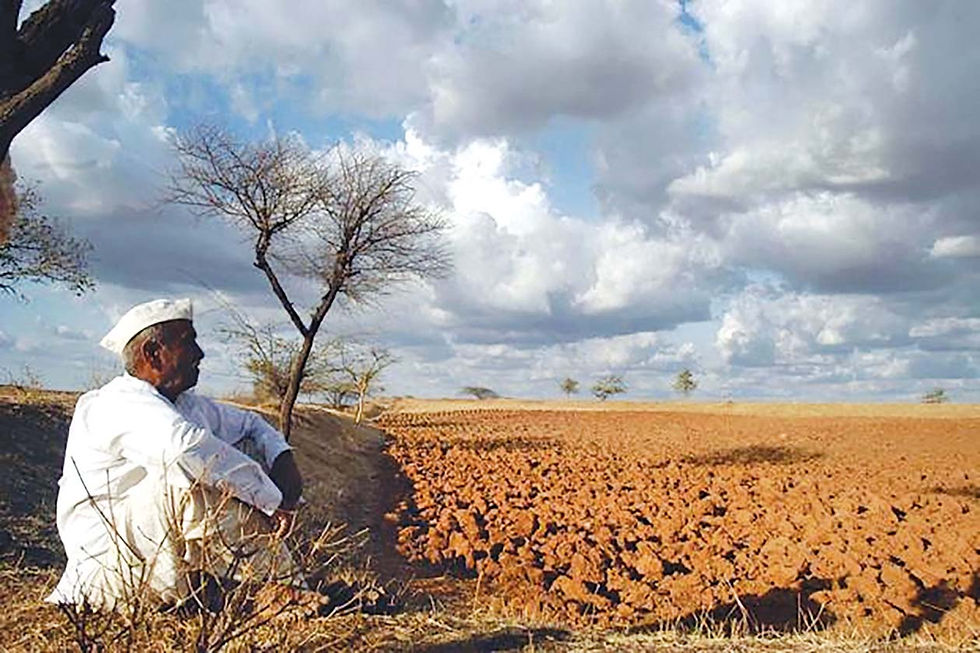
Latur district has long been hostage to the vagaries of the monsoon. With the weather being increasingly defined by erratic temperatures and monsoon patterns, agriculture in Marathwada region is fast becoming a gamble. Each season, farmers stake their livelihoods on the caprice of rain which is either too little or unseasonal, causing crops to wither or rot. The Kharif season of 2025 has followed this weary script.


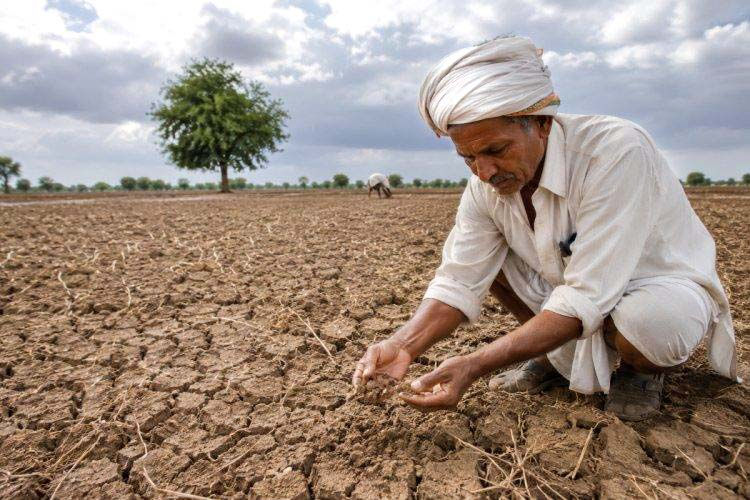
Erratic rainfall throughout defined the monsoon season. Long dry spells were punctuated by bursts of excessive rain in scattered pockets, leaving fields ravaged. Key crops like soybean, pigeon pea (tur), and black gram (urad) suffered heavily. In many areas, yields fell by more than half. Across Latur district, the estimated damage is said to have stretched over 2.5 lakh hectares. For a region already classified as drought-prone, the blow was particularly severe.


No Compensation

It is precisely for such contingencies that the Pradhan Mantri Fasal Bima Yojana (PMFBY) exists. Touted as a safety net for farmers, the scheme promises financial protection against crop loss. In Latur, between 3.5 and 4 lakh farmers enrolled for the 2025 Kharif season, collectively contributing along with government subsidies, an estimated Rs. 250 to Rs. 300 crore in premiums to insurance companies. The farmers thought this would be a hedge against ruin. Yet, months after the damage, that promise remains unfulfilled as despite widespread and well-documented crop losses, compensation has not reached the vast majority of farmers.


Farmers claims have stalled in a maze of procedural objections. Insurance companies are citing familiar technicalities like ‘data mismatches,’ inconsistencies in survey reports, and anomalies in satellite assessments.


The effect on the ground is stark. Without compensation, farmers find themselves trapped in a tightening financial vise. Debts are accumulating at punishing interest rates. The farmers’ ability to invest in the next sowing cycle by buying seeds, fertilisers or even maintaining basic inputs has been severely compromised. For many households, the absence of timely insurance payments has transformed hardship into crisis.


This administrative lapse is a major failure that cuts to the core of trust. Crop insurance schemes like PMFBY are designed to reassure farmers that the state stands behind them in times of distress. When that assurance falters, the consequences extend beyond a single season. The farmer loses confidence in government schemes and their very purpose is undermined.


What the government needs to do is not indulge in any further explanation for the delay in compensation but intervene swiftly by giving farmers their due. The state government must treat the situation in Latur with the seriousness it demands. Leadership at the highest levels including Chief Minister Devendra Fadnavis, has a crucial role to play in breaking the deadlock. Coordinated action between administrative authorities and insurance companies is essential to expedite the verification process and clear pending claims.


More importantly, timelines to payout the overdue compensation must be enforced. Insurance, by definition, is a time-sensitive instrument. A payout delayed beyond a season risks becoming irrelevant. Direct benefit transfers to farmers’ accounts, once their eligibility has been established, should be prioritised to ensure that relief reaches those who need it most, when they need it most.


As climate variability intensifies, districts like Latur will face increasing agricultural uncertainty, crop insurance schemes will become ever more central to rural resilience. But their credibility hinges not on policy design alone, but on its execution. A scheme that works on paper but falters in practice deepens the very vulnerabilities it seeks to mitigate.


For the farmers of Latur, the issue is immediate. Their fields have already borne the cost of an unforgiving season. What they await now is not sympathy, but settlement.


If action continues to lag, the damage will not be confined to crops or balance sheets. It will seep into the fragile compact between the state and its farmers. In Latur today, that compact hangs in the balance.


(The writer is a farmer and resident of Latur district. Views personal.)
Comments


bottom of page