top of page

By:

Bhalchandra Chorghade

11 August 2025 at 1:54:18 pm

Micro-Zoning, RR proposal: A reform opportunity

Mumbai: The government’s proposed introduction of micro-zoning and differentiated Ready Reckoner (RR) rates marks a significant shift in the way property valuations are determined across the state. The initiative, which seeks to assign distinct RR rates to high-rise buildings, slums, chawls and redeveloped properties within the same locality, has largely been welcomed by the real estate sector. Industry stakeholders, however, caution that the reform’s effectiveness will depend less on its...

Micro-Zoning, RR proposal: A reform opportunity

Mumbai: The government’s proposed introduction of micro-zoning and differentiated Ready Reckoner (RR) rates marks a significant shift in the way property valuations are determined across the state. The initiative, which seeks to assign distinct RR rates to high-rise buildings, slums, chawls and redeveloped properties within the same locality, has largely been welcomed by the real estate sector. Industry stakeholders, however, caution that the reform’s effectiveness will depend less on its intent and more on the framework governing its implementation. The proposal comes at a time when property markets in major urban centres, particularly Mumbai Metropolitan Region (MMR), are witnessing increasingly diverse development patterns within the same neighbourhoods. Experts argue that uniform RR rates often fail to capture the substantial variations in infrastructure quality, redevelopment status, accessibility and market demand that exist even within small geographical pockets. Real estate professionals believe that a micro-zoning approach could help bridge the gap between official property valuations and actual market realities. More accurate valuation mechanisms can improve transparency in transactions, provide a fairer basis for stamp duty calculations and create a more nuanced framework for urban planning. Experts’ Comments Kamlesh Thakur, President, NAREDCO Maharashtra and Co-Founder & Managing Director, Srishti Group, believes the concept has merit but warns that the execution framework will determine whether the reform succeeds or creates fresh challenges. “The concept of micro-zoning and differentiated Ready Reckoner rates has the potential to make property valuation more reflective of local market realities and development potential. However, its success will depend entirely on the framework adopted for implementation. Unless there is a clear, transparent and objective policy with well-defined parameters, the introduction of micro-zoning could lead to increased discretion at the administrative level, resulting in uncertainty and inconsistent outcomes,” he said. According to Thakur, valuation systems that allow excessive room for subjective interpretation can generate disputes, create inconsistencies in assessments and undermine business confidence. His concerns reflect a broader industry apprehension that redevelopment projects—already burdened by lengthy approval processes and rising costs—could face additional uncertainty if valuation criteria vary across administrative jurisdictions. Kaushal Agarwal, Chairman, The Guardians Real Estate Advisory, views the proposal as a logical evolution of property valuation practices, particularly in rapidly transforming urban markets. “The move towards differentiated Ready Reckoner rates through micro-zoning is a progressive step, as property values can vary significantly within the same locality depending on factors such as infrastructure, accessibility, building quality and surrounding development. If implemented effectively, it has the potential to make property valuations more realistic and aligned with actual market dynamics,” he said. Transparency, Methodology At the same time, Agarwal emphasized that transparency and data quality will be critical to ensuring credibility. “However, the success of this initiative will depend on the transparency of the methodology, the quality of data used, and the consistency of its application across micro-markets. Buyers, investors, and developers value clarity and predictability in valuation mechanisms. A well-defined and publicly accessible framework will be essential to avoid ambiguity, strengthen market confidence, and ensure that the new system delivers greater accuracy without creating uncertainty in transaction pricing or investment decisions,” he noted. Uniformly Implemented Echoing similar concerns, Dhruman Shah, Promoter, Ariha Group, said the government must ensure that the system remains easy to understand and uniformly implemented. “The move towards micro-zoning reflects an effort to modernize property valuation and make it more representative of actual market conditions. However, it is important that the system remains simple, transparent and uniformly enforced across regions. If multiple layers of interpretation emerge during implementation, it could lead to disputes and delays, particularly for redevelopment projects that already involve complex approval processes. Industry consultation at every stage will help create a practical and effective framework,” Shah said. As the state explores one of the most significant changes to its property valuation mechanism in recent years, the industry appears broadly supportive of the objective. Yet the consensus remains clear: the success of micro-zoning will depend on transparency, consistency and stakeholder consultation. Without these safeguards, a reform intended to improve valuation accuracy could inadvertently introduce new layers of uncertainty into an already complex real estate ecosystem.

Raj steals thunder; Uddhav repeats taunts

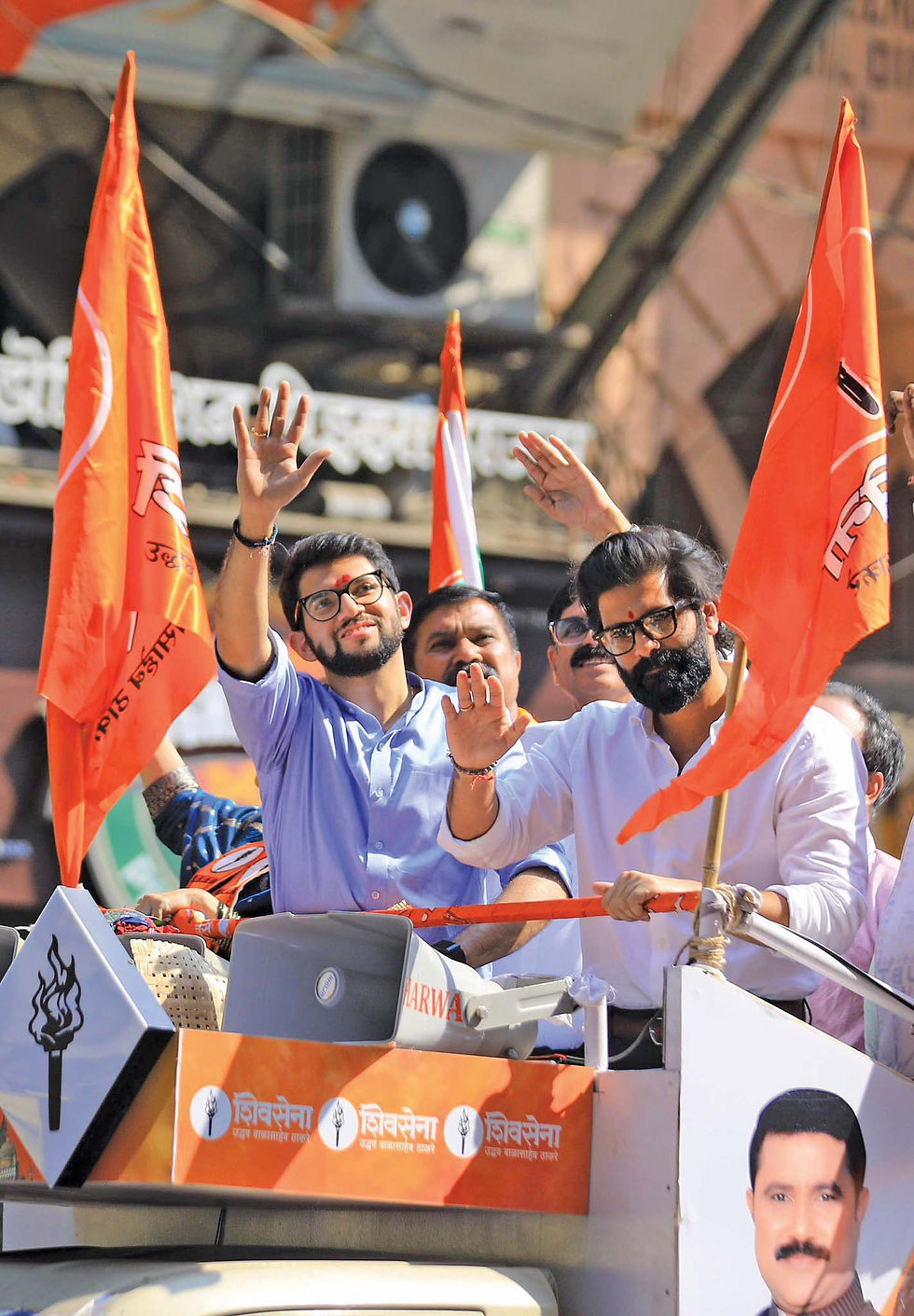
Pic: Bhushan Koyande

Mumbai: Sounding a loud alarm for Mumbai, the Maharashtra Vikas Aghadi (MVA) launched a blistering attack on the Bharatiya Janata Party and the Adani Group, alleging a systematic attempt to capture Mumbai’s assets and wealth, marginalize the Marathi population and weaken Maharashtra.


The Shiv Sena (UBT) President Uddhav Thackeray, Maharashtra Navnirman Sena (MNS) chief Raj Thackeray, Nationalist Congress Party (SP) leader Jayant R. Patil, besides Aditya Thackeray and other speakers made a desperate appeal to the voters to ‘choose wisely’ in the January 15 BMC elections.


Stealing the thunder, Raj said that last year’s compulsory Hindi push was a “test”, intended to check whether Maharashtra’s people were still alert. “That experiment proved why we needed to come together. No squabble is bigger than Maharashtra,” Raj said, referring to his reunion with Uddhav Thackeray after two decades.


Painting  a grim picture of present-day rulers and previous regimes, Raj said that despite Congress and other parties ruling for years, fear never dominated public life.

“Today, 66 corporators have been elected unopposed. People are being deprived of their right to vote, and this number will only rise,” he warned.


Both Raj and Uddhav slammed the BJP for increasingly giving tickets to criminals, drug peddlers and rape accused, eroding democracy at its roots.


Mumbai For Sale

Claiming that Mumbai is ‘up for sale’, Raj cited data collected by his research team to highlight the dramatic expansion of Gautam Adani’s business empire after 2014 – when Narendra Modi became Prime Minister.


Pointing to Maharashtra specifically, Raj claimed that Adani Group had just one unit here in 2014, which has since multiplied rapidly, listing multiple mega-projects in the Mumbai Metropolitan Region being handled by the Gautam Adani-led conglomerate.


He spoke of a long-term strategy to “break Mumbai away” from Maharashtra by dividing districts, voters and civic bodies, while bringing in outsiders at the cost of locals. “Marathis are being pushed into a minority in their own city - without homes, jobs or identity,” he warned.


Explaining the intense fight for civic bodies, Raj said control of local governments prevents the sale of land and public wealth without local consent, and called upon the voters to make the right choice.


Mewa-bhau

Terming it as a decisive final battle for Mumbai and MMR, Uddhav took a potshot at Chief Minister Devendra Fadnavis, calling him a “Mewa-bhau”. He accused the BJP of dividing Mumbai and the Marathi community while hollowing out the city’s institutions and finances.


“They say they want a ‘Hindu Marathi Mayor’. We said we will give a Marathi Mayor. The BJP is deliberately fragmenting Marathis by mixing religion into civic politics.


“We (Thackeray cousins) have come together only for Maharashtra, Mumbai and Marathis. These civic elections will decide our future. If we don’t act now, it will be too late,” he urged.


“We have fought many elections. We’ve won many, lost some. The BJP can ally with anyone all over India, but now they don’t want Shiv Sena,” he said.


Lashing out at the BJP for its repeated attacks on the ‘Thackeray brand’, Uddhav said sharply: “You question us, but you are nothing more than ‘band-masters’ of Modi.”


Both cousins vowed to move forward guided by Balasaheb Thackeray’s teachings, and dismissed the BJP’s claims of nationalism and concern for the poor as ‘fake Hindutva’, with Uddhav declaring: “I kick such patriotism.”


He even dared Fadnavis to have a public debate with him or Aditya Thackeray on Mumbai’s issues. “They ask what Shiv Sena did for Mumbai. Look around – and our work is visible in healthcare, education, infrastructure, water supply, sewerage,” he said.


The cousins attacked the BJP for emptying the coffers of Mumbai and Navi Mumbai, and diverting public attention from real civic issues to keep filling up Adani’s coffers.


Accusing the BJP of promoting criminals, goons, rapists and drug peddlers while fuelling caste and religious divisions, the duo said they ‘reject’ such politics, and exhorted  the people to decide as its final call for the future of Mumbai, Marathis and Maharashtra.
Comments


bottom of page