

Selective Outrage and the Politics of Morality in Maharashtra
Political morality was compromised the day the MVA was formed. Everything that followed was a consequence of that turning point.

Suddenly, after the news of six UBTSS MPs defecting to Shiv Sena, political discourse in Maharashtra has once again turned to questions of morality and ethics.
Yet, the sudden outrage of self-proclaimed intellectuals, left-liberals, and purogami voices has started its vidhva vilap once again over these defections. During the 30-month tenure of the Maha Vikas Aghadi (MVA) government, these same voices remained conspicuously silent.
Their silence over what many saw as a betrayal of the 2019 Maharashtra Assembly mandate gave legitimacy to many more such events. It started in 2022 with Eknath Shinde's split in Shiv Sena, followed by Ajit Pawar's split in the NCP.
In 2019, the BJP–Shiv Sena alliance (Yuti) secured a clear mandate, winning 161 of the 288 Assembly seats (BJP 105, Shiv Sena 56). However, Uddhav Balasaheb Thackeray (UBT) broke away from his pre-poll partner and joined hands with the Congress and NCP — parties against whom he campaigned and against whom his MLAs fought and won.
This move was widely perceived as a backstab of the people's verdict.
It was like a wedding and reception where people happily attended and blessed the couple (Yuti), wishing them success in their future journey together. Then, shockingly, the bride runs away with a new boyfriend before the suhaag raat, leaving the groom alone.
The formation of the MVA government was the biggest betrayal of a public mandate in Indian history, and that too on results day.
It was not criticised by those so-called intellectuals. I repeat, not a single person criticised it. In fact, much of the left-liberal ecosystem and media supported the MVA government because it suited their agenda.
They are very selective in their outrage. They became outraged in 2022 when Eknath Shinde split Shiv Sena. They are outraged again now with the news of six MPs defecting. They speak loudly of morality now. Their silence then and outrage now expose double standards.
This reminds me of the Mahabharata, when Pitamah Bhishma, Dronacharya and Kripacharya remained silent during Draupadi's cheerharan.
The betrayal of the 2019 Maharashtra mandate evokes parallels with the Mahabharata. Just as Abhimanyu was killed unethically by seven Kaurava warriors, the 2019 mandate was "killed" by the alliance of UBT, Congress and NCP.
After Abhimanyu's death, talks of morality lost their meaning. It became the turning point of the Mahabharata. Many unethical events followed, such as Yudhishthir saying "Naro va Kunjaro va", Karna being killed by Arjuna when his chariot was stuck in the mud and he had stepped out unarmed, and Bhima striking Duryodhana on the thigh, below the belt and against the rules of war.
Similarly, the betrayal of the Maharashtra mandate in 2019 was the turning point of Maharashtra politics. Political morality was compromised the day the MVA was formed.
Subsequent events — Eknath Shinde's split from Shiv Sena, Ajit Pawar's split from the NCP, and now reports of six UBT MPs considering another split — followed.
Krishna justified breaches in the name of Dharma, arguing that the Dharmayudh was between Dharma and Adharma. He stood with the Pandavas and supported Dharma against Adharma.
In both cases — the Mahabharata and Maharashtra politics — the larger struggle was framed as Dharma versus Adharma.
The Numbers Game
Prime Minister Narendra Modi and Home Minister Amit Shah, after setbacks on delimitation and the Women's Reservation Bill, recalibrated their strategy. They recognised that in a democracy, numbers matter more than intentions. Without numbers, reforms remain aspirations. Their focus now is on gathering the strength needed for constitutional changes and doing everything possible within the limits of the Constitution. Their every move is legally and constitutionally correct. Morality and ethics are merely noise and subjects for prime-time debate.
The vision of New Bharat rests on reforms such as the Uniform Civil Code (UCC), One Nation, One Election, Delimitation, the Women's Reservation Bill, judicial reforms and electoral reforms.
These changes, proponents argue, will transform India into New Bharat. To achieve that, Modi and Shah are working ruthlessly within the limits of the Constitution.
Hypocrisy Exposed
The hypocrisy of intellectual voices is stark. Those who remained silent during the MVA's rule cannot now claim the moral high ground. By ignoring the 2019 betrayal, they legitimised political opportunism.
The Maharashtra episode is more than a state-level dispute. It reflects the larger struggle over political morality, constitutional legitimacy and the future of Indian democracy.
Just as the Mahabharata was fought to establish Dharma, today's battles are shaping the contours of New Bharat.
The question remains: in this modern Dharmayudh, where do you stand in the Dharmayudh of New Bharat?
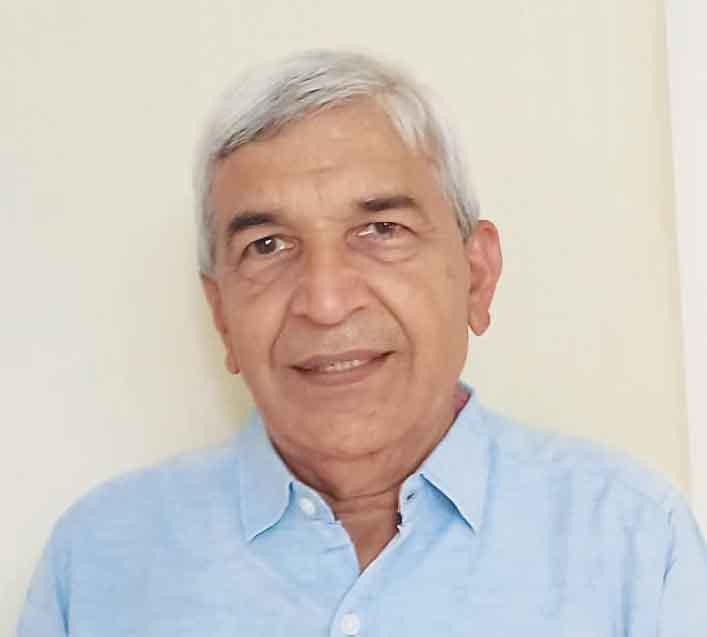
(The writer is a political commentator. Views personal.)


Comments