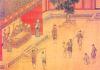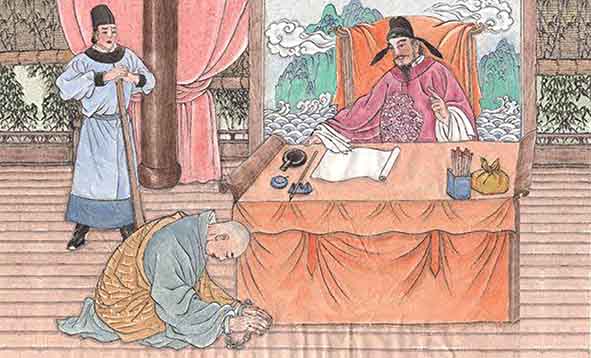
of an unjustly accused monk.
Toward the end of the 19th century the Qing Dynasty was faltering. The acquisition of knowledge from the West was considered essential if China was going to reform itself and to modernise. Western works on history, science, and law were translated into Chinese – in the main for the benefit of the elite. But the education of the masses was also considered a priority. To this end, the reformers in China looked toward Western works of popular fiction as a vehicle to help promote political and social change, particularly novels of adventure, romance, and, of course, crime.
In the West, the first true detective story is considered to be The Murders in the Rue Morgue by Edgar Allen Poe (1841), and the first true mystery novel The Moonstone by Wilkie Collins (1868) – though some argue for The Notting Hill Mystery by Charles Felix (1862). The Chinese, how
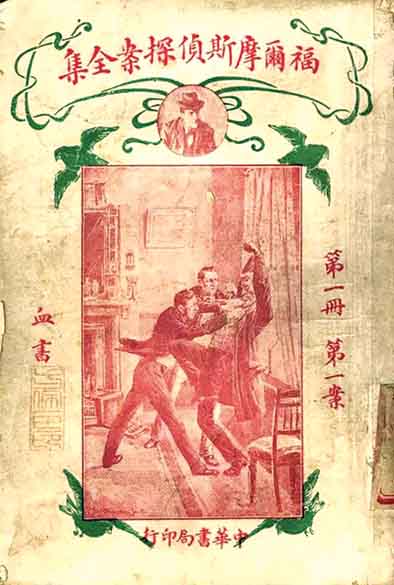
Sherlock Holmes collection.
ever, had developed a taste for stories centred on criminal cases as far back as the Song Dynasty (960-1279), with the antecedents of these stories reaching even further back in time still. It was in the Song Dynasty that a specific genre of crime story known as gong’an emerged – gong’an referring to both to the court case and the bench in a magistrate’s office – in which a magistrate as the protagonist investigates criminal cases and issues a judgment. These gong’an novels usually featured fictional representations of real-life judges such as Di Renjie (630-700) and Bao Zheng (999-1062), famous in their day for being highly astute and incorruptible, determined to bring to justice the guilty regardless of social status.
The famed Dutch sinologist Robert Van Gulik (1910-1967) would summarise the five primary characteristics of the gong’an novel as these: the reader learns the identity of the perpetrator from the outset, the thrill for the reader being the game of cat and mouse to be played out between the criminal and the magistrate; incredible attention to detail, many gong’an novels running to hundreds of chapters; populated by whole host of characters; very little left to the imagination as gruesome murders and punishments were described in great detail; and, finally, the importance of supernatural agencies that assist in the solving of the crime.
Importing Sherlock
But Chinese reformers had had enough of the gong’an tradition by the end of the 19th century. Also, Chinese publishers, noting the immense popularity of crime fiction in the West, had a beady eye on the profits to be made. The first Western crime story published in translation in China was a Sherlock Holmes story – The Naval Treaty – in the newspaper Shi Wu Bao (The Chinese Progress) in 1896. There is no extant literature that tells us about the Chinese public’s initial response, positive or otherwise, to the first publication of a story featuring Arthur Conan Doyle’s eponymous hero. What we do know is that over the next decade there would be a meteoric rise in the quantity of translated crime fiction made available, easily exceeding that of domestically authored fiction. Translated crime fiction would quickly change Chinese crime writing for good, and give rise to what is considered to be the ‘Golden Age’ of Chinese crime fiction (1900-1949).
For those in China intent on educating the masses, there was a lot to like about translated Western crime fiction. Not only were the Chinese people to be given a window into the Western world, to new technology such as the railways, steamships, the telegraph, and the telephone, the heroes of Western crime fiction also exhibited qualities thought to be lacking in Chinese people. Qualities such as physical robustness and an ability to work through seemingly impossible problems by virtue of an intellectually disciplined approach and logical deduction, as well as by employing modern scientific methods.
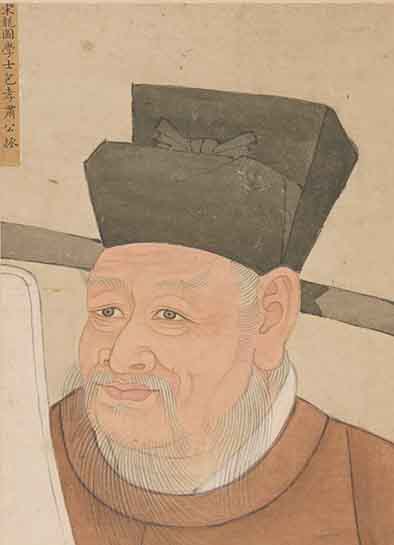
ong dynasty magistrate.
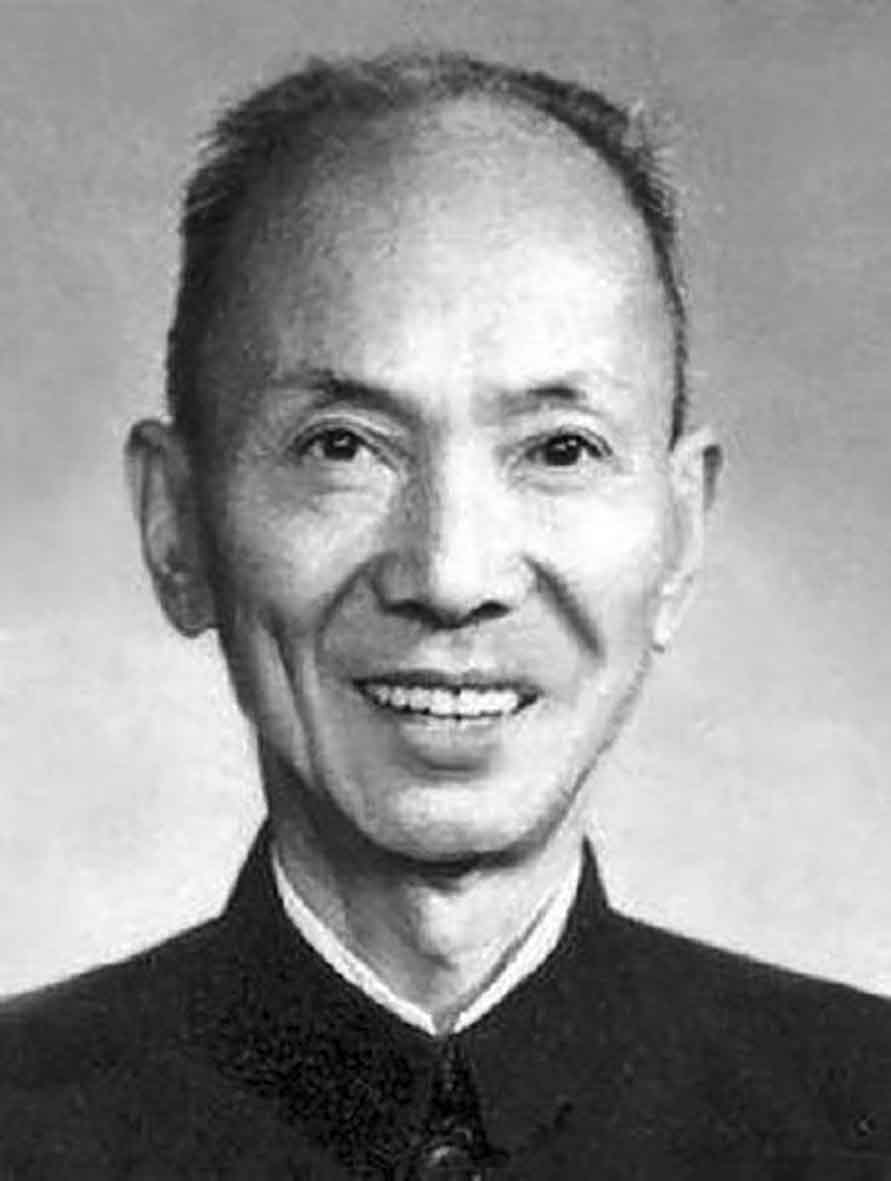
Two of the most famous Chinese crime fiction authors of the early 20th century, translators in their own right and both very heavily influenced by the Western crime fiction canon, were Cheng Xiaoqing (1893-1976) and Sun Liaohong (1897-1958). Cheng Xiaoqing was a firm believer in the didactic properties of crime novels, considering his own works as ‘textbooks in disguise’, there to communicate to the reader the solemn advantages of observation and analytical reasoning. He created his own version of Holmes and Watson in the characters Huo Sang and Bao Lang, though his characters would remain very much Chinese. Sun Liaohong took as his inspiration Maurice LeBlanc’s stories about the gentleman thief Arsène Lupin, choosing to create his own gentleman thief, Lu Ping.
Intellectual Opposition
The popularity of crime fiction in China in the first decades of the 20th century eventually led to opposition from intellectuals in 1919 during what has become known as the May 4th Movement – a national protest movement against the weak Chinese government and traditional Chinese society, Confucianism continuing to have a profound influence despite the Qing Dynasty having disintegrated in 1911. The protesters demanded a society built on ‘Mr Science’ and ‘Mr Democracy’ and were firmly opposed to crime fiction, viewing it as nothing but escapist entertainment, unworthy in comparison to serious political works by writers such as Lu Xun (1881-1936) and Mao Dun (1896-1981). Nonsensical as this might seem, especially after crime fiction had only so recently been lauded for its educational benefits, Cheng Xioaqing and Sun Liaohong and other crime fiction writers would soon find themselves unfairly condemned to the Chinese literary periphery.
Chinese crime novels of the 21st century continue to follow Western narrative forms and considerations, and yet the incorruptible spirits of Di Renjie and Bao Zheng still live on within them, as does the gong’an tradition. Incidentally, in the 1940s, in a used bookstore, Robert Van Gulik would stumble upon an 18th century Chinese book, Di Gong An, and translate it into English as the Celebrated Cases of Judge Dee, thereby introducing the gong’an storytelling tradition to the wider world. He would follow this translation with his own gong’an stories, novels which remain popular to this very day – proof, if it was ever needed, of the universal appeal of crime fiction. He did, however, choose to downplay supernatural agencies in his stories so as not to offend Western sensibilities.
The Case of the Missing Bestseller
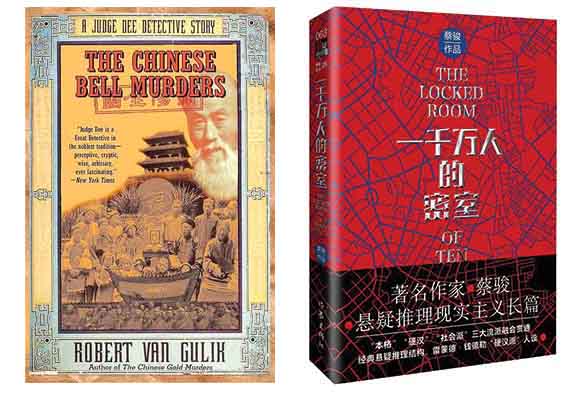 It is hard to predict changing literary fashions. It is doubtful that anyone could have foretold the worldwide impact that ‘Scandinavian Noir’ would have on the crime fiction market before the 1990s when Swedish author Henning Mankell led the charge with his Inspector Kurt Wallender series. At present, Japanese crime fiction is surging in popularity around the world. Translated Japanese crime fiction, such as that of the late Keigo Higashino, even dominates the Chinese domestic crime fiction market. And outside of China is it safe to say that Chinese crime fiction, either in translation or written in English, has yet to have its day.
It is difficulty to answer why this should be. Even though crime fiction is popular in China it lags behind the market for wuxia (martial arts) and
pioneers of modern
Chinese detective fiction
xianxia (mythic fantasy) novels. Perhaps it is because there are censorship constraints on crime fiction in China, novels still expected to be generally supportive of the regime. Subjects such as endemic corruption remain taboo. Even the mention of specific locations might prove politically unpalatable, no city wanting to be seen as a particular locus for crime. Not for nothing are many Chinese crime novels set in rather vague or undescribed locations.
Despite all these constraints, there are some very successful Chinese crime writers such as Cai Jun, Lü Zheng, Huyan Yun, and Shi Chen. A few have even entered the international market through being translated into English, such as Zhou Haohui with his Death Notice trilogy, Zijin Chen for his psychological thrillers, A Yi for his gritty, literary-leaning crime fiction, and Chan Ho-Kei for his Hong Kong novels. A particular favourite of mine is He Jiahong, a professor of law in China, who has created a series of crime novels featuring a lawyer as the main protagonist.
It is possible that Chinese crime fiction has yet to make an international impact because it has only sporadically been translated into English, publishers wary of taking a risk. Some Chinese authors have also pointed out the different expectations that an internationa
l audience might have in terms of narrative structure and pacing, the gong’a n tradition very much still alive in China. It is certainly interesting that the most commercially successful authors of Chinese crime fiction write from outside of China, and not necessarily Chinese at all – successful, possibly, because these authors are less politically constrained.
By far the most internationally famous author of Chinese crime fiction is Qiu Xiaolong with his Inspector Chen mysteries. He is based in the United States, having left China after the Tiananmen Square massacre. Christopher West, an Englishman, and the late Peter May, a Scotsman, both wrote a series of mystery novels set in China, both able to develop links with the Chinese police to aid their research. Lisa See, an American, published her Red Princess mysteries during the early 2000s but is probably more famous for her literary fiction. Elliot Pattison, an international lawyer, has written a series of novels set in Tibet featuring a Chinese detective, Shan Tao Yun, very much evoking the wholesale destruction of Tibetan culture by China. And finally, there is Brian Klingborg, and his Inspector Lu series set in the cold north of China. Elliot Pattison and Brian Klingborg are American but both have strong links to China.
Of course, success is a relative thing. There are some authors of Chinese mysteries I have not had the space to mention. To date, however, the list remains very small indeed.
The Writing of Chinese Mysteries
 The inner world can be an unexpected place, always mysterious, its landscape draped in shadow, often difficult to traverse. No one can rightly say where the inspiration for novels come from. When asked where he got his ideas, Kurt Vonnegut would answer, ‘Schenectady, New York State’. A joke, perhaps, but as good an answer as any. Sometimes stories, characters, plots, don’t come from anywhere out there; they just emerge, sometimes unbidden, sometimes kicking and screaming, from somewhere deep within.

Years ago, I was struggling to make a novel work, set on home soil, in the English Midlands. I had no real plot and the characters were little more than cardboard, hardly alive. Late in the evening, pacing up and down, a happy memory came to mind, me as a young teenager, watching a dubbed Japanese TV series, The Water Margin – an interpretation of the famous Chinese novel of the Ming Dynasty, Shui Hu Zhuan which is attributed to Shi Nai’an (c. 1296-1372). Set during the Song Dynasty in the early 12th century, it follows the exploits of 108 righteous outlaws who rebel against local corrupt officials. I especially remembered the Song Jiang, the ‘honest judge’, from the TV series. It then occurred to me then that I could write a mystery set during the Song Dynasty. Before I understood quite what I was doing, I had quickly written down the names of the most important characters in my story, all of them already quite alive to me: Magistrate Zhu, Horse, Little Ox, Fast Deng and Slow Deng, and, last but not least, Jade Moon.
In hindsight, it was madness. Previously, I had had no great interest in Chinese history. I had no links to China, other than occasionally lecturing at Warwick University on IP enforcement in the UK to mainly Chinese overseas students. I certainly didn’t have any Chinese language skills – and still don’t. Nor then had I read or even heard of any Chinese mystery novels written by anyone else. But the idea had taken hold of me. And, as I said above, the Chinese characters from my inner world seemed to me already completely formed.
It took time, it took effort, and much more research than I first imagined, but eventually a story was done, a Magistrate Zhu mystery, set in the year 1086, Magistrate Zhu having travelled from the Song Dynasty capital of Kaifeng to take up a post at the remote border town of Tranquil Mountain, to find himself landed with four inexperienced constables, a murder to solve, as well as an intractable legal dilemma involving a local heroine, Jade Moon. Not only was the novel done, The Balance of Heaven and Earth, but I had also fallen in love with China, its history, and its long tradition of dynastic law.
Another Magistrate Zhu novel was to follow, The Bitter Mists of Memory. But by then I had also become intrigued by the possibilities of writing a police procedural set in modern China. I knew Christopher West and Peter May had already attempted it, but I wanted to try something slightly different. I also knew I didn’t have Qiu Xiaolong’s facility for or deep understanding of Chinese literary culture, so my portrayal of China and my protagonist would have to be somewhat different to his novels as well. I had two other considerations. The first was, that despite my appreciation of the gong’an tradition, supernatural beings tend not to appear in my Magistrate Zhu novels. They do not seem to fit within the Song Dynasty part of my inner world. This needed to change for my modern police procedural. There was also the matter of China being an authoritarian state, the Chinese Communist Party being all powerful. It was time to properly confront the labyrinthine network of political power structures in modern China, as well as explore the importance of local clans and family ties. And so was born my modern half-English homicide detective Philip Ye to whom ghosts occasionally come to call.
Two books of my envisioned Chengdu Quartet have been written so far: The Willow Woman and Liberation Street – with a third to follow sometime next year. Look out for more in my Magistrate Zhu series as well. The honest magistrate is also set to return for a new adventure very soon.