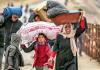
Jordan gave Palestinian families shelter after the 1948 war. Many received Jordanian citizenship. When the 1967 war uprooted another generation, hundreds of thousands of Palestinians crossed into Jordan. Yet within three years, King Hussein faced an extraordinary challenge. Palestinian guerrilla organisations operating from Jordanian soil had set up checkpoints, collected taxes and exercised authority of their own. In August 1970, two factions went before the Palestinian National Council with an explicit proposal to overthrow the monarchy. A kingdom that had opened its doors to displaced families now faced armed men who wanted to decide who would rule it.
The roots of this dilemma predate Black September. The 1948 Arab-Israeli war produced a Palestinian refugee population that neighbouring Arab governments initially regarded as a temporary consequence of war. Jordan went further than most, extending citizenship to Palestinians in the territory it controlled. But the 1967 war, which brought the West Bank under Israeli occupation, enlarged the refugee crisis and transformed Jordan into the principal base of Palestinian armed organisations. The distinction between providing sanctuary and surrendering control over national territory was about to become a defining question of Jordanian politics.
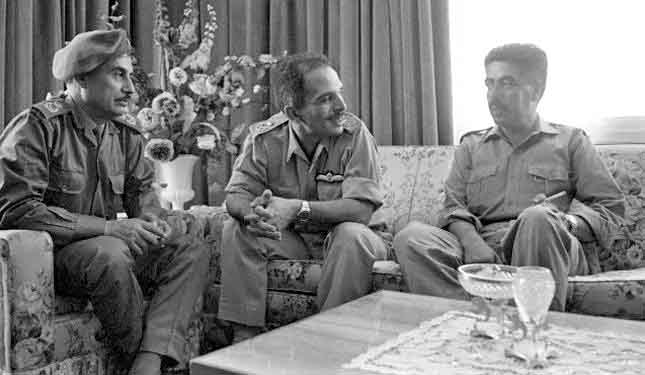
It was the families who had the least say in what followed. In September 1970, the Popular Front for the Liberation of Palestine hijacked civilian airliners and blew up three of them on Jordanian soil. The spectacle made Hussein’s predicament plain. An armed organisation could commandeer aircraft, bring them into his country and destroy them before the world’s cameras. On 17th of September the King sent his army against the guerrillas. As Jordanian troops fought to regain control, the shelling reached the Palestinian refugee camps of Amman. Those days entered Palestinian memory as Black September.
Yasser Arafat later put the Palestinian death toll at 20,000 over the course of the fighting. Other estimates were substantially lower. The precise number remains disputed, but the contemporary record leaves little doubt about what happened to the camps. The United Nations relief agency reported severe destruction at Wahdat and casualties and damage at Jabal Hussein, Zarqa and Irbid. For ten days its operations in east Jordan stopped. Water, electricity and telephone services failed. A family that had once crossed into Jordan for safety could now find itself under fire in the very place where it had taken refuge.
That was the history Dr. Sergio Simon, a Jewish oncologist in São Paulo, asked Queen Rania of Jordan to remember. In July 2014, she had written about Gaza and invited readers to imagine taking a sick child to a border crossing for treatment unavailable at home. Simon’s reply, dated 1 August 2014, began with sympathy. As a doctor, he could readily understand what such a wait meant. Then he turned to the Queen’s own family history. The monarch who had ordered the offensive in September 1970 was her father-in-law, King Hussein. Rania had been an infant at the time. The question Simon put before the adult Queen was one of public memory. When Jordan spoke for Palestinians suffering in Gaza, what place did it give Palestinians who had suffered at Jordanian hands?
There was also a regional precedent for the problem. The 1969 Cairo Agreement had permitted Palestinian guerrilla activity from parts of southern Lebanon, subject to restrictions on interference in Lebanese domestic affairs. In practice, the arrangement exposed the weakness of a state already divided by internal political and sectarian tensions. Lebanon would discover that allowing an armed movement to operate from its territory could compromise the government's authority and expose its population to retaliation.
Jordan’s neighbours had a reason of their own to remember. After Jordan expelled the Palestine Liberation Organization in 1971, the PLO shifted its main base of operations to Lebanon, already home to Palestinian refugees. In 1973, Palestinian fighters clashed with the Lebanese army. Raids on Israel from Lebanese territory exposed villages in the south to Israeli retaliation. In 1978, Israel invaded southern Lebanon. Within a decade, two Arab countries had confronted the same question. Who has the authority to take a host country to war: its government or an armed organisation operating from its territory? For villagers on either side of the Lebanese border, the answer had consequences far beyond the politics of Beirut or Jerusalem.
That history helps explain the reluctance of Egypt and Jordan to accept the mass relocation of Palestinians from Gaza. Egypt has stated its security concern quite plainly. If armed groups established themselves in Sinai and attacked Israel from Egyptian territory, Cairo could find its peace treaty with Israel in jeopardy. There is a second concern, equally rooted in experience. Families displaced in 1948 expected to go home. Generations later, their descendants are still abroad. What assurance could an Egyptian or Jordanian leader give a Palestinian mother today that, once across the border, she and her children would ever be allowed back? The governments concerned know the danger of admitting armed factions. Palestinian families know the danger of leaving home.
It would nevertheless be unfair to describe Arab reluctance to absorb Gaza’s population as a refusal to help Palestinians. Egypt and Qatar, alongside Türkiye and the United States, helped broker the ceasefire that took effect in October 2025. It secured the return of the remaining hostages taken in the Hamas-led attack of 7 October 2023 and the release of hundreds of Palestinian prisoners and detainees. The agreement also brought the old Jordanian dilemma into the negotiations themselves. Who would govern Gaza, and who would control the guns? A Palestinian committee was formed in January 2026 to administer public services. By the ceasefire’s first anniversary, Israel was still demanding Hamas’s disarmament before further progress, while Hamas linked disarmament to an end to Israeli strikes and a withdrawal.
Here the doctor’s letter and the Queen’s essay each supply something the other needs. Jordan’s experience helps explain why an Israeli family would want more than a promise that armed factions will keep the peace. What happened at Wahdat also explains why a Palestinian family would fear an army entering its neighbourhood to dislodge those factions. In October 2026, UNICEF reported that a fourteen-year-old Palestinian boy had been killed in an armed drone strike while walking home from a learning centre in Deir al-Balah. Five decades after Black September, the distance between a government’s security argument and a family’s experience of it can still be measured in the length of a walk home from school.
After recalling Black September, Dr. Sergio Simon asked Queen Rania to urge her husband, King Abdullah II, to press fellow Arab leaders to make peace with Israel and give Palestinians a secure place in their own societies.
Dr. Simon ended his letter by imagining Queen Rania turning to the magic mirror. “Mirror, mirror on the wall, who in the land is the fairest of all?” The mirror would reply, “You, my Queen, are the fairest of all.” For Simon, the word fair carried a second meaning. The Queen who spoke so movingly for Gaza could also give the Palestinian families of Black September their place in Jordan’s memory. The doctor signed off his letter with a blessing. “May Allah grant Your Majesty good health and happiness.”
(The writer is an advocate and a public policy analyst. Views personal.)