Between the Written Word and the Moving Image

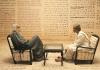
Recently, a Bengali film, Emperor Versus Sarat Chandra, was released in West Bengal theatres. It deals with the British Government’s ban on Sarat Chandra Chatterjee’s only political novel, Pather Dabi (1926), named after a secret society in the novel headed by its fictional hero, Sabyasachi. Sarat Chandra’s novels probably hold a world record for the number of cinematic adaptations in the history of Indian cinema. Devdas is by no means the only novel of his to have been adapted into films in several Indian languages. Srijit Mukherji’s film is perhaps among the few in which the original author and his characters come alive within the same cinematic narrative without disturbing its essential rhythm.
Creative Freedom
The interplay between cinema and literature is as old as the medium itself. It will continue as long as there are good books to read and filmmakers with the vision to translate them into films. There will inevitably be controversy and criticism. But, however good or bad an adaptation may be, one must remember that the original will always remain; it cannot be obliterated or erased by its celluloid version. At times, a film adaptation may be so remote an interpretation that it distances itself entirely from its literary source. The film then becomes a work unto itself, completely detached from the original, as in Sanjay Leela Bhansali’s Devdas.
When a film adaptation, interpretation or relocation is remarkable, it stands on its own. The history of world cinema is replete with brilliant adaptations of literary classics: Margaret Mitchell’s Gone with the Wind (1939), produced by David O. Selznick; Leo Tolstoy’s Anna Karenina, adapted for the screen in 1935, starring Greta Garbo in the title role, and again in 1948, starring Vivien Leigh; Akira Kurosawa’s Throne of Blood (1957), which transposes William Shakespeare’s Macbeth to feudal Japan; and Satyajit Ray’s Charulata, an interpretation of Rabindranath Tagore’s Nastaneerh.
Writers can take heart from the fact that cinema takes their works to a much wider audience than the original literary text might reach. Cinema expresses the filmmaker’s personal vision, whether through faithful imitation, political propaganda or visual abstraction. The critical emphasis, therefore, should be on the work of art – the film itself – rather than on its comparison with the literature from which it springs.
Literary Fidelity
The fundamental difference between literature and its cinematic adaptation lies in the physicality of the latter and the absence of it in the former. Literature gives readers the freedom to imagine how characters and objects might look in real life. Cinema, however, must invest characters and objects with a tangible, three-dimensional physicality, thereby restricting the viewer’s imaginative freedom.
Geoffrey Wagner divided film adaptations into three ‘modes’: transposition, in which a novel is directly rendered on screen with minimal apparent interference; commentary, in which the original story is deliberately or inadvertently altered in some respect; and analogy, which involves a considerable departure from the source in order to create another work of art.
DeWitt Bodeen, co-author of the screenplay for Peter Ustinov’s Billy Budd (1962), argues: ‘Adapting literary works to film is, without a doubt, a creative undertaking, but the task requires a kind of selective interpretation, along with the ability to recreate and sustain an established mood’.
Traditionally, criticism of film adaptations of novels has often been extremely judgmental. ‘Terms like “infidelity”, “betrayal”, “deformation”, “violation”, “vulgarization”, “bastardization” and “desecration” proliferate, with each word carrying its specific charge. Despite the variety of the accusations, their drift seems always to be the same – the book was better.’
There can be several reasons for adapting literature to cinema: a director’s love for a particular story; the desire to reinterpret a written text as a film text; the conviction that a historical period can be recreated beautifully through the visual medium; or an ideological affinity with the subject, which the director wishes to communicate to an audience through cinema. Whatever the motivation behind a cinematic adaptation – and sometimes multiple adaptations of the same literary work – the subject remains intriguing and demands critical discussion.
Colonial Histories
The events leading to what colonial historiography describes as the annexation of Oudh have been explored in several literary and historical works. Satyajit Ray’s Shatranj Ke Khiladi, however, offers a brilliant example of how those events can be interpreted cinematically. The film is an adaptation and recreation of a short story of the same title by Munshi Premchand.
Dhrubajyoti Banerjee examines how Ray foregrounds and exposes the fissures in the edifice of colonial historiography, while also exploring the ways in which the short story and the film engage with one another. The film is much more than a mere ‘mosaic of quotations’; it achieves the ‘absorption and transformation’ of the original story in a truly enabling fashion.
Eashwar Mime Company (2004) is the only film directed by the late theatre personality Shyamanand Jalan. Based on Mukabhinay, a short story by Sahitya Akademi Award-winning writer Dibyendu Palit, the film is an incisive political statement. It presents silence as a collective weapon of self-expression, a means of livelihood, an expression of simmering anger and, ultimately, a weapon of attack.
The screenplay was written by noted playwright Vijay Tendulkar, while painter Rameshwar Broota designed the film and painted the faces of the ten mime artists who play its central characters. The film is a striking example of how cinema can dispense with extensive dialogue and rely instead on powerful visuals and a compelling soundtrack.
It evolves into a powerful presentation of the tension between an individual’s voice and collective silence. It also explores how this opposition, when allowed to escalate into a conflict between the powerful and the weak, between a dictator and his subjects, can overturn the existing balance of power. The once-powerful are eventually overthrown by the oppressed, who assume power with silence as their principal weapon of rebellion.
Mime in this film goes far beyond the ‘poetry’ of silence. It becomes a weapon of attack, a language of revolt and a means of exacting revenge through killing. At the same time, it is a performing art, a means of earning one’s daily bread and an expression of human interaction in everyday life. For the director, it is also a way of extending the parameters of cinema by incorporating an entirely different art form into its language, thereby strengthening and enriching the medium while narrating a bizarre story through the expressive power of silence.
Inner Landscapes
The late Mani Kaul once said: ‘I made Uski Roti (based on a short story by Mohan Rakesh), Ashadh Ka Ek Din (by Mohan Rakesh) and Satah Se Uthta Aadmi (on the life and work of Gajanan Madhav Muktibodh) years ago. What actually drew me towards Mohan Rakesh was his recognition of the fact that mental pain, such as anxiety, is in no way less real than bodily pain. Physical pain is localised and can be adequately described, whereas certain fears can never be located or described within the mind; nevertheless, they do exist. The mental and physical planes at times can be said to merge. For example, when Bala in Uski Roti suffers and tolerates oppression, a landscape is created within her mind. So, when towards the end she hallucinates, I treat the hallucinatory projections as real.’
A final perspective on the cinematic potential of literature comes from Gaston Roberge, who writes:
‘There are passages of literature, novels and plays, which are re-thought by a filmmaker and rendered in cinematic terms. A beautiful example of such re-creation is the opening sequence of Satyajit Ray’s Charulata, which cinematizes, in a few minutes of screen time, several pages of Tagore’s novelette Nastaneerh. In one relatively short sequence, you come to know a lot about Charu, a knowledge which, in real life, might take quite some time to arrive at. But then, it is one of art’s functions to condense life.’
(The writer is a noted film scholar and a double-winner for the National Award for Best Writing on Cinema.Views personal.