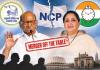
NCP merger stalls amid power tussle

Mumbai: The merger of Sharad Pawar and Sunetra Pawar-led factions of the Nationalist Congress Party remains a distant mirage as both the factions have formally abandoned the idea. After the accidental demise of former DCM Ajit Pawar around 9 months ago, the talk of merger came to fore for the first time. But, now it appears as if the idea has failed to take off due to strong internal power struggles, and rigid coalition compulsions.
According to recent statements, a formal blueprint had initially scheduled the reunification of the two factions for February 12, 2026, but the process completely derailed following the sudden death of Ajit Pawar in a plane crash on January 28.
State NCP president Sunil Tatkare and leaders from the Sharad Pawar-led NCP (SP) subsequently closed the chapter on negotiations, noting that the tragedy removed the sole leader possessing the authority and political capital required to mediate between the rival camps.
Institutional Barrier
Control over the party machinery has emerged as a primary institutional barrier to resuming talks. Following Ajit Pawar’s passing, his wife, Sunetra Pawar, assumed the roles of NCP National President and Maharashtra Deputy Chief Minister.
Both she and her son, Rajya Sabha MP Parth Pawar, firmly oppose any reunification. Their resistance is rooted in the political calculation that a merger would inevitably transfer absolute control of the unified entity back to party patriarch Sharad Pawar and his daughter, Supriya Sule, effectively sidelining Ajit Pawar’s immediate family and stripping them of their newfound autonomy.
Leadership Vacuum
Within the ruling NCP camp, a leadership vacuum and portfolio disputes present another formidable hurdle. Senior leaders such as Praful Patel and Sunil Tatkare face internal turbulence, exacerbated by widespread grassroots discontent regarding Parth Pawar’s controlling management style.
While a section of the old guard quietly feels that only Sharad Pawar can universally lead a reunited party, the current power-holders refuse to cede their ministerial leverage. Incumbent ministers remain unwilling to relinquish key cabinet berths, specifically their ongoing demand for the plum Finance Ministry, to facilitate a truce.
Ideological commitments and the contrasting power dynamics of the state’s two major alliances further entrench the division. Sharad Pawar too has issued public declarations putting a full stop to merger rumors, stating that while individual defectors are welcome, his NCP (SP) will not dissolve into another entity. The NCP (SP) remains a vital engine of the opposition Maha Vikas Aghadi (MVA) bloc alongside the Congress and Shiv Sena (UBT). Conversely, the ruling NCP is firmly embedded within the ruling Mahayuti alliance.
A formal merger would instantly fracture the MVA coalition. Hence other parties of the coalition are trying hard to ensure the merger plans don’t materialise.
The Bharatiya Janata Party (BJP) finds itself navigating conflicting compulsions at the central and state levels regarding the NCP. At the Centre, the BJP leadership has reportedly pushed for a unified NCP to strengthen the National Democratic Alliance (NDA) and project absolute stability ahead of key electoral battles across the nation.
However, in Maharashtra, the BJP faces the complex task of managing a fragile Mahayuti coalition. Pushing too hard for an NCP merger risks alienating other regional allies or destabilizing the state government by upsetting the delicate distribution of power and ministerial portfolios.
Even if the current political equilibrium shifts, a future merger remains only a remote possibility. The structural divide between the two factions has deepened beyond mere political strategy into profound personal insecurity and legal entanglements.