top of page


Twilight of the Peshwas: G.S. Sardesai and the Unravelling of the Maratha State
Part 2: From the high-water mark at Delhi to the fatal Treaty of Bassein, Sardesai’s Main Currents of Maratha History analyses how internal flaws doomed the empire built by the Peshwas. Sir Charles Warre Malet, concluding a treaty in 1790 with the Peshwa, by Thomas Daniell (1805). Next to Shivaji Maharaj, Sardesai regarded Chhatrapati Shahu as the most consequential figure in the making of the Maratha state. Emerging from eighteen years of Mughal captivity, Shahu presided ove

Shoumojit Banerjee
Sep 1613 min read


Beyond Myth and Hagiography: G.S. Sardesai and the Making of the Maratha State
Part 1: A century after his landmark Patna lectures, Main Currents of Maratha History remains a classic primer for understanding the anatomy of Maratha power. It seems Chhatrapati Shivaji and Maratha history are condemned to be trapped between the Scylla of ‘liberal’ Western obloquy and the Charybdis of regional chauvinism that fails to evaluate historical processes with objective rigor. Every so often, a piece appears in a ‘liberal’ Western newspaper casting Shivaji Maharaj
Shoumojit Banerjee
Sep 159 min read


The Women Behind the American Dream
Arranged Marriage, a collection of short stories first published in 1995, is celebrated author Chitra Banerjee Divakaruni’s debut fiction work. Apart from being a bestseller in the United States, the book won the PEN Oakland Josephine Miles Prize for fiction, an American Book Award and the Bay Area Book Reviewers Award for fiction. Divakaruni, apart from teaching creative writing at a local college, is the coordinator for a helpline for South Asian women. This book reflects h

Smitha Balachandran
Sep 23 min read


Beyond Palaces and Pomp
Immortalizing a literary work which juxtaposes art and history, culminating in the creation of a masterpiece is no easy task. But a historian of Manu S. Pillai’s caliber has achieved this on a monumental scale in False Allies: India’s Maharajahs in the Age of Ravi Varma. Pillai describes the travels of the painter Ravi Varma through five princely states. He demonstrates how these maharajas, far from being frivolous despots consumed by lust and luxury, were involved in industr
Smitha Balachandran
Aug 183 min read


The Israel Lobby and Its Discontents
A new book revisits the contentious case that Israel’s friends wield too much influence in Washington. Yet the roots of America’s attachment to Israel run deeper. Harry Truman's recognition of Israel in 1948 remains an early test of the competing forces that shaped America's relationship with the Jewish state. By now, William Faulkner’s iconic observation in Requiem for a Nun that “the past is never dead. It’s not even past” has achieved gold cliché status, being quoted ad na
Shoumojit Banerjee
Aug 139 min read


A Scientist Who Built a Future
PM Bhargava's greatest strength was his ability to combine scientific excellence with institutional vision. The history of modern Indian science is often narrated through institutions, discoveries, and national programmes. Yet, behind these achievements are individuals whose vision and determination transformed the country's scientific landscape. Pushpa Mitra Bhargava was one such individual—a pioneering molecular biologist, institution-builder, and public intellectual whose

Suhas B Naik-Satam
Aug 123 min read


Still Storming the Bastille
Amid shelves crowded with sophisticated histories on the French Revolution, Thomas Carlyle’s classic remains the one book that makes history feel gloriously, terrifyingly alive like no other. Every Bastille Day, I find myself reaching for the same battered volume. It is not the newest history of the French Revolution. It is not the most balanced, the most archival or even the most reliable in the way modern historians would define ‘reliability.’ But for me, Thomas Carlyle’s T

Mouparna Srimani
Jul 143 min read


Paranoid Empire, Insecure Republic: America at 250
As the United States marks its semiquincentennial, its finest histories reveal a restless nation unable to escape the foundational neurosis of its own creation. Washington Crossing the Delaware (1851), by Emanuel Leutze. No painting has done more to canonise America’s founding myth. Yet beneath its heroic certainty lies the restless republic that historians from Charles Beard to Robert Kagan would relentlessly question. Behind the fireworks and the dutiful invocations of libe
Shoumojit Banerjee
Jul 48 min read


Where the Krushna Flows
Mohan Deshmukh’s book From the Banks of Krushna River, originally published in Marathi as Krushnakathavarun, reminds me of my stay in Sangli district (1965-1969), which was one of the most memorable periods in my long government service. His book is a delightful account of Sangli’s rich cultural and artistic heritage. It also tells the story of how a village boy from the district - the son of an honest and upright junior police officer - rose to become a leading builder and

Vappala Balachandran
Jun 283 min read


Contours of Darkness
In the evolving landscape of Indian non-fiction, where true crime writing frequently succumbs to spectacle and narrative sensationalism, The Pune Serial Killers authored by Sujata Sapre and Prof. Anandajit Goswami and published by Srishti Publishers asserts itself as a work of formidable intellectual authority and narrative sophistication. It is not a mere reconstruction of crime but a deeply reflective inquiry into the architecture of violence and the fragile moral ecosystem

Shiv Sethi
Jun 73 min read


Economics With a Civilisational Soul
A reflection on the ideas, history, and philosophy that shaped The Economic DNA of Bharat. In The Economic DNA of Bharat, I explore an alternative framework that places civilisation, ethics, and human dignity at the centre of economic thought. Part philosophy, part policy discourse, and part civilisational reflection, the book offers a sweeping exploration of Bharat’s economic journey, from the Indus–Saraswati civilisation to the aspirations of an Atmanirbhar India. In writin
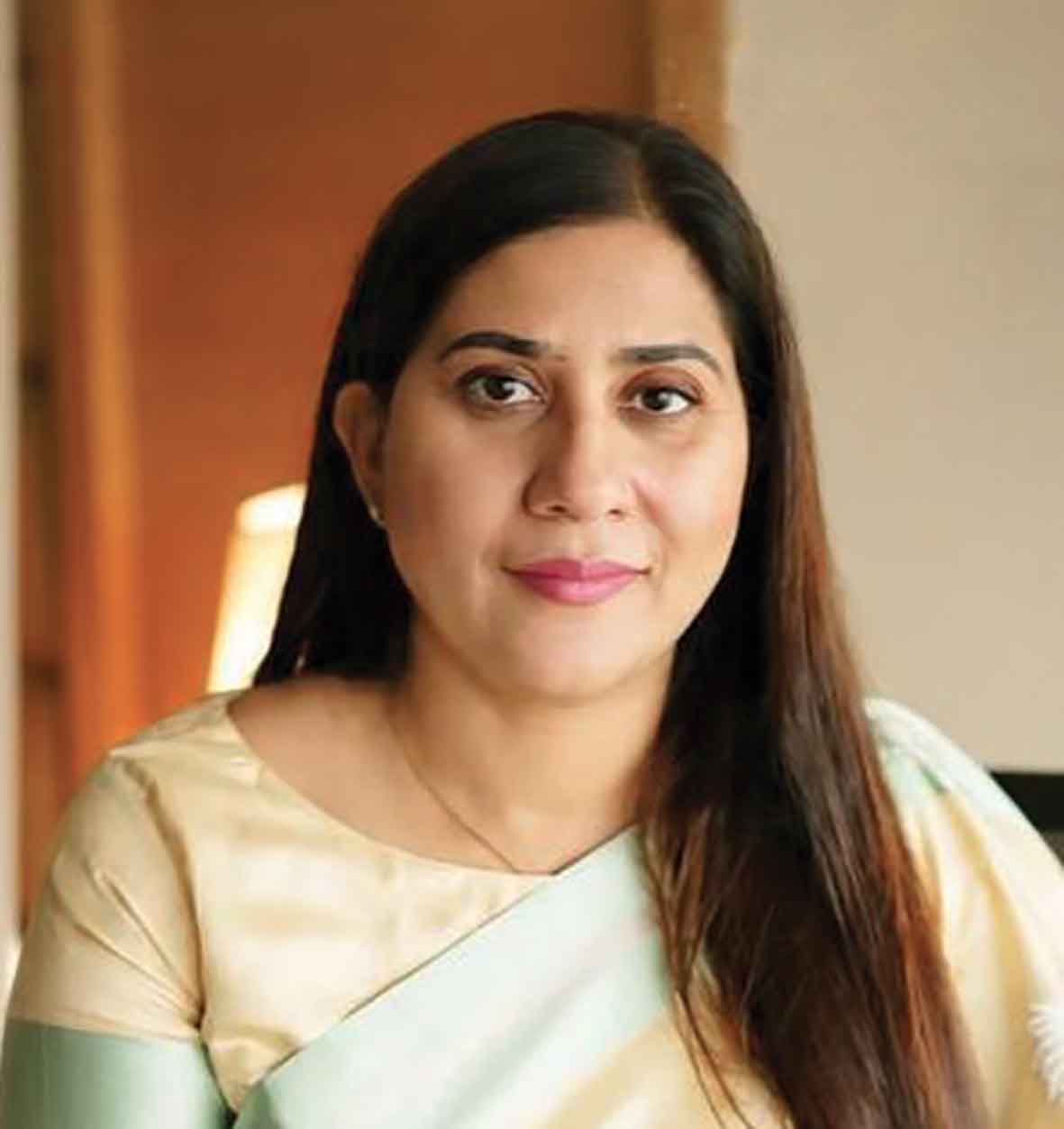
Monica B. Sood
Jun 33 min read


Why I Wrote ‘From Startups to Success’
A practical guide for aspiring entrepreneurs and dreamers from ordinary backgrounds carrying extraordinary ambitions. When I first arrived in San Francisco in 1969 with just seventy-five cents in my pocket, I could never have imagined that one day I would write a book on entrepreneurship and business leadership. I came from Taravada, a small village in Gujarat, where opportunities were limited, but dreams were not. My parents, despite having very little formal education, taug
Manu Patolia
May 233 min read


Inside the Great Power Game
Certain books on geopolitics (past and present) are insightful and revelatory enough to constitute an intellectual treat for the reader. ‘Great Power Games’ by erstwhile RAW chief Vikram Sood is exactly that. Published in 2025, this work begins by describing how power and money result in global control. Sood begins with the phrase: “It is difficult to define or measure power, but it is true that wealth is a source of power and the ability to project violent force adds to that
Smitha Balachandran
May 133 min read


The Myth of the Maverick Bookshop
Zheng Liu’s study of independent bookselling in China reveals a vibrant retail culture but skirts the politics that shape it. The independent bookshop is one of modern capitalism’s most stubborn survivors. From Britain to America, it has endured the onslaught of scale and algorithms, adapting itself into something more than a retail space: part salon, part sanctuary and part civic square. That same romance now attaches itself to China’s flourishing crop of design-led bookstor

Laurence Westwood
Apr 215 min read


Imagining the India We Aspire to Build
Envisioning India by Dr. Sanjay Sindhu Vasant Deshmukh is an ambitious, wide-ranging, and intellectually engaging work that seeks to map the socio-cultural, educational, and developmental trajectory of India in the contemporary era. Spread across more than 580 pages, the book belongs to the genre of ideological and analytical writing, offering a compelling blend of insight, reflection, and forward-looking vision. It is not merely a descriptive account of India’s present reali
Suhas B Naik-Satam
Apr 204 min read


Rukmani’s Enduring Strength
In Nectar in a Sieve , Kamala Markandaya crafts a timeless portrait of rural womanhood, resilience and the human cost of change. Even after International Women’s Day, works that illuminate women’s resilience remain worth revisiting. In Nectar in a Sieve , Kamala Markandaya creates a memorable portrait of Rukmani, a character shaped by strength, patience, and moral courage, all of which are forged in the context of poverty, patriarchy, and social change. This post-colonial n

Dr. Kailash Atkare
Mar 113 min read


Uncovering the Invisible History of Indian Journalism
For more than seven decades, the Press Trust of India (PTI) has been the silent engine driving Indian journalism, delivering news with speed, accuracy and credibility across the nation. Yet, the stories behind the stories, the human drama inside newsrooms and the relentless effort that transforms events into headlines have largely remained invisible. 'What They Don’t Teach You in Journalism Schools' lifts that veil, offering a rare and compelling journey into the inner workin

Bhalchandra Chorghade
Feb 283 min read


Fear is the Key
Terrorism, which is a near ubiquitous phenomenon today, raises its ugly and sinister head every now and then with frightening precision and disastrous consequences. Terrorism can be defined as the deliberate targeting of civilians to terminate or lessen their support of their political leaders. In American military historian Caleb Carr’s controversial ‘The Lessons of Terror’ (2002), he analyses and describes how initially, this method was used by the Romans till the late eigh
Smitha Balachandran
Feb 183 min read


Bollywood’s Annus Mirabilis
Author Pratik Majumdar’s latest book argues that 1975 transformed Bollywood in ways memory has flattened. Sadly, whenever we go into a flashback to 1975, all discussions boil down to Sholay , a milestone in the history of Indian cinema and perhaps also, across world cinema. “Sadly” because, few are aware that 1975 can be defined as the Golden Year of Bollywood cinema. Did you know that not less than 80 full-length feature films were released across theatres in India and some

Shoma A. Chatterji
Jan 173 min read


Horror Beyond the Supernatural
The title itself is enough to send shivers down the spine even before turning the first page, evoking an image of voices rising from unfathomable depths – forgotten, cursed, or perhaps deliberately silenced, only to return as haunting reverberations that refuse to be ignored. This sense of unease and foreboding forms the backbone of the book and remains remarkably consistent throughout. From the very beginning, readers are invited into a dark, unsettling universe where horror
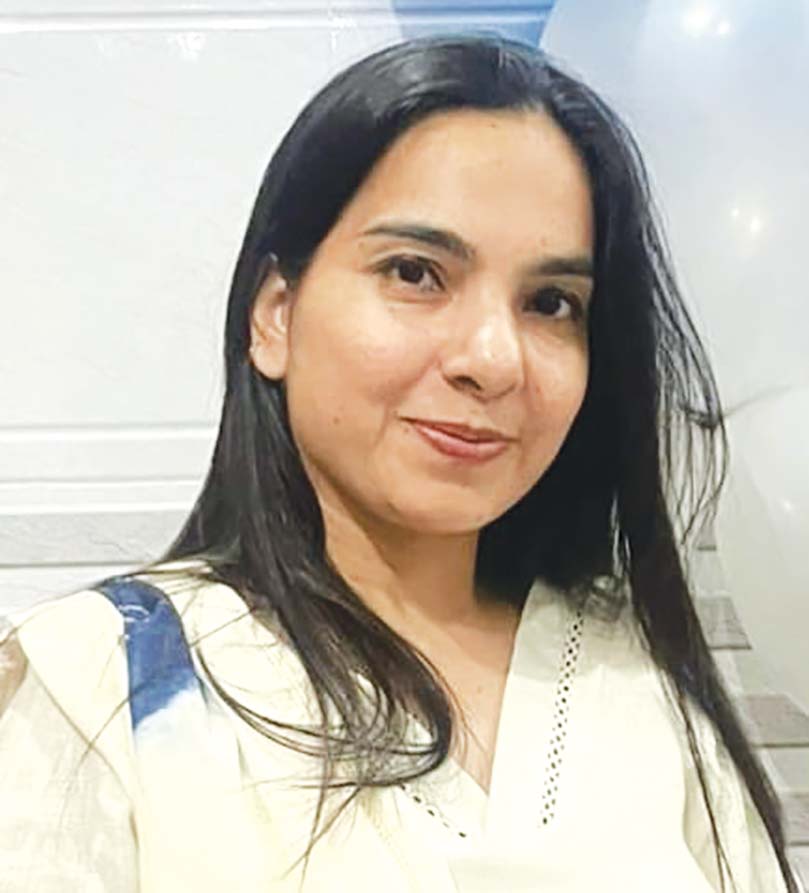
Rupali Sethi
Jan 113 min read
bottom of page